

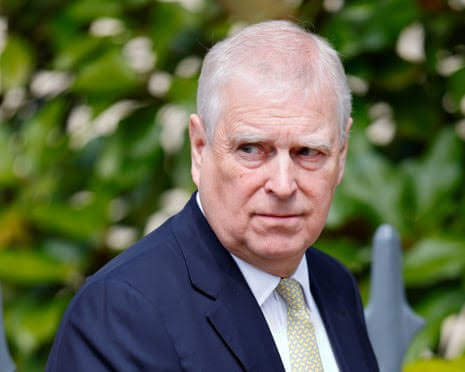
There is now no hiding place for cornered Prince Andrew Mountbatten-Windsor, who stands as an isolated global pariah.
The fallen royal—once the favourite child of the late Queen Elizabeth II—has nowhere left to turn as the net closes in over his long association with prolific paedophile Jeffrey Epstein.

One by one, his family members are publicly distancing themselves from a man who, by virtue of birthright, has long embodied entitlement and greed.
First, his younger brother Prince Edward broke ranks, declaring it “really important” to remember the blameless victims of Epstein’s crimes.
Then his nephew Prince William and Catherine, Princess of Wales, said they are “deeply concerned” by the continuing revelations about Epstein, adding that “their thoughts remain focused on the victims.”

And now King Charles has delivered the most seismic intervention yet: he would speak to the police if invited.
In a blistering Buckingham Palace statement, the King made clear he “stands ready to support” any police inquiry into allegations that continue to haunt his outcast younger sibling.
Thames Valley Police is investigating claims that Andrew shared confidential documents with Epstein while serving as a UK trade envoy.

Far more significantly, the King has publicly acknowledged he would assist authorities over the broader allegations of sexual impropriety levelled at Andrew—who continues to deny any wrongdoing but remains silent.
The Palace statement read:
“The King has made clear, in words and through unprecedented actions, his profound concern at allegations which continue to come to light in respect of Mr Mountbatten-Windsor’s conduct.

“While the specific claims in question are for Mr Mountbatten-Windsor to address, if we are approached (by the police) we stand ready to support them, as you would expect.
“As was previously stated, Their Majesties’ thoughts and sympathies have been, and remain with, the victims of any and all forms of abuse.”

The intervention bears similarities to the late Queen Elizabeth II’s rare live broadcast “from the heart” following the death of Diana, Princess of Wales, in 1997—both moments when the monarchy faced an existential public relations crisis.
Charles’ words are seismic and illustrate the depth of the constitutional crisis now engulfing the House of Windsor.
A more extraordinary few days in the 1,200-year history of the British monarchy—or greater public humiliation for the mute former prince—it is hard to imagine.

In 2022, less than nine months before her death, the Queen stripped Andrew of his military titles, royal patronages, and the right to use “His Royal Highness” in an official capacity.
Later that year, Andrew paid a confidential out-of-court settlement—believed to be around £12 million—to Epstein sex-trafficking victim Virginia Giuffre, despite claiming he had never met her.
Giuffre (then known by her maiden name Roberts) alleged she was raped by Andrew on three occasions, including during a 2001 trip to London when she was 17. She died by suicide last year.

Recently released files appear to show him kneeling on all fours over a female lying prostrate on the ground.
Andrew, now 65, has consistently and vigorously denied any wrongdoing.
Yet his years-long association with Epstein and Ghislaine Maxwell has triggered a worldwide demand for him to reveal what he knows about the disgraced financier’s network.
After the King’s dramatic intervention, continued silence from Andrew will no longer be tenable.
The clamour for Charles to act grows louder by the day as the scandal engulfing the House of Windsor overshadows recent crises.
The decision of King Edward VIII to abdicate in 1936 to marry Wallis Simpson and the withdrawal of Prince Harry and Meghan Markle from royal duties in 2020 were considered large-scale problems.
This moment feels different—and far more dangerous for the monarchy’s future.




