

The Lagos State Government has identified growing investment opportunities across key areas including urban renewal, affordable housing, logistics hubs, industrial parks, climate-resilient infrastructure, and transit-oriented developments.
According to the state, Nigeria’s construction and real estate outlook for 2026 remains cautiously positive, though success in the sector will depend largely on deliberate planning and policy consistency. Speaking at the Nigerian Construction and Real Estate Market Outlook 2026 forum, Moruf Akinderu-Fatai, Lagos State Commissioner for Housing, warned that policy instability and fragmented planning could limit the sector’s potential.

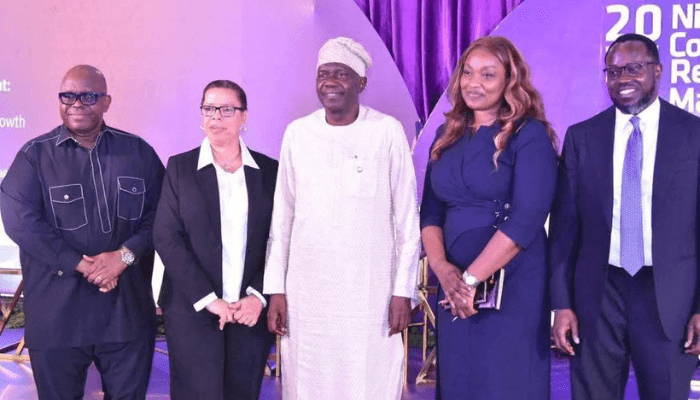
Akinderu-Fatai, who represented Governor Babajide Sanwo-Olu at the event organised by the Royal Institution of Chartered Surveyors (RICS) Nigeria Group, said the government is committed to providing the infrastructure necessary to attract profitable investments. The forum was held under the theme “Infrastructure Development: A Catalyst for Real Estate, Construction, and Economic Development.”

He explained that Lagos’ development strategy is centred on accelerating infrastructure delivery, strengthening institutions, expanding climate-adaptive investments in drainage and urban resilience, and ensuring that city growth results in tangible improvements in residents’ quality of life.

The commissioner added that the state is focused on maintaining a stable policy environment, enhancing data-driven urban planning, encouraging innovation in construction methods, and expanding partnerships with private investors and professional bodies.
Akinderu-Fatai noted that infrastructure plays a defining role in shaping growth, determining how cities expand, where value is created, and whether development is inclusive and sustainable. He described Lagos as a clear example, noting that as Africa’s largest city and Nigeria’s economic hub, the state continues to absorb thousands of new residents daily.
While this population growth places significant pressure on infrastructure, he said it also presents vast opportunities if development is planned ahead of demand. According to him, Lagos’ experience has shown that when government takes the lead in infrastructure provision, investor confidence follows.

Earlier at the event, RICS Nigeria Group Chairman, Tayo Odunsi, emphasised the strong link between construction, real estate, and economic growth, identifying conviction, access to long-term capital, and effective project execution as key drivers for the sector.
Meanwhile, Ayo Ibaru, Director of Research and Chief Investment Officer at Panterra, said Nigeria’s real estate market in 2026 would be influenced by evolving fiscal policies and the structural challenges they aim to address. Drawing from Panterra’s 2026 outlook, he noted that growth across real estate submarkets would be uneven and shaped by pre-election uncertainties.

Ibaru observed that while infrastructure-led expansion remains a proven growth driver, expectations around digital integration are more uncertain. He added that despite challenges, the real estate sector continues to demonstrate resilience, contributing between 5 and 6 per cent to Nigeria’s GDP.

He further explained that historical trends show pre-election years often lead to cautious investment behaviour and slower transaction volumes. Similar patterns were recorded during the 2011, 2015, and 2019 election cycles, with investors becoming more selective.

Recalling the period ahead of the 2023 elections, Ibaru noted that inflation and policy uncertainty contributed to a 20–30 per cent decline in foreign investments. He warned that similar trends could emerge between 2026 and 2027, although election-related spending may temporarily boost short-term rentals and commercial real estate. Long-term projects reliant on government support, however, may face delays due to policy uncertainty.




