

As part of its new Domestic Growth Acceleration Strategy (DGAS), the Federal Government has announced a shift in its economic role from being the main spender to acting as a strategic enabler that attracts private investment.
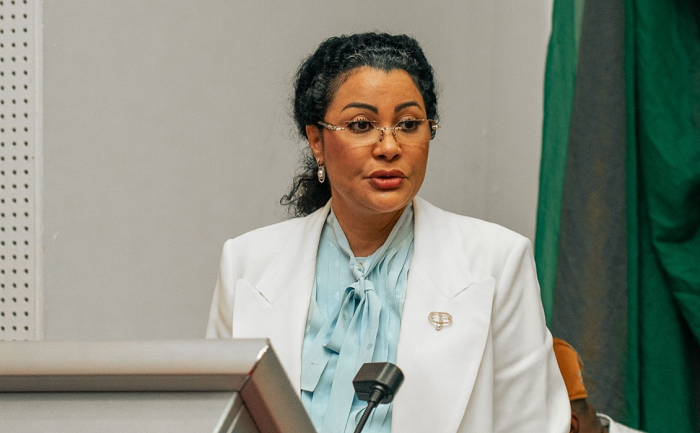
Minister of State for Finance, Dr. Doris Uzoka-Anite, stated this on Tuesday in Abuja during the National Economic Council (NEC) Conference, noting that the new approach has been fully incorporated into the 2026–2030 National Development Plan.

The minister explained that the government has introduced a system called “Investment Budgeting”, designed to reduce risks around major projects and encourage private sector participation. According to Uzoka-Anite, every naira spent by the government under this system could attract three to five times more funds from private investors.
“Our role must evolve decisively from being the primary spender to being an enabler of investments that de-risk and unlock private capital,” she said. “The government alone cannot finance the transformation we seek.”
She highlighted that Nigeria’s development needs, particularly in infrastructure such as roads, power, transport, and housing, far exceed what public funds can cover. Strategic public de-risking, she added, could unlock private investment multipliers critical for accelerated development.

Uzoka-Anite noted that while Nigeria’s economy is showing signs of stabilisation, more needs to be done to achieve the government’s long-term goal of building a $1 trillion economy. She stated that the economy recorded around 4% growth in 2025, but stressed that sustained double-digit growth is required to reach the trillion-dollar target, which must be driven by private investment and deep structural reforms.
On the 2026 fiscal outlook, the minister said government revenue is projected at ₦34 trillion, with the tax-to-GDP ratio expected to rise to 18% once the Nigeria Tax Act 2025 is fully implemented and taxes harmonised across states. She also forecast that inflation could slow to below 13% by the end of 2026, supported by ongoing bank recapitalisation, a positive trade balance, and foreign reserves above $40 billion.

Uzoka-Anite stressed that relying solely on government funding to close Nigeria’s $300 billion infrastructure gap is unrealistic. She noted that, at current allocation rates, it would take over 111 years to mobilise the necessary funds. Through Investment Budgeting, a $100 billion capital pool could potentially generate $278–$400 billion in economic output.

Despite the positive outlook, the minister warned of risks that could slow progress, including oil price fluctuations, food supply challenges, and climate-related shocks. She called for strong policy discipline and closer collaboration between the federal and state governments to ensure that economic stability translates into tangible improvements in living standards.

“We must strengthen federal-state collaboration so that macroeconomic stability translates into better living standards for Nigerians,” Uzoka-Anite concluded.



