

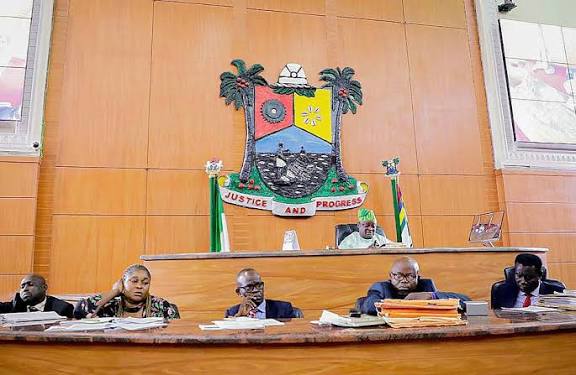
The Lagos State Government is introducing major legal and technological reforms to speed up court processes, particularly in tenancy disputes, and promote faster voluntary compliance with the law while balancing the rights of tenants and landlords.

Attorney General and Commissioner for Justice, Mr Lawal Pedro, SAN, made the announcement during a media briefing with Judiciary Correspondents at the Lagos Chamber of Commerce and Industry (LCCI) in Ikeja.
Pedro highlighted Governor Babajide Sanwo-Olu’s frustration with tenancy cases dragging on in court for up to five years, allowing defaulting tenants to remain in properties without paying rent simply because litigation is ongoing.

He said a new bill currently before the Lagos State House of Assembly seeks to limit tenancy disputes to a maximum of six months. Under the proposed law, courts will no longer serve as protection for non-payment of rent. Tenants may be required to demonstrate proof of settlement of utility bills and service charges before their cases can proceed, creating a fairer system for both property owners and occupants.

In a pioneering move, Pedro announced the Lagos State Criminal Information System, a digital database that tracks every defendant across correctional centres and courts using biometrics.
“Lagos is the only state that has this system today. We have the biometrics of all inmates, whether they are undergoing trial or are convicted,” he explained.

This innovation eliminates instances of missing defendants and ensures immediate identification of anyone entering the criminal justice system.
Addressing misconceptions about the prison population, Pedro clarified that most inmates are not merely awaiting trial but are actively undergoing trial. To reduce overcrowding, the state has:

– Expanded plea-bargaining to encourage defendants to accept deals and shorten trial durations.
– Conducted prisoner release reviews, prioritising those who have served 70 per cent of their sentences and demonstrated reform.
– Introduced a new witness protection and support law to enable faster and safer prosecutions.
In partnership with the Court of Appeal, the state successfully cleared 400 appeals in the Lagos Division within one week, preventing lengthy appellate delays from undermining High Court judgments.

Pedro also emphasised improved access to justice through specialised agencies:
– The Bureau of Public Defender (BPD), offering free legal aid for both civil and criminal matters.
– The Citizens’ Mediation Centre (CMC), now led by a Permanent Secretary, focusing on out-of-court settlements.
– The Domestic and Sexual Violence Agency (DSVA), providing shelter for survivors and pursuing prosecution of perpetrators.

“Our goal is voluntary compliance. It is cheaper, safer, and makes everyone happier. We are building a system where justice is fast, efficient, and effective for every Lagosian,” Pedro concluded.
The reforms aim to decongest the courts, reduce prolonged disputes, protect legitimate investments in property, safeguard tenants from unfair eviction, and strengthen overall confidence in the Lagos justice system.




