

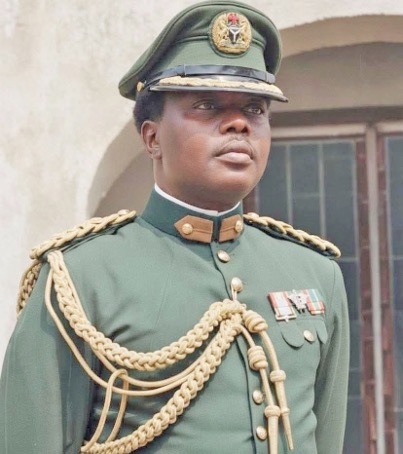
Fifty years ago, on 13 February 1976, Nigeria and Africa awoke to the shocking assassination of General Murtala Ramat Mohammed, the Head of State whose brief tenure of just 180 days left an indelible mark on the continent. Though his time in office was short, his leadership was intense, decisive, and transformative, redefining Nigeria’s role in African liberation and asserting the continent’s moral and political agency.

When Murtala assumed power in July 1975, Africa was still emerging from the shadows of colonial rule. Apartheid persisted in South Africa, Rhodesia resisted majority governance, and Angola and Mozambique were caught in Cold War conflicts. Against this backdrop, Murtala championed the “African Personality,” the idea that Africa must define its own destiny free from external domination. At the 1976 OAU Summit in Addis Ababa, he declared, “Africa has come of age. It is no longer under the orbit of any extra-continental power,” setting the tone for Nigeria’s assertive foreign policy.

Within months, Nigeria recognized Angola’s MPLA government, provided financial and strategic support to liberation movements in Southern Africa, and intensified pressure on apartheid South Africa and Rhodesia. Murtala rejected neutrality in matters of justice, making Nigeria the diplomatic spearhead of African liberation. His administration confronted apartheid, minority rule, and neo-colonial influence with clear and unwavering resolve.

Murtala’s philosophy aligned with the vision of African revolutionaries. He operationalized the calls of Frantz Fanon, Amilcar Cabral, and Kwame Nkrumah, turning Nigeria’s sovereignty into a tool for continental freedom. In just six months, Nigeria became the undisputed diplomatic anchor of Black Africa, Southern African liberation movements gained legitimacy, and the moral narrative shifted to African determination and self-determination.
His governance was characterized by momentum, austerity, and impatience with complacency. Though his life was cut short, the trajectory he set was irreversible. The liberation of Mozambique, the eventual independence of Zimbabwe and Namibia, and the dismantling of apartheid were all accelerated by his decisive action.

Murtala Mohammed embodied the African Personality: the refusal to bow, the courage to lead, and the insistence that Africa speaks in its own voice. His leadership demonstrated that sovereignty without courage is hollow, and that true leadership transforms history.
Fifty years on, Africa faces new forms of dependence—from financial and technological constraints to institutional and market pressures—but the question remains: will Africa define itself? Murtala’s answer still resonates: “Africa has come of age.” His legacy is not just remembered; it continues to guide and inspire.

On this 50th anniversary, we do not simply mourn Murtala Mohammed. We salute him as a leader whose courage, vision, and decisiveness reshaped a continent.




