

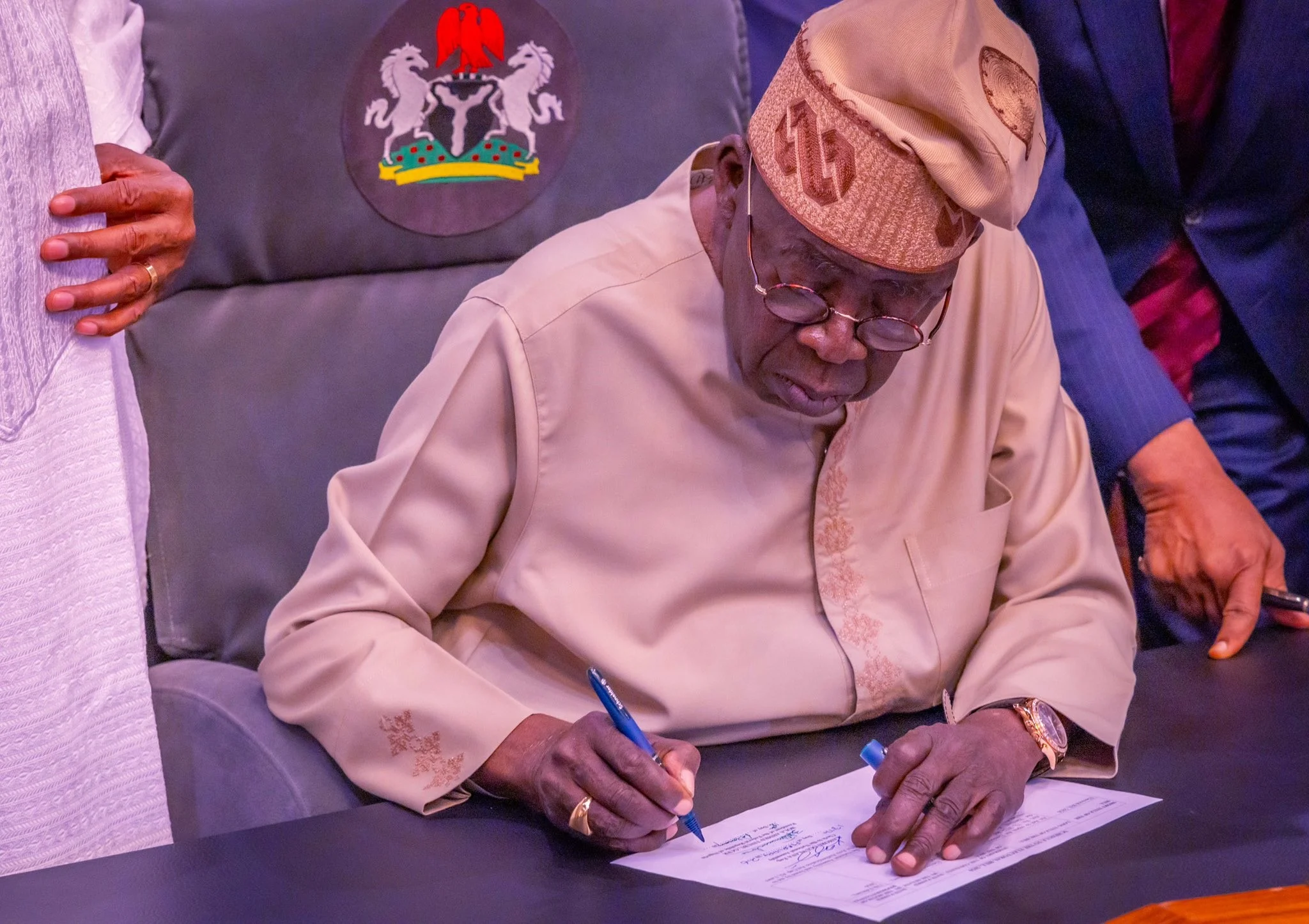
Federal, state, and local governments in Nigeria are expected to see additional revenue allocations of about N14.57 trillion following a recent executive order signed by President Bola Tinubu. The order mandates that royalty oil, tax oil, profit oil, profit gas, and other revenues due under production sharing, profit sharing, and risk service contracts be remitted directly into the Federation Account.

Analysis of 2025 revenue inflows, based on monthly submissions to the Federation Account Allocation Committee (FAAC), shows that the Nigerian National Petroleum Company (NNPC) is projected to remit about N906.91 billion in management fees and Frontier Exploration Fund contributions. Oil and gas royalties totaling N7.55 trillion and gas flaring penalties of N611.42 billion collected by the Nigerian Upstream Petroleum Regulatory Commission (NUPRC) will now also go directly to the Federation Account.

The Nigeria Revenue Service (NRS) will no longer collect Petroleum Profits Tax and Hydrocarbon Tax, which generated N4.905 trillion in 2025. Similarly, the Midstream and Downstream Gas Infrastructure Fund (MDGIF), which recorded N596.61 billion in the same period, will now be governed under public finance regulations. Collectively, these changes affect about N14.57 trillion in revenue streams.
The executive order, which took effect on February 13, 2026, also abolished the 30% Frontier Exploration Fund and stopped the 30% management fee on profit oil and profit gas retained by NNPC Limited. The directive aims to safeguard oil and gas revenues for the Federation and improve remittances into the Federation Account. President Tinubu cited excessive deductions, overlapping funds, and structural distortions as reasons for the reform, noting that revenues must serve Nigerians first and support national priorities such as security, education, healthcare, and energy transition.

The Frontier Exploration Fund, previously used to finance hydrocarbon exploration in Nigeria’s frontier basins—including the Chad, Sokoto, Bida, Benue Trough, and Dahomey basins—will no longer be retained by NNPC. These reforms are expected to shift the revenue landscape significantly while ensuring NNPC operates strictly as a commercial enterprise.
Revenue inflows into the Frontier Exploration Fund and NNPC management fees in 2025 were highly variable, ranging from N6.83 billion in June to N82.61 billion in September, reflecting fluctuations in production and exploration activity. Gas flare penalties and royalties collected under the PIA are now directed to the Federation Account, improving transparency and fiscal oversight.

Energy experts have reacted cautiously. Professor Wunmi Iledare of the Oil, Gas, and Energy Policy Forum described the executive order as a significant fiscal intervention aimed at improving transparency, curbing discretionary retention, and ensuring statutory remittances to all three tiers of government. However, he warned that parts of the order intersect with statutory provisions of the PIA 2021, including the Frontier Exploration Fund, MDGIF, and Production Sharing Contracts, emphasizing that reforms must be carefully sequenced to maintain contractual stability and investor confidence.

The Capital Market Academics of Nigeria (CMAN) has praised the executive order as a “bold and historic” step, correcting a long-standing fiscal imbalance under the PIA. CMAN highlighted that the reforms promote equitable revenue sharing and urged the inclusion of the Chairman of the Revenue Mobilisation, Allocation and Fiscal Commission in the implementation committee to ensure transparency and accountability. The group also called for extending these reforms to Joint Venture assets to maximise national revenue.

Experts agree that the anticipated surge in revenue could provide a major boost to government budgets at all levels, enabling more consistent funding for infrastructure, social services, and economic development, while marking a new phase of fiscal discipline and transparency in Nigeria’s oil and gas sector.




