

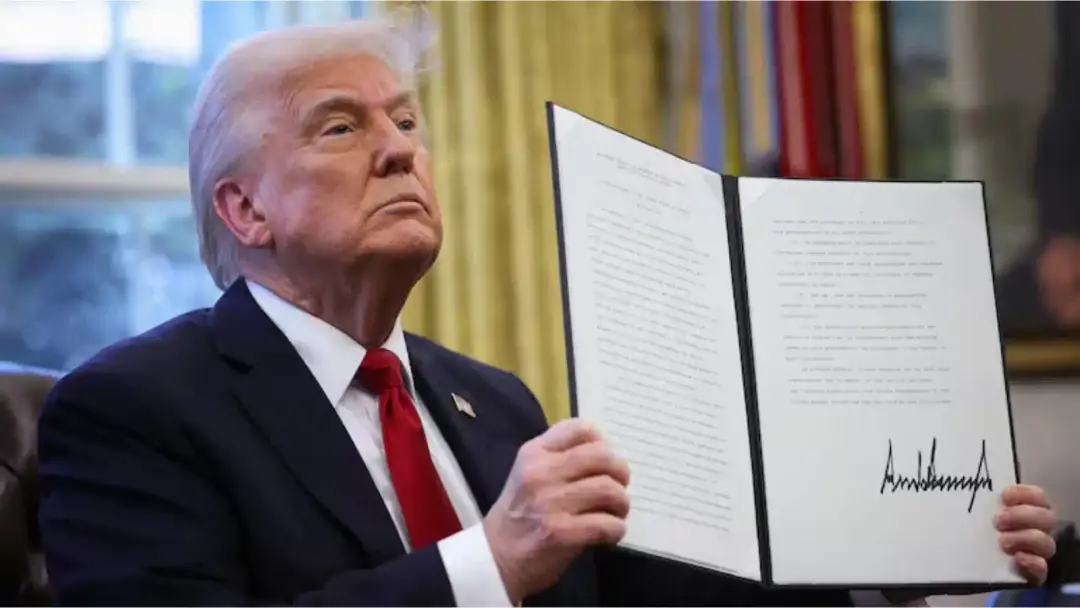
A United States congressional panel established following President Donald Trump’s October 2025 redesignation of Nigeria as a Country of Particular Concern (CPC) has formally submitted its findings to the White House, recommending sweeping diplomatic, military and economic measures tied to allegations of persecution of Christians in Nigeria.

The submission was disclosed by Riley M. Moore, who represents West Virginia’s 2nd Congressional District.
Posting on X, Moore wrote: “Just presented our report on the persecution of Christians in Nigeria to the White House. More to come,” alongside a photograph taken at the White House.

The panel was constituted after President Donald Trump redesignated Nigeria as a CPC under U.S. religious freedom laws — a move with potential implications for sanctions and diplomatic leverage.
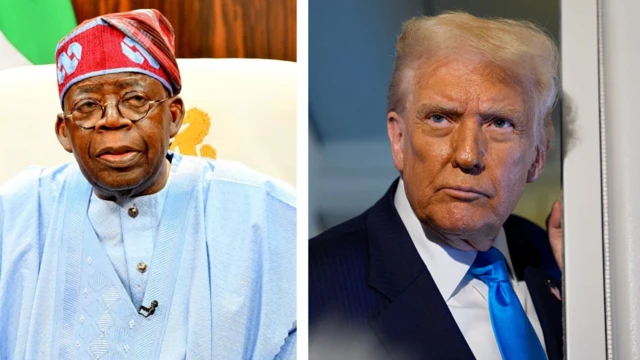
The Report: “Ending the Persecution of Christians in Nigeria”
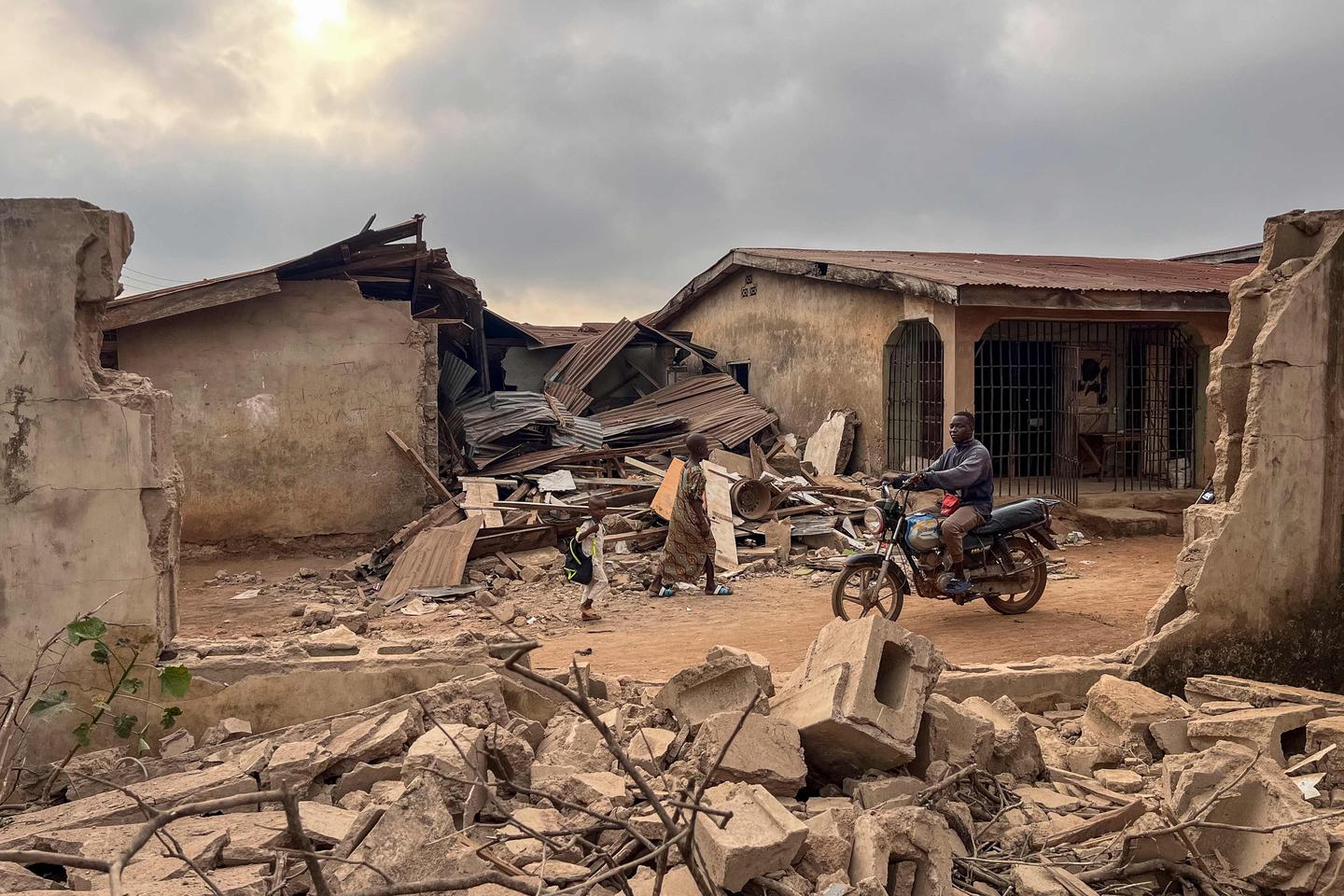
The two-page report, titled Ending the Persecution of Christians in Nigeria, asserts that Nigeria is “the deadliest place in the world to be a Christian” and accuses well-armed Fulani militias and terrorist groups of responsibility for the deaths of “tens of thousands” of Christians over two decades.

It further alleges:
Widespread destruction of churches and schools.
Kidnappings of clergy and civilians.
Use of blasphemy laws in northern states to suppress dissent.
Weak enforcement or political will by Nigerian authorities.
The report states that the CPC redesignation presents a “once-in-a-generation opportunity” to redefine U.S.–Nigeria relations through what it describes as a new strategic partnership.

Key Recommendations.
The panel recommends a bilateral agreement between the U.S. and Nigeria encompassing:
Security and Counterterrorism.
Expanded U.S.–Nigeria military cooperation.
Divestment from Russian military equipment in favour of American systems
Provision of excess U.S. defence equipment.
Development of demobilisation and reintegration programs targeting armed militias.
Consideration of classifying certain Fulani militia groups as Foreign Terrorist Organisations.

Humanitarian and Governance Measures.
Co-funded humanitarian assistance targeting internally displaced persons (IDPs), particularly in the Middle Belt.
Early-warning mechanisms and rapid-response security deployments.
Removal of armed groups from confiscated farmland.
Support for Nigeria’s Ministry of Livestock and ranching reforms.
Sanctions and Diplomatic Pressure.
Visa restrictions for alleged perpetrators.
Public naming of individuals accused of violence.
Implementation of sanctions against groups “participating in or tolerating” violence.
Calls to repeal Sharia criminal codes and anti-blasphemy laws.

Blocking beef and cattle-related exports as leverage against armed herders.
Economic and Financial Oversight.
Enhanced anti-money laundering systems.
Treasury-backed reforms of Nigeria’s financial integrity.
Increased U.S. Development Finance Corporation investments.
A Government Accountability Office (GAO) audit on U.S. aid effectiveness.

Context: Violence in Nigeria.
Nigeria has faced layered insecurity over the past 15 years, including:
Boko Haram insurgency in the North-East.
Islamic State West Africa Province (ISWAP) activity.
Banditry and mass abductions in the North-West.
Farmer–herder clashes across the Middle Belt.
Human rights organisations report thousands of deaths annually from these overlapping conflicts.
However, Nigerian authorities have consistently described the crisis as complex — driven by terrorism, land disputes, climate stress, criminality, and governance gaps — rather than a singular religious war.
The congressional report frames much of the violence in religious persecution terms, a characterisation likely to generate debate within Nigeria’s policy and diplomatic circles.
Diplomatic Implications.
The CPC designation does not automatically trigger sanctions but enables the U.S. administration to impose targeted penalties or negotiate corrective agreements.

If the White House adopts the report’s recommendations in full, potential implications could include:
Heightened diplomatic pressure on Abuja.
Conditional security assistance.
Expanded intelligence oversight.
Economic leverage tied to religious freedom benchmarks.
The proposal to demand repeal of blasphemy laws and Sharia criminal codes touches sensitive constitutional and federalism debates within Nigeria, where states possess considerable legislative autonomy.
Strategic Calculus.
Nigeria remains one of America’s largest African trading partners and a critical regional security actor in West Africa.
It also faces increasing geopolitical competition involving China and Russia.
The report explicitly calls for countering Chinese illegal mining operations and Russian defence influence — signalling that religious freedom concerns intersect with broader strategic competition.
For Abuja, the challenge will be navigating:
Sovereignty concerns.
Security cooperation benefits.
Domestic political sensitivities.
International investment perceptions.
The Nigerian Response.
As of press time, the Nigerian government had not formally responded to the panel’s submission.
Previous administrations have rejected claims of state-sponsored persecution, arguing instead that terrorism and communal violence affect citizens of all faiths.
Security analysts caution that external framing of Nigeria’s crisis purely through a religious lens may oversimplify deeply rooted socio-economic and governance drivers.

The Bigger Question
Will the report reshape U.S.–Nigeria relations, or become another diplomatic flashpoint?
For Nigeria, the stakes are significant:
Security assistance and arms procurement timelines.
Foreign investment confidence.
International religious freedom rankings.
Diaspora and bilateral trade dynamics.
For the United States, the report tests how far religious freedom enforcement will extend when applied to a major African partner.
The White House now holds the report.
Whether it translates into policy shifts, sanctions, or renegotiated cooperation remains to be seen.
One thing is clear: Nigeria’s internal security challenges are no longer just domestic concerns — they are firmly embedded in global geopolitical discourse.
The National Patriots Movement notes the submission of the U.S. congressional report on alleged Christian persecution in Nigeria and urges calm, facts, and strategic diplomacy.
While security challenges are real and demand urgent action, Nigeria’s complexity must not be reduced to a single narrative.
We call on the Federal Government to strengthen accountability, protect all citizens irrespective of faith, and engage Washington constructively to safeguard national sovereignty, security cooperation, and investor confidence.
Dr. Gloria Fraser. MFR.
Headlinenews.news Special Investigative Report.




