

As 9 Million Poorest Nigerian Households Receive Cash Transfers, Experts Say Social Protection Must Deepen for Reform to Truly Deliver
In one of the most significant social protection developments in recent memory, Nigeria has taken a bold step to cushion vulnerable citizens amid sweeping economic reforms.

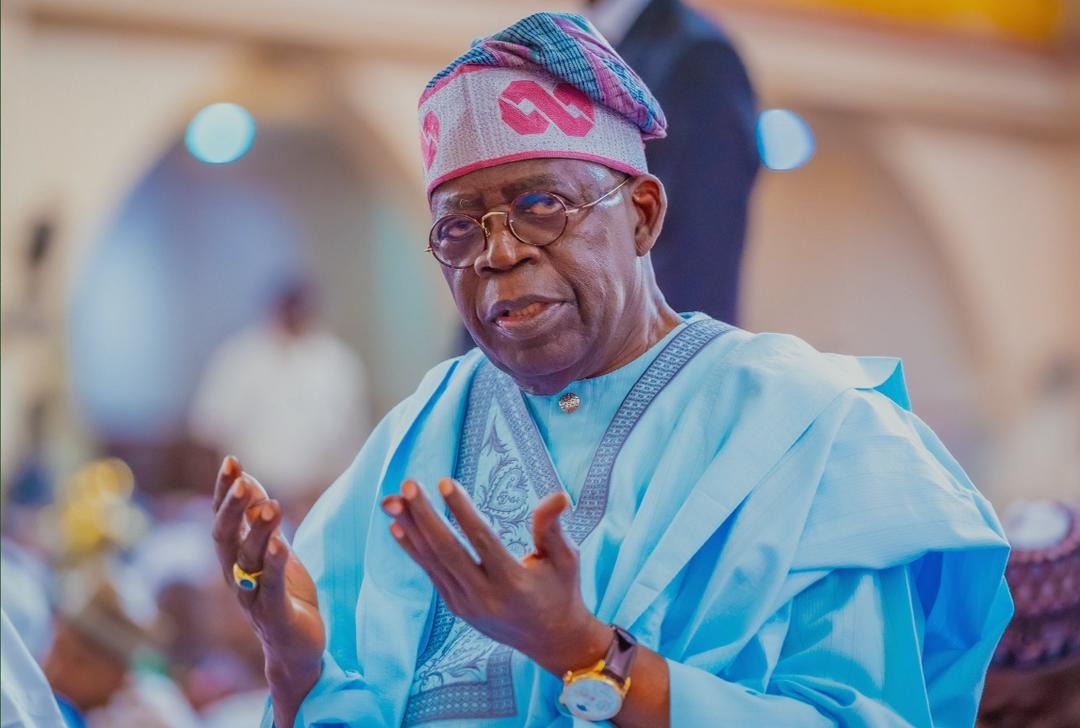
“When growth reaches the poorest households, national stability strengthens,” President Tinubu declared at the recent National Economic Council summit, setting the tone for an economic reform agenda that pairs fiscal restructuring with direct cash transfers aimed at cushioning vulnerable Nigerians and preserving social stability.

The Minister of Finance and Coordinating Minister of the Economy, Mr. Wale Edun, confirmed that nine million of the poorest households nationwide have already received direct cash transfers under a World Bank-supported safety net programme. This figure, representing beneficiaries selected from more than 12 million enrolled Nigerians, was disclosed during a keynote address at the International Development Association’s 20th retrospective launch, where Edun emphasised that “reform must protect the vulnerable.”

Cash transfers are a globally recognised tool used by governments to support households during times of economic transition.
In Brazil, the Bolsa Família programme helped lift millions out of extreme poverty and link financial support to health and school attendance outcomes.
India’s Direct Benefit Transfer (DBT) system digitised welfare payments for over 300 million citizens, slashing bureaucratic leakages and reducing corruption opportunities. Indonesia adopted temporary cash transfers when cutting fuel subsidies to prevent sharp drops in living standards.
Even developed economies like the United States and the United Kingdom deployed emergency cash payments during the COVID-19 crisis to stabilise consumption and mitigate recession risks.

In Nigeria, the impacts of exchange-rate harmonisation and the removal of petrol subsidies have been felt acutely by low-income households whose incomes have not kept pace with rising transport and food costs.
The logic behind direct cash transfers is simple: give targeted support to those most in need so that they can manage shocks without falling deeper into poverty.
But Nigeria’s institutional context presents challenges for trust.
In a corruption-plagued environment where many social programmes have underperformed or been captured by non-eligible elites, citizens remain sceptical about whether funds actually reach their intended targets.

To test the real-world impact, Headlinenews.news conducted interviews with beneficiaries in three states:
In Kaduna State’s Zaria metropolis, market trader Fatima Musa (46) said the transfer—which she received directly into her bank account—helped her stabilise week-to-week trading expenses.
“When food prices jumped after fuel subsidy changes, we struggled to meet daily needs.
The cash payment gave us breathing room to buy essential goods without borrowing,” she told our correspondent.
In Enugu State’s Nsukka region, Mr. Chidi Okafor (53), a cocoa farmer, said the transfer coincided with planting season and enabled him to purchase seedlings and fertiliser.
“I wouldn’t have accessed these inputs at a critical time otherwise. It’s not everything, but it prevented total crop failure for my farm,” he said.
In a rural part of Niger State, widow Hauwa Sani (38) recounted how the support allowed her to pay school fees for her children when local fees surged.
“Without that support last semester, my eldest would have had to drop out,” she said.
These on-the-ground accounts suggest the cash transfers are not merely a headline figure but translating into tangible, if limited, relief for ordinary Nigerians.
Edun’s confirmatory data shows that nearly 60 per cent of enrolments are women, hinting at a pro-poor, gender-sensitive targeting strategy. The integration of digital ID systems and direct electronic payments, the minister said, is helping reduce leakages, improve transparency, and expand trust—critical in a context where social programmes have historically faced credibility deficits.

Still, there are challenges. Nigeria’s social safety-net infrastructure is still nascent compared to countries with decades-old systems.
Coverage remains below the estimated numbers of vulnerable households: recent estimates suggest multidimensional poverty impacts over 130 million Nigerians, meaning the current reach represents only a portion of potential need.
There is also the question of sustainability.
Many of the transfer funds come through concessional financing under the World Bank’s IDA20 replenishment, which mobilised nearly $97.4 billion for the world’s poorest and most vulnerable nations.
How Nigeria plans to sustain and expand this support within its own budget in a tightening fiscal space—and whether these transfers will be institutionalised in annual appropriations—is yet to be fully clarified.

Critics also argue that unless disclosure of beneficiary breakdowns, periodic independent audits, and real-time impact assessments are published, scepticism will persist.
Civil society groups continue to urge full transparency of recipient lists, amounts disbursed, and state-by-state results. In a democracy, such accountability mechanisms are not optional—they are essential for public trust.
Yet, the Tinubu-led administration’s willingness to expand direct support signals a shift from reactive to structured social policy. Coupled with digital identity integration and banking sector reach, the approach presents a template that, if refined and scaled, could form the backbone of Nigeria’s social safety net in coming decades.

Importantly, the world’s largest economies and emerging nations alike have embraced cash transfers not as charity but as sound economic instruments that stabilise consumption, protect human capital, and maintain social cohesion during reform periods.
Nigeria’s experiment, positioned at the intersection of reform and relief, could yield similar dividends—if implementation quality keeps pace with intention.
In the final analysis, the milestone of nine million households served is evidence of progress, not perfection.
It underscores a government conscious that economic reform without human cushioning risks social fracture.
Whether this episode becomes a turning point in Nigeria’s social protection history will depend on transparency, expansion, and measurable outcomes in the months and years ahead.
The National Patriots commend the Federal Government for confirming that nine million of Nigeria’s poorest households have received direct cash transfers, as disclosed by the Minister of Finance. In a reform season, cushioning the vulnerable is not optional but necessary. While transparency and independent audits must continue to strengthen trust, this intervention reflects people-focused governance aligned with progressive ideals. Reform must be firm, but compassion must remain visible. Nigeria’s stability depends on both economic correction and social protection.
Princess Gloria Adebajo-Fraser MFR.
Headlinenews.news Special Report.




