

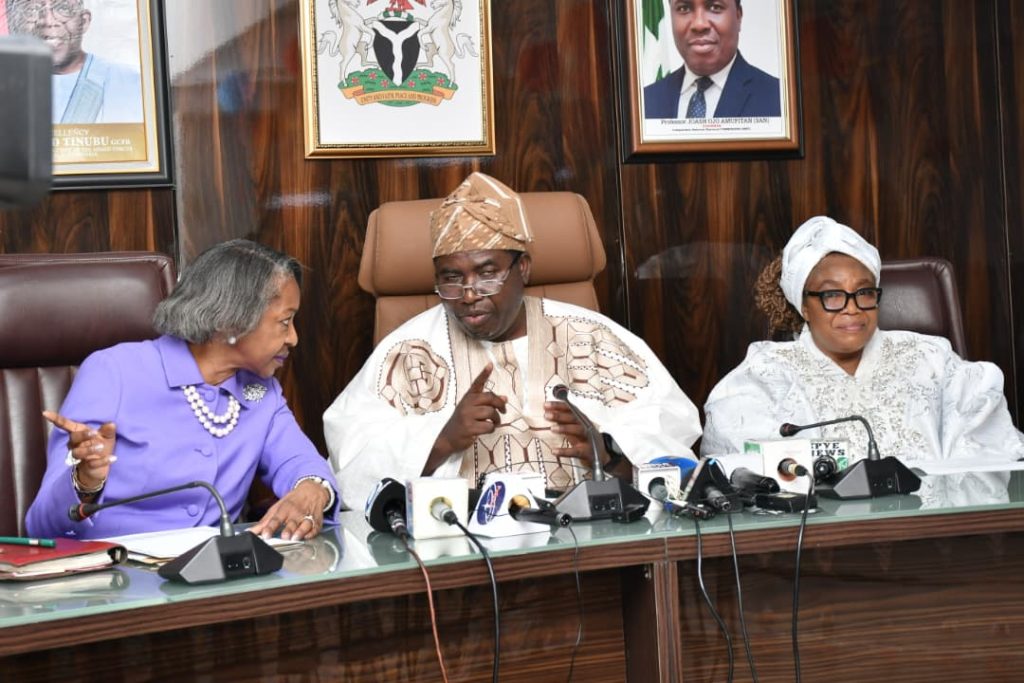
The Independent National Electoral Commission (INEC) has assured Nigerians that the technical challenges witnessed during the 2023 presidential election will not be repeated in 2027.
INEC Chairman, Joash Amupitan, gave the assurance in Abuja during the Citizens’ Townhall on the Electoral Act 2026. He expressed confidence that the 2027 general election would set a new benchmark for credibility and transparency in the country’s electoral history.

The commission recently released a revised timetable, fixing the presidential and National Assembly elections for January 16, 2027, while governorship and state Houses of Assembly elections will hold on February 6, 2027. The adjustment followed amendments to the Electoral Act signed into law by President Bola Ahmed Tinubu.
A major point of debate has been Section 60(3) of the 2026 Electoral Act, which guarantees electronic transmission of results. Opposition parties had criticised aspects of the law, describing them as unfavourable ahead of the 2027 polls.

Addressing concerns over past glitches, Amupitan revealed that INEC plans to conduct a mock presidential election to thoroughly test its result-transmission infrastructure across states. He acknowledged that while the BVAS technology was tested during off-cycle governorship elections, it was not fully stress-tested nationwide before the 2023 presidential election. According to him, the commission is determined to eliminate such lapses before 2027.

He admitted that while achieving perfection may be difficult, INEC is committed to delivering a near-flawless process. Logistics and result management were identified as key operational challenges, with network coverage—rather than electronic transmission itself—described as the primary obstacle.
Beyond election-day preparations, INEC has commenced a broad review of its regulations and guidelines for political parties to align them with the Electoral Act 2026. The reform process aims to reduce pre-election litigation, strengthen internal party democracy, and enhance compliance with legal standards. The review involves commissioners, legal experts, and institutional stakeholders.

The exercise is supported by the Westminster Foundation for Democracy, whose Nigeria Country Director, Adebowale Olorunmola, described the initiative as a significant step toward reinforcing democratic institutions.
Meanwhile, Speaker of the House of Representatives, Abbas Tajudeen, defended the National Assembly’s decision to retain both electronic and manual transmission of election results in the amended law. He argued that limited internet penetration and inconsistent electricity supply across parts of the country make a purely electronic system impractical. According to him, adopting a hybrid approach would prevent voter disenfranchisement and reduce apathy.
The All Progressives Congress (APC) in Ondo State welcomed the revised election timetable, describing it as fair and well-structured. The party dismissed allegations by the African Democratic Congress (ADC) that the schedule was designed to favour the ruling party.

On its part, the ADC announced the launch of a free nationwide online membership registration platform to comply with the Electoral Act’s digital register requirement. The party stated that the initiative aims to promote inclusivity while strengthening internal processes ahead of the 2027 elections.
Overall, INEC reiterated that credible elections begin long before polling day, stressing that institutional reforms and transparent political party operations are essential to restoring public trust in Nigeria’s democracy.




