

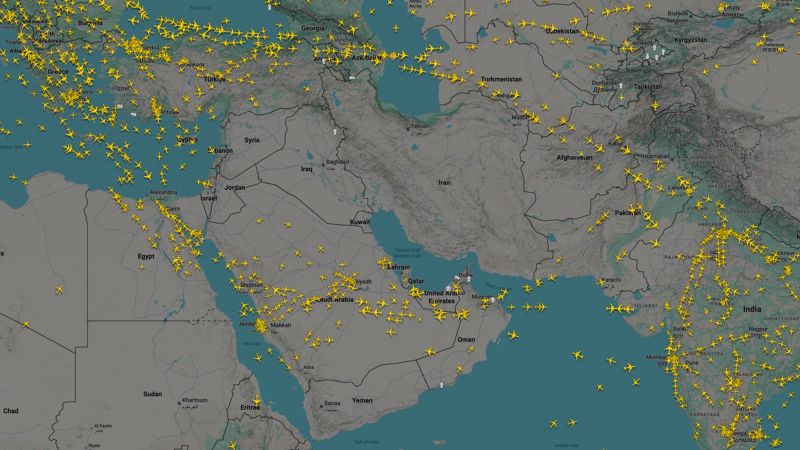
As tensions escalate in Iran, major Middle Eastern airspace has closed or emptied, creating significant disruption for global aviation. Long-haul flights between Europe and Asia, which normally transit through the region, are being rerouted, resulting in longer travel times, higher fuel consumption, and operational complications for airlines.

Airline hubs in the region, including Dubai International, Hamad International, and Zayed International Airports, along with carriers like Emirates, Qatar Airways, and Etihad, rely on these air routes to connect East and West. When this airspace closes, flights are forced north or south through narrower corridors, causing congestion, delays, and additional logistical challenges.

Tony Stanton, director at Strategic Air, described the situation as a “collapsed bridge” in global air travel, emphasizing that airlines require permission to overfly countries and must carefully plan new routes under air traffic control. Airlines have risk-monitoring systems to anticipate geopolitical disruptions, but prolonged closures still strain these operations.

Extended reroutes increase fuel usage, crew requirements, and sometimes necessitate additional stops. For example, Japan Airlines Flight JL43 from Tokyo to London now flies east over the Pacific and North America, adding 2.4 hours and roughly 5,600 extra gallons of fuel per flight—a 20% increase. War risk insurance can cover some costs, but premiums may rise as perceived risk increases.

Crew and aircraft displacement also adds complexity. Airlines deploy standby crews and aircraft, cancel flights when necessary, and house stranded staff in hotels. Emirates has partially resumed services, while Austrian Airlines evacuated crew from Doha to Vienna.

Industry experts warn that if the Iran crisis persists, airlines may incorporate higher operating costs into ticket prices. Nevertheless, major airlines continue to prioritize safety, relying on structured intelligence, risk assessments, and government guidance to operate flights securely.

The length of the disruption remains uncertain, and recovery will depend on the reopening of affected airspace. However, analysts stress that travelers can trust major airlines’ systems and protocols to manage these challenges.




