

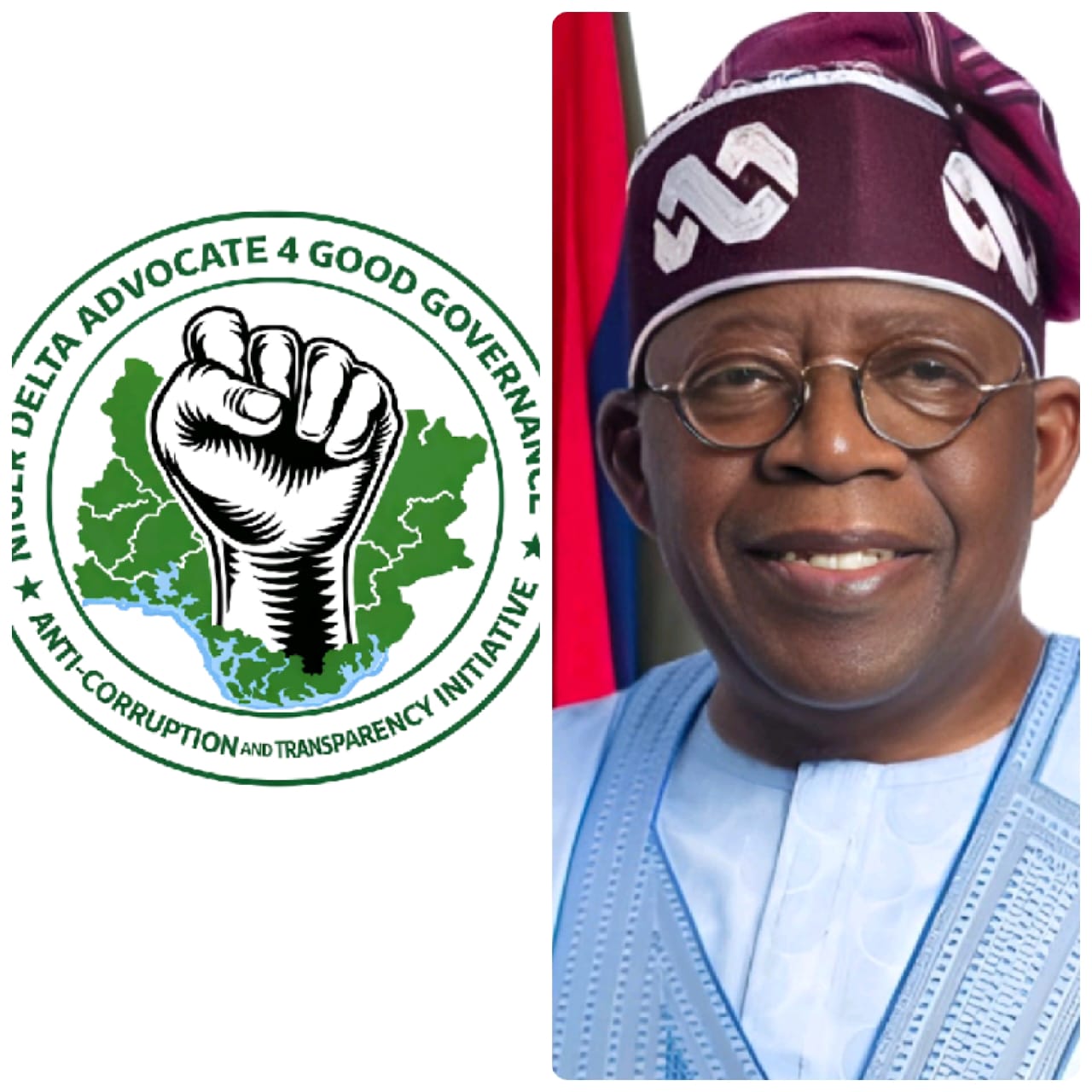
A Niger Delta advocacy group has petitioned President Bola Tinubu, raising concerns about the alleged exclusion of Isoko ethnic nationality stakeholders from pipeline surveillance operations in their host communities, warning that continued marginalisation could spark tensions and threaten oil production stability in the region.

In an open letter dated March 5, 2026, and addressed to the President, the Niger Delta Advocate for Good Governance, Anti-Corruption and Transparency Group—through its National President and Coordinator, Captain Momoh Ebiowei Erickson—called for urgent presidential intervention to ensure equity, fairness, and inclusive participation.

The group emphasized that the petition was made “in the spirit of patriotism, transparency and deep concern for peace, equity, fairness, justice and stability within the Niger Delta region,” and was not intended to malign any individual, company, or ethnic group.

The controversy centres on the pipeline surveillance contract awarded to Tantita Security Services Nigeria Limited. The stakeholders claim that despite repeated engagements, Isoko youths and community leaders have been systematically sidelined from surveillance roles covering pipelines traversing their land.

According to the petition, representatives led by Karo Edor have held multiple meetings with NNPC Limited officials to discuss inclusion structures, submitted petitions to the Senate Committee on Public Petitions during the 9th National Assembly, and participated in discussions in Abuja—yet no meaningful participation has materialized.

The group noted that the Federal Government expanded the use of private pipeline surveillance contractors in 2022 under former President Muhammadu Buhari, with support from then Minister of State for Petroleum Resources Timipre Sylva and former NNPC GCEO Mele Kyari. The initiative was intended to curb crude oil theft and vandalism, which had driven production down to around 900,000 barrels per day at the time.

However, the advocacy group argued that the programme has fallen short of expectations, with Nigeria consistently failing to meet OPEC production quotas despite the multi-billion-dollar contracts.
The petitioners warned that perceived exclusion in Isoko land—and similar grievances in other areas such as Itsekiri, Kalabari, and Okrika communities—could reignite unrest in the oil-rich region.
“This is not a threat,” the statement read. “It is a warning based on historical realities in the Niger Delta.”

The group urged President Tinubu to convene a high-level stakeholder dialogue involving traditional rulers, ethnic nationality leaders, the Host Communities of Nigeria Producing Oil and Gas, and relevant federal agencies including NNPC and the Nigerian Upstream Petroleum Regulatory Commission.
They also called for a transparent review of the surveillance framework in line with the Petroleum Industry Act (PIA), which emphasizes the role of host communities in safeguarding oil and gas infrastructure.

“Stability must not only be measured in barrels per day,” the group added. “It must also be measured in justice, inclusion and peace.”
The petition followed an emergency annual stakeholders’ meeting held in Port Harcourt, Rivers State, to assess governance, anti-corruption indices, and regional issues in 2025.
The group expressed hope that swift presidential action would prevent renewed agitation, protect national oil output targets, and promote equitable development in the Niger Delta.




