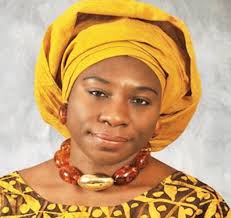
Ogun State has a history of women holding high offices, producing female Speakers, Chief Judges, and three deputy governors since 1999. Yet, the governorship has remained elusive for women, a challenge mirrored across Nigeria. This is changing as female politicians are now stepping forward with renewed determination and experience to vie for the state’s top position.
Over the years, several women have attempted the governorship but faced obstacles including structural barriers, limited party support, and societal biases. Trailblazers like the late Chief (Mrs.) Titi Ajanaku, Nigeria’s first elected female council chairman, ran multiple times in the early 2000s and 2011 but could not break the governor’s glass ceiling. Ajanaku’s work in promoting internal party democracy and women’s rights earned praise from former President Olusegun Obasanjo, who described her as a role model and source of inspiration for Nigerian women.

Other notable female aspirants include Dr Jackie Adunni Kassim, who contested in 2019 under the United Democratic Party (UDP) and sought the New Nigeria Peoples Party (NNPP) ticket in 2023 before stepping down amid controversy.
Three Women Eye APC Ticket for 2027
Looking ahead to the 2027 elections, three women have emerged as frontrunners for the All Progressives Congress (APC) governorship ticket:
Senator Iyabo Obasanjo – Daughter of former President Olusegun Obasanjo, Iyabo recently returned to active politics after 15 years abroad. She previously represented Ogun Central Senatorial District (2007–2011) and served as Commissioner for Health in the state. Iyabo officially joined the APC through the e-registration exercise in Ibogun, Ifo Local Government Area, and has declared her intention to run. She cites a desire to fill governance gaps and bring her expertise to the state. Advantages include her political pedigree, grassroots support, and prior experience in public service. However, analysts note challenges such as late entry into the race, her father’s association with the opposition, religious considerations, and the longstanding agitation for power shift to Ogun West.

Deputy Governor Noimot Salako-Oyedele – Hailing from Ogun West, Salako-Oyedele is a public health engineer and real estate expert. She has been deputy governor since 2019 and is reportedly positioning herself to succeed Governor Dapo Abiodun in 2027. Advantages include regional backing and being a Muslim in a region advocating leadership from Ogun West. Her drawbacks include limited grassroots presence and competition from established male politicians in the region.
Modele Sarafa-Yusuf – A pioneering journalist and Africa’s first female sportscaster, Sarafa-Yusuf later served as Special Adviser on Information to Governor Abiodun. She has formally declared her governorship ambition for 2027, presenting herself as “the safest option” who would govern with discipline, consultation, and respect for institutions. She comes from Ogun East, the same senatorial district as the current governor, which could be a political disadvantage.
Analysts Weigh In
Prof. Emmanuel Ojo, a political scientist, sees the three women’s ambitions as a positive step for democracy and a potential breakthrough for women in Nigerian politics. He encouraged women to unite behind the most capable candidate if a party nominates a female contender, noting that education, experience, and resources are not the barriers—cultural biases are. “The cultural aspect is the problem in our society. But one day someone will break the jinx, and I hope it is from Ogun State,” Ojo said.
As the 2027 elections approach, these three women are setting the stage for what could be a historic moment in Ogun politics, challenging long-held norms and inspiring a new generation of female leaders.