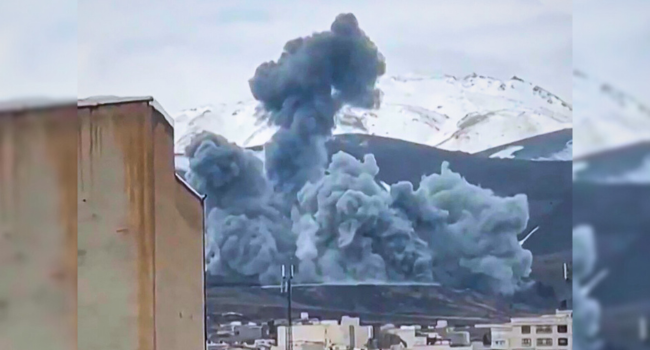
Israel launched a fresh wave of strikes on Tehran and Beirut on Tuesday, while explosions in Baghdad signaled that Iraq is being drawn deeper into the widening Middle East conflict, which is already shaking global economies.
Tehran, which has faced near-daily bombardment since the war began on February 28 following joint US-Israeli attacks, was again targeted. Israel said the strikes hit what it described as “terror regime infrastructure.”
Now in its third week, the war has killed hundreds and expanded beyond its initial fronts, with Iran launching retaliatory strikes on Gulf countries and Israel intensifying attacks in Lebanon.
In Beirut, Lebanese state media reported that Israeli airstrikes at dawn struck a residential building in the southern suburbs—an area known as a stronghold of Hezbollah. The violence has triggered a humanitarian crisis, with authorities saying over one million people have been displaced since early March. More than 130,000 are currently sheltering in hundreds of temporary camps.

Lebanon was pulled into the conflict after Hezbollah fighters—backed by Tehran—attacked Israel following the killing of Iran’s Supreme Leader, Ayatollah Ali Khamenei, at the start of the war.
Iraq is also increasingly caught in the crossfire. Early Tuesday, rockets and drones targeted the US embassy in Baghdad, while another strike killed four people at a location believed to be housing Iranian advisers. Air defense systems intercepted some of the attacks, but a drone strike caused a fire at a luxury hotel in the heavily secured Green Zone.
Beyond the battlefield, the war is sending shockwaves through the global economy. Oil prices have surged by more than 40 percent since the conflict began, driven by disruptions in supply and repeated attacks on key oil facilities, including sites in the United Arab Emirates and southern Iraq.
The Strait of Hormuz—through which about a fifth of the world’s oil passes—has been severely affected, with tanker traffic disrupted. The situation has raised fears of prolonged instability in global energy markets.

US President Donald Trump has called on allied nations to join efforts to secure the vital waterway, urging quick and strong participation. However, several countries, including the United Kingdom, Germany, Japan, and others, have shown reluctance to commit to military involvement.
European leaders have instead pushed for restraint, especially regarding Israel’s operations in Lebanon. Still, Israeli President Isaac Herzog has insisted that efforts to eliminate Hezbollah should be fully supported.
Meanwhile, Iran has taken a defiant stance. Its foreign minister said the country is prepared to continue the war for as long as necessary, warning that Iran will defend itself without hesitation.
The conflict has now spread across multiple countries, with Iran reportedly launching hundreds of missiles and thousands of drones. Casualty figures continue to rise, with over 1,200 deaths reported in Iran alone, although the numbers remain unverified.
Despite the ongoing violence and widespread disruptions, some parts of Iran are attempting to maintain normal life, with markets and businesses reopening in Tehran ahead of the Persian New Year.
The United Nations estimates that up to 3.2 million people have been displaced within Iran, highlighting the growing humanitarian toll of a war that shows no signs of slowing down.