

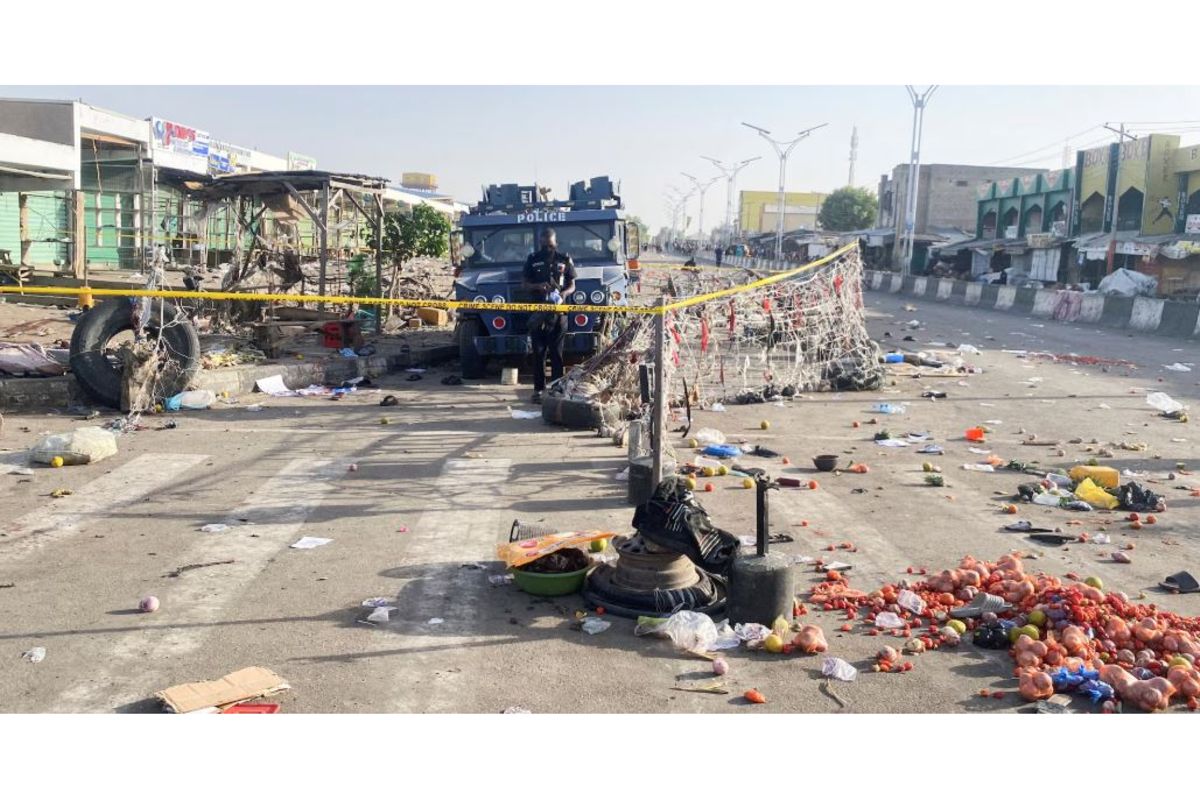
President Bola Tinubu has described the recent attacks in Maiduguri as “final desperate acts” by militants, but security experts say the reality may be far more troubling.
Analysts argue that the coordinated suicide bombings in Maiduguri—one of the most heavily fortified cities in Nigeria’s northeast—point to growing strength among insurgent groups rather than weakness. They say the ability to strike such a strategic location highlights serious intelligence gaps and the continued operational capacity of Islamist militants.
The attack has also raised fresh concerns about the complexity of the insurgency, which has lasted over 17 years, killing tens of thousands and displacing millions. It remains unclear which group carried out the bombings, though suspicion falls on factions like Boko Haram and Islamic State West Africa Province (ISWAP).

Some experts believe there may have been coordination between the rival groups, given the recent surge in attacks across the region. Ikemesit Effiong, a partner at SBM Intelligence, said the incident signals growing confidence among militants.
“We have to see this as the groups showing confidence in their ability to carry out attacks,” he said, warning that the Maiduguri bombings could mark the beginning of a wider wave of violence across the northeast.
In response, President Tinubu approved additional military support and equipment, reiterating his administration’s commitment to defeating insurgents—echoing promises made by previous governments.
Nigeria has been battling Islamist insurgency since 2009, when Boko Haram first emerged in Maiduguri with the aim of establishing an Islamic state. Despite years of military operations, the group has splintered into factions, with ISWAP becoming one of the most dominant, controlling parts of rural northeastern Nigeria.

Security analysts say while the military largely controls urban centres, militants maintain a strong presence in rural areas and often regroup after operations. Even successful offensives tend to yield only temporary gains, as insurgents withdraw and later return.
The Maiduguri attack, described as the deadliest suicide bombing in years, has further exposed possible intelligence failures. Experts question how multiple explosives were moved or assembled within a city that hosts key military installations.
According to analysts, the ability to carry out coordinated strikes in such a location sends a symbolic message—that no area is entirely secure.
Meanwhile, the involvement of foreign support, including assistance from the United States military through intelligence sharing and targeted strikes, has added another layer to the conflict. While it has helped disrupt some militant activities, experts warn it could also fuel extremist narratives and aid recruitment.
As attacks continue to spread beyond the northeast into other parts of the country, analysts say the insurgency remains far from over, with militants adapting quickly and maintaining the ability to strike when least expected.




