

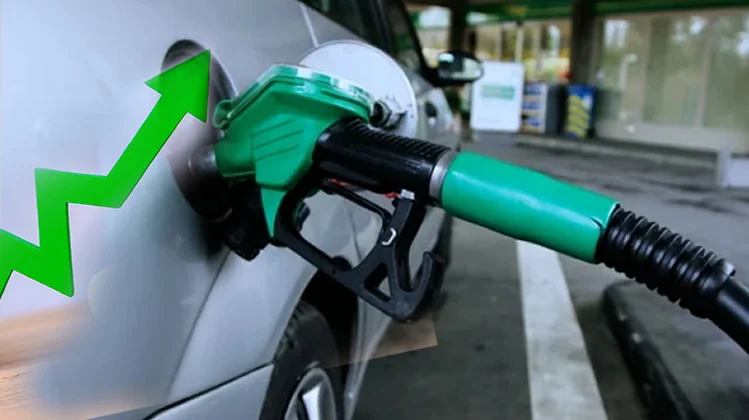
Nigeria’s reliance on imported petrol continued throughout 2025, with oil marketers spending N8.96 trillion on Premium Motor Spirit (petrol) imports despite increased investment in domestic refining.

Data from the National Bureau of Statistics (NBS) revealed that petrol remained one of the country’s top imported commodities, reflecting persistent gaps in the downstream sector. While import expenditure declined from N15.42 trillion in 2024 to N8.96 trillion in 2025—a 41.9% reduction—it was still 19.3% higher than the N7.51 trillion spent in 2023, after the removal of the fuel subsidy.

This trend persisted even as domestic refineries, including the Dangote Petroleum Refinery and state-owned facilities, ramped up production. In 2025, total petrol consumption was 18.97 billion litres, with imports supplying 62.5% (11.85 billion litres) and domestic refineries contributing 37.5% (7.54 billion litres).
Quarterly data showed fluctuating import values: N1.76 trillion in Q1, rising to N2.38 trillion in Q2, dropping to N1.29 trillion in Q3, and surging to N3.54 trillion in Q4. The fourth-quarter spike accounted for nearly 40% of total annual imports, highlighting ongoing supply pressures and seasonal demand swings.

Nigeria sourced petrol from multiple countries, including the Netherlands, Brazil, the United States, Belgium, and Togo, underscoring the global nature of its fuel supply chain. Notably, Togo was a key supplier in the ECOWAS region, while the Netherlands and Brazil dominated international shipments.
Energy analysts warn that the continued dependence on imports, despite growing refining capacity, raises concerns about energy security, foreign exchange strain, and market sustainability. Kelvin Emmanuel, Managing Partner at Energy Consulting Practice, criticized the Federal Government for maintaining tight control over licensing under the Petroleum Industry Act, limiting refiners’ access to crude supply. He also noted that the Dangote Refinery still imports roughly 10 million barrels of crude monthly out of 18 million barrels processed.

Emmanuel suggested the government establish a strategic petroleum reserve to support domestic refining and reduce reliance on foreign supply. Analysts agree that addressing these structural issues is vital for Nigeria to achieve energy independence and align upstream resources with downstream capacity.
Despite being Africa’s largest oil producer, Nigeria continues to import a majority of its refined fuel, highlighting the urgent need to strengthen domestic refining and reduce reliance on external sources.




