Empires prepare to dominate.
Nations under threat prepare to endure.


For decades, global military thinking assumed a predictable pattern—superior force overwhelms weaker states through speed, precision, and command decapitation.
Iraq in 2003 became the defining case study.

A regime collapsed not because every soldier was defeated, but because its command structure was dismantled.
Iran watched. And learned.
Long before its current tensions with the West hardened into routine geopolitical friction, a different kind of military doctrine began to take shape within the Islamic Revolutionary Guard Corps (IRGC).
It was not built around winning wars quickly.
It was designed to ensure Iran could never be defeated completely.
At the center of this evolution was Major General Mohammad Ali Bagheri, a strategist shaped by the brutal realities of the Iran–Iraq War (1980–1988)—a conflict that cost over a million lives and exposed the vulnerabilities of centralized command.
The lesson was clear: when leadership collapses, armies follow.

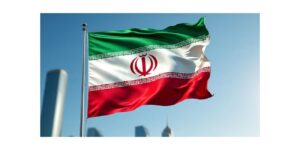
Iran chose a different path.
Rather than building a traditional hierarchical military structure, Iranian planners developed what is now widely referred to as the “mosaic doctrine”—a decentralized system of command that transforms geography into strategy.
Iran is divided into more than 30 provinces.
Under this doctrine, each province functions as a semi-autonomous military unit, complete with localized command structures, operational authority, and logistical capabilities.
The IRGC reorganized itself into territorial commands, each capable of independent action without waiting for central directives.
In effect, the country became a network of battle-ready nodes.

This is not theoretical.
Estimates suggest Iran maintains hundreds of thousands of personnel within the IRGC and affiliated Basij forces, many of whom are embedded within local communities.
These are not just soldiers—they are distributed assets, positioned across terrain that ranges from mountainous strongholds to urban centers and critical oil infrastructure.
The logic is simple, but powerful.
If Tehran is cut off, the war does not stop.
If leadership is eliminated, command continues.
If communication fails, action begins.
This stands in sharp contrast to conventional Western military doctrine, which relies heavily on centralized coordination, technological superiority, and unified command chains.
In systems like those of the United States or NATO, disruption at the top can create temporary operational paralysis.
Iran’s model eliminates that vulnerability—but introduces another.
Control.
Military historians often compare such decentralized systems to guerrilla warfare at scale. It borrows elements from insurgent doctrine—flexibility, local autonomy, adaptability—but embeds them within a national defense framework.
China’s concept of “People’s War,” Vietnam’s resistance strategy, and even aspects of Hezbollah’s operational structure reflect similar thinking.
But Iran has taken it further—formalizing decentralization into doctrine.
In war theory, this is resilience.
In practice, it is controlled fragmentation.
Recent assessments indicate that mid-level commanders within Iran’s structure are empowered to make real-time battlefield decisions, even in the absence of senior leadership.
This creates speed and unpredictability—two advantages against technologically superior adversaries.
But it also raises a fundamental question.
Can a system designed to fight without permission also stop on command?
History offers caution.
From Afghanistan to Libya, decentralized armed networks have often outlived the conflicts that created them.
What begins as strategic resilience can evolve into operational autonomy beyond political control.
Iran’s planners are aware of this paradox.
Yet they have accepted it as the price of survival.
Because for Iran, the greater risk is not losing control.
It is losing continuity.

The mosaic doctrine ensures that no single strike, no matter how precise, can end the fight.
It transforms the nation into a layered defense system—difficult to penetrate, harder to dismantle, and nearly impossible to silence entirely.
But there is a deeper implication.
This is not just military planning. It is political signaling.
It tells adversaries that escalation will not produce quick victories.
It warns that conflict will be prolonged, dispersed, and costly.
It redefines deterrence—not as the ability to strike first, but the ability to endure indefinitely.
And in today’s geopolitical climate, where precision warfare dominates strategic thinking, that message carries weight.
The world has long understood how empires fight.
What it is still learning is how nations prepare never to be defeated.
Because in a system where every province is trained to resist, every commander empowered to act, and every region prepared to continue—
war does not end when leadership falls.
It simply changes shape.
And sometimes, the most difficult order in such a system is not to begin the fight—
but to bring it to a close.
The National Patriots note that Nigeria’s evolving security challenges demand a shift from over-centralised command structures to more resilient, decentralised operational frameworks. While not replicating Iran’s model wholesale, elements of the mosaic doctrine—localised intelligence, empowered regional commands, and rapid response autonomy—offer practical lessons. A nation as vast and diverse as Nigeria must build a security architecture that can withstand disruption, respond instantly, and sustain operations even under extreme pressure.
Dr. Amiida Fraser.
Headlinenews.news Special Investigative Report