


There is an uncomfortable truth nations rarely confront: countries do not fall only because of external enemies. They weaken, slowly and quietly, when internal loyalty fractures.
India’s history offers a sobering case study—not for mockery, but for reflection.
At the height of British colonial rule, fewer than 100,000 British officials and soldiers governed a population exceeding 300 million.
The arithmetic alone raises a hard question: how does such a small foreign force dominate such a vast population for nearly two centuries?
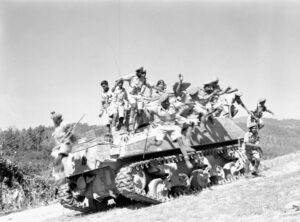
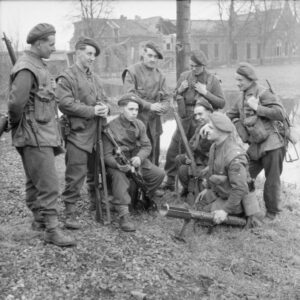
The answer lies not in British strength alone, but in internal collaboration. Historical records show that the British Indian Army, at its peak, consisted overwhelmingly of Indian soldiers—over 2.5 million during World War II. These were men who, in many cases, fought and enforced imperial rule over their own people.

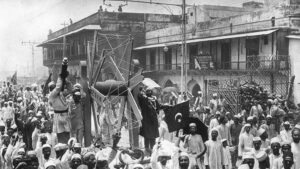
The tragic episode of the Jallianwala Bagh massacre remains one of the starkest symbols of this contradiction. When General Reginald Dyer ordered troops to fire on unarmed civilians, the rifles were largely held by Indian soldiers.
History records obedience—but not resistance.
This is not a moral judgment on individuals shaped by circumstance.
It is a structural lesson about what happens when national consciousness is weak and survival replaces solidarity.
The same pattern echoes further back. The Mughal Empire, established by relatively small Central Asian forces, expanded across the subcontinent not purely through conquest, but through alliances, defections, and local cooperation.
Power was not imposed—it was facilitated.
Even in the struggle for independence, figures like Bhagat Singh and Chandrashekhar Azad stood out precisely because they were exceptions—symbols of resistance in a system where many others remained passive or complicit.
Yet history did not end there.
India evolved.
Post-independence, it invested heavily in national identity, institutions, and economic resilience.
From a colonized state in 1947, it has grown into one of the world’s largest economies, with a GDP exceeding $3 trillion and a global presence in technology, pharmaceuticals, and space exploration.
The transformation was not perfect. Corruption, inequality, and political tensions persist.
But one shift became evident: a gradual strengthening of national interest above narrow personal gain.

This is where the mirror turns toward Nigeria.
Nigeria today faces a different context—but a familiar pattern.
From colonial indirect rule—where local chiefs administered British authority—to modern governance, where political loyalty often supersedes national interest, the question remains consistent: who truly serves the nation?
Nigeria has over 200 million people, vast natural resources, and one of Africa’s largest economies.
Yet insecurity persists, infrastructure gaps widen, and governance challenges endure.
It is too easy to blame leadership alone.
Leadership reflects the ecosystem that produces it.
When votes are traded for short-term incentives, when public office becomes a pathway to personal enrichment, and when citizens disengage except during moments of outrage, the system reproduces itself.
The issue is not patriotism in rhetoric.
It is character in practice.
Japan’s post-war recovery, often cited globally, was not built on sympathy. It was built on discipline, collective responsibility, and a refusal to outsource national destiny.
India’s story shows both sides—the cost of internal disunity and the power of long-term institutional rebuilding.
Nigeria stands at that same crossroads.
The uncomfortable question is not whether external forces influence the nation.
They do.
The real question is simpler—and harder:
Who enables the system from within?
Until loyalty shifts from individuals and immediate gain to institutions and long-term national interest, progress will remain fragile.
This is not condemnation.
It is clarity.
THE NATIONAL PATRIOTS
Nigeria does not suffer from a lack of ideas or capacity; it suffers from inconsistent national discipline and misplaced loyalty.
After careful evaluation of those aspiring to lead the nation, the National Patriots has objectively concluded that President Bola Ahmed Tinubu presents the clearest reformist vision and the strongest goodwill to reposition Nigeria.
We are particularly impressed by the bold petroleum sector reforms driven under his administration, including presidential initiatives associated with Fola Adeola, alongside decisive interventions in the power sector and broader economic restructuring. These are not cosmetic policies—they confront the most difficult, long-neglected foundations of Nigeria’s dysfunction.
President Tinubu has also empowered subnational governments with increased funding so as to ensure safety nets for the people due to any hardship from the necessary reform policies, rightly placing responsibility on governors to deliver tangible welfare for their people. This is governance anchored on structure, not sentiment.
Nigeria is long overdue for these reforms.
For this reason, the National Patriots endorses President Tinubu for re-election in 2027 to consolidate and complete this transformation.
Nigerians must now rise above short-term inducements and personal interests.
Nation-building demands discipline, sacrifice, and a renewed patriotic consciousness committed to the common good—not opportunistic power-seeking self aggrandisement.
Princess Gloria Adebajo-Fraser MFR.




