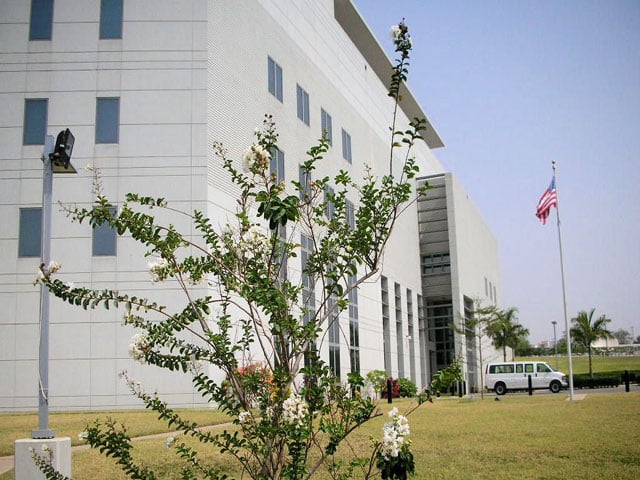
The US State Department has authorised non-emergency government employees and their families to leave its embassy in Abuja, citing worsening security conditions across Nigeria. The directive, announced on Wednesday, comes as part of an updated travel advisory.
The advisory also added Plateau, Jigawa, Kwara, Niger, and Taraba states to the “Do not travel” list due to risks from terrorism, crime, and kidnapping. The update follows recent deadly attacks in several states.
On March 29, gunmen stormed the Gari Ya Waye area of Angwan Rukuba, Jos North, killing over 20 people and injuring many others during Palm Sunday celebrations. A week later, at least 20 residents were reportedly killed in multiple communities in Niger State, while other attacks occurred in Kebbi.

Other states already listed as high-risk include Borno, Jigawa, Kogi, Kwara, Niger, Plateau, Taraba, Yobe, Adamawa, Bauchi, Gombe, Kaduna, Kano, Katsina, Sokoto, Zamfara, Abia, Anambra, Bayelsa, Delta, Enugu, Imo, and Rivers.
Last November, the United Kingdom also advised its citizens against non-essential travel to 21 Nigerian states, including Niger, Plateau, and Kebbi.
Nigeria’s Rising Terror Threat
According to the 2026 Global Terrorism Index, Nigeria ranks as the fourth most unsafe country in the world. The report noted a 43 percent increase in fatalities from terrorist attacks in 2025 compared to the previous year.

The Islamic State West Africa Province (ISWAP) and Boko Haram were responsible for nearly 83 percent of all terrorism-related deaths in Nigeria last year. Pakistan, Burkina Faso, and Niger Republic occupied the top three positions on the index.
Following the recent attacks, some religious leaders have urged the federal government to declare a state of emergency on insecurity to curb the growing violence.
The escalating violence and foreign travel advisories underscore the urgent need for strengthened security measures as Nigeria continues to grapple with terrorism, kidnappings, and violent crime.