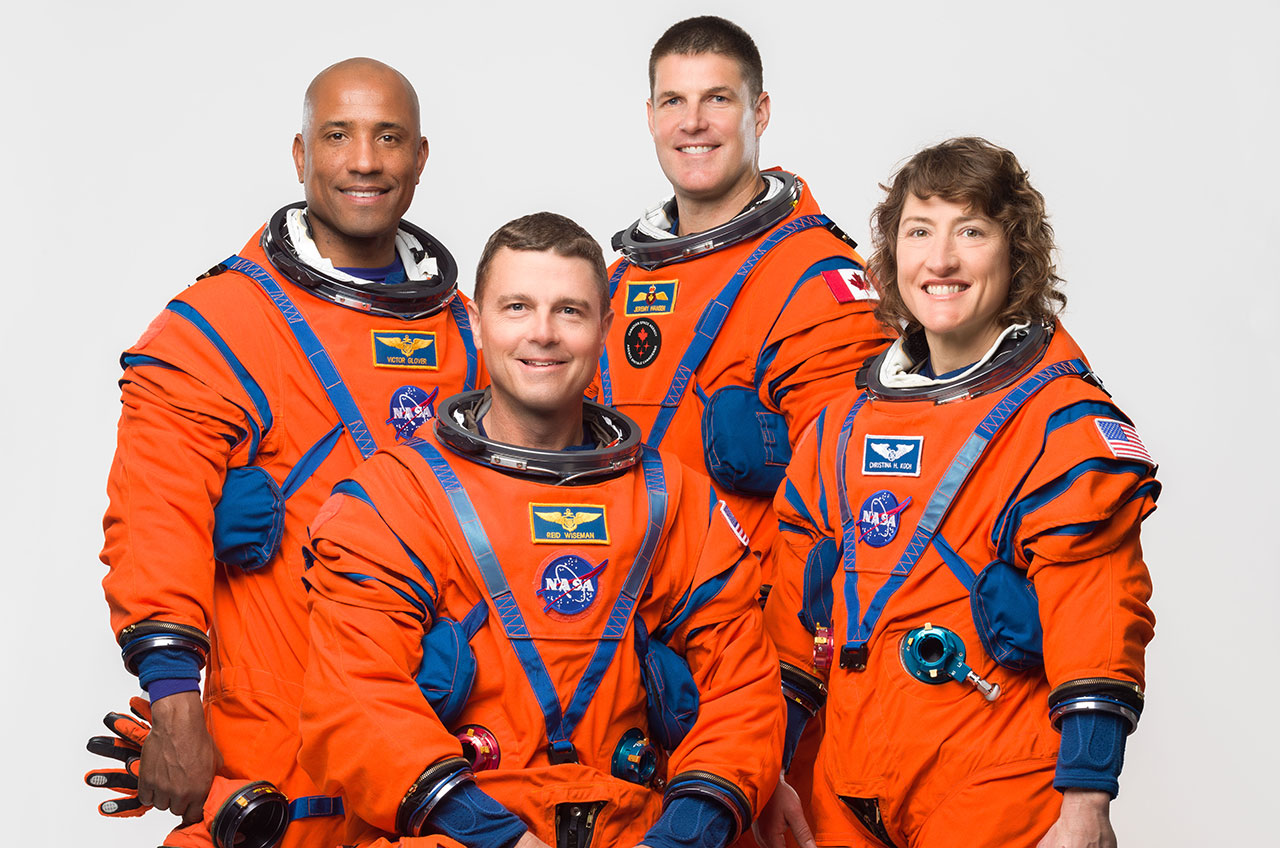
The crew of Artemis II mission say they are bringing back far more than data as they prepare to return to Earth, promising new stories and images from their journey beyond the Moon.
The four astronauts aboard the Orion spacecraft have completed their lunar flyby and are expected to splash down off the coast of San Diego later on Friday. Speaking from space during their return, pilot Victor Glover said the team is eager to share their experience with the world.
“We have to get back. There’s so much data that you’ve already seen, but all the good stuff is coming back with us,” he said, hinting at the wealth of material yet to be revealed.

The mission marked a major milestone in human space exploration, taking the crew farther from Earth than any humans have travelled before—surpassing the record set by Apollo 13 mission in 1970.
Although the spacecraft did not land on the Moon, it flew around its far side—an area never visible from Earth. While satellites have captured images of this region, this mission gave astronauts a rare, direct view of its vast craters and rugged terrain.
Commander Reid Wiseman described a brief but powerful moment during the mission when the crew lost contact with Earth for about 40 minutes. During that time, they paused their work to reflect on their journey, sharing a quiet moment together.
For Wiseman, one of the most emotional highlights came when the crew named a lunar crater after his late wife, Carroll. He described the moment as deeply personal and unforgettable.

Astronaut Christina Koch said she would miss the strong bond formed among the crew during the mission, describing their camaraderie as one of the most meaningful parts of the experience.
The crew will now spend their final days in space conducting checks and experiments before re-entering Earth’s atmosphere. The return journey will include a high-speed descent of nearly 25,000 miles per hour, followed by a parachute-assisted splashdown in the Pacific Ocean.
As the mission draws to a close, the astronauts say the experience will stay with them for life—marking not just a scientific achievement, but a deeply human journey into space.