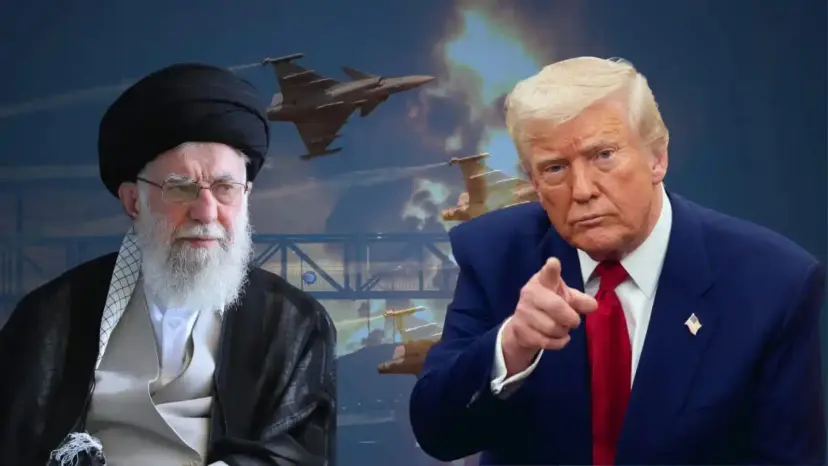
U.S. President Donald J. Trump has accused Iran of failing to honour its commitments on the movement of oil through the strategic Strait of Hormuz, describing the situation as both inadequate and “dishonourable.”
The reopening of the vital waterway was a key condition in the recent ceasefire agreement between United States and Iran, making the latest developments a major point of tension.
In a post on Truth Social, Trump criticised Tehran’s handling of oil transit through the strait.
“Iran is doing a very poor job, dishonourable some would say, of allowing oil to go through the Strait of Hormuz. That is not the agreement we have,” he wrote.
In a follow-up post, he also warned Iran against imposing charges on oil tankers passing through the route.

“There are reports that Iran is charging fees to tankers going through the Hormuz Strait — they better not be, and if they are, they better stop now!” he added.
Trump’s comments come amid reports that shipping activity in the strait remains significantly disrupted, despite a recently announced ceasefire between Washington and Tehran. The Strait of Hormuz is one of the world’s most critical oil transit routes, and any disruption has far-reaching global economic implications.
Reports indicate that only a limited number of vessels have passed through the waterway since both countries agreed to a temporary pause in hostilities earlier this week, raising concerns about continued instability in global energy supply.
Tensions have further escalated following claims that a private oil tanker company allegedly paid millions of dollars to secure safe passage through the strait.
Reacting to the situation, Iran’s Foreign Minister, Seyed Abbas Araghchi, accused the United States of undermining diplomatic efforts in the region.

“The United States is letting Israel kill diplomacy,” he said, linking the ongoing tensions to broader geopolitical issues involving Israel.
Araghchi also referenced the legal troubles facing Israeli Prime Minister Benjamin Netanyahu, suggesting that regional instability could have political implications.
Meanwhile, Iranian President Masoud Pezeshkian condemned what he described as renewed Israeli aggression in Lebanon, warning that such actions could undermine the fragile ceasefire and threaten regional stability.
He accused Israel of acting in bad faith and violating ceasefire terms, stating that such moves weaken ongoing diplomatic efforts.
“Our hands remain on the trigger. Iran will never forsake its Lebanese brothers and sisters,” Pezeshkian said.
The situation continues to raise concerns about a possible escalation in the region, with global attention focused on whether the ceasefire can hold and whether oil flows through the Strait of Hormuz will return to normal.