

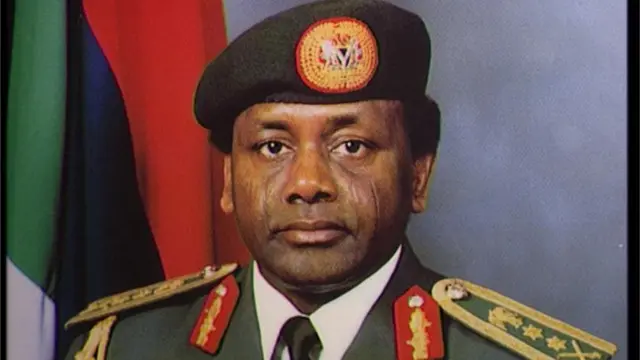
History rarely offers simple verdicts—especially in nations where power, survival, and reform intersect under intense pressure.
Few Nigerian leaders embody this complexity more than Sani Abacha, whose legacy continues to provoke sharp divisions decades after his rule.

To some, Abacha remains the archetype of a ruthless military dictator.
To others, he represents a hardline reformer who imposed order, stabilized an ailing economy, and asserted Nigeria’s sovereignty at a time of deep uncertainty. The truth, as with most consequential leaders, lies in a more uncomfortable middle ground—one that demands scrutiny, not sentiment.
Economic Stabilisation and Fiscal Discipline
When Abacha assumed power in 1993, Nigeria’s economic conditions were undeniably fragile. Inflation had surged into troubling territory, public finances were strained, and investor confidence was weak.
Under his administration, inflation dropped significantly—falling from extreme highs to more moderate levels within a few years.
Foreign reserves, frequently cited as one of his administration’s strongest economic indicators, rose sharply—from under $500 million to several billions of dollars by the late 1990s.

This accumulation, achieved without reliance on International Monetary Fund (IMF) borrowing, is often presented as evidence of fiscal discipline and a deliberate attempt to insulate Nigeria from external financial control.
Yet this narrative requires balance. While reserves increased, critics argue that the broader economic environment remained constrained by limited transparency, restricted private sector growth, and governance structures that discouraged long-term institutional confidence.
Infrastructure and State-Led Development
Abacha’s years in office saw notable federal infrastructure projects. Developments such as the National Hospital in Abuja, the expansion of Gwarimpa Estate, and extensive road construction formed part of a broader state-led approach to national development.
These projects reflected a governance style that prioritized centralized decision-making and rapid execution. In an era before the full liberalisation of Nigeria’s economy, such projects were facilitated by a combination of state control and favourable global oil market conditions.
However, it is important to separate execution from sustainability. While infrastructure expanded, questions remain about maintenance frameworks, economic spillover effects, and the absence of institutional continuity after his regime.

Military Strength and Regional Influence
As a career soldier, Abacha invested heavily in Nigeria’s military capacity. Under his leadership, Nigeria played a dominant role in West African peacekeeping through ECOMOG, particularly in Liberia and Sierra Leone.
These interventions strengthened Nigeria’s reputation as a regional power and positioned it as a stabilising force in West Africa.
Yet they also came at significant financial and human cost—raising ongoing debates about whether the strategic benefits justified the burden placed on the Nigerian state.
Political Engineering and Structural Legacy
One of the more enduring structural contributions attributed to Abacha is the formalisation of Nigeria’s six geopolitical zones—a framework still central to political balancing and representation today.
Additionally, the Vision 2010 development blueprint, initiated during his regime, sought to outline a long-term economic direction for Nigeria. Though never fully implemented, it remains a reference point in policy discussions.

Still, these initiatives existed alongside a political environment defined by repression. The detention of figures such as Moshood Abiola and Olusegun Obasanjo underscored the authoritarian nature of his rule. International sanctions, diplomatic isolation, and human rights criticisms significantly shaped Nigeria’s global image during this period.
The Question of Integrity and Corruption
Any assessment of Abacha’s legacy that overlooks corruption would be incomplete. Large sums of public funds—often referred to as “Abacha loot”—were traced to accounts linked to his regime and later recovered by successive Nigerian governments.
This reality directly challenges claims of integrity and complicates efforts to frame his leadership purely as patriotic or reform-driven. It also highlights a critical contradiction: fiscal discipline at the macro level coexisting with alleged personal enrichment at the highest levels of power.

Death, Speculation, and Myth
Abacha died suddenly on June 8, 1998—a date often surrounded by speculation.
Claims of poisoning or foreign involvement persist in some narratives, though no definitive evidence has substantiated these theories.
What remains factual is that his death marked a turning point, opening the path for Nigeria’s return to civilian rule in 1999.
From Military Authority to Democratic Reform: The Tinubu Parallel
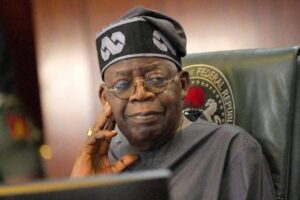
Nigeria’s leadership challenges did not end with military rule—they merely evolved. Today, President Bola Ahmed Tinubu faces a different but equally complex terrain.
Unlike Abacha, Tinubu operates within democratic constraints—where reform must navigate public opinion, institutional checks, and political opposition. His early decision to remove fuel subsidy, for instance, triggered immediate economic pain but was framed as a necessary structural correction.

While claims such as a recent $50 billion IMF offer was declined by the FG, what is clear is that the administration is pursuing fiscal reforms, tax restructuring, and efforts to expand domestic revenue generation.
At a recent economic forum, Tinubu emphasised a foundational principle of governance:
“The strength of any nation lies not in its elite, but in the productivity, resilience, and inclusion of its people at the grassroots.”
This reflects a shift from command-style governance to participatory reform—though the effectiveness of this transition remains under scrutiny.
The Burden of Reform and the Politics of Perception
The comparison between Abacha and Tinubu is not about equivalence—it is about context.
One ruled by decree, the other by consensus.
One operated in isolation, the other within a globalised, interdependent economy.
Yet both illustrate a central truth: reform in Nigeria is rarely painless, and leaders who pursue structural change often face resistance—whether justified or politically motivated.
Opposition criticism, while essential in a democracy, becomes problematic when it lacks credible alternatives or descends into pure obstructionism. Equally, uncritical praise risks distorting reality and weakening accountability.
The National Patriots
The National Patriots reiterate that nation-building demands both honesty and balance.
Leaders must be held accountable, but they must also be assessed with objectivity—acknowledging both their decisions and the context in which those decisions are made.
As Princess Gloria Adebajo-Fraser, MFR, aptly states:
“A nation that judges its leaders only by their flaws risks losing sight of the sacrifices required to hold that nation together. Patriotism demands not blind loyalty, but informed understanding and constructive engagement.”
Nigerians must resist narratives that deepen division or weaken national confidence. Constructive criticism should be matched with credible alternatives.
At a time of shifting global dynamics, unity of purpose, strategic patience, and civic responsibility remain essential to safeguarding Nigeria’s long-term stability and progress.
Conclusion
General Sani Abacha remains one of Nigeria’s most polarising figures—both a symbol of order and a reminder of excess.
His story is not one of simple redemption or outright condemnation, but of contradiction.
As Nigeria navigates its current reform trajectory under Bola Ahmed Tinubu, the lessons of history remain relevant: strong leadership must be matched by strong institutions, and patriotism must be anchored in accountability.
Anything less risks repeating the very cycles Nigeria seeks to escape




