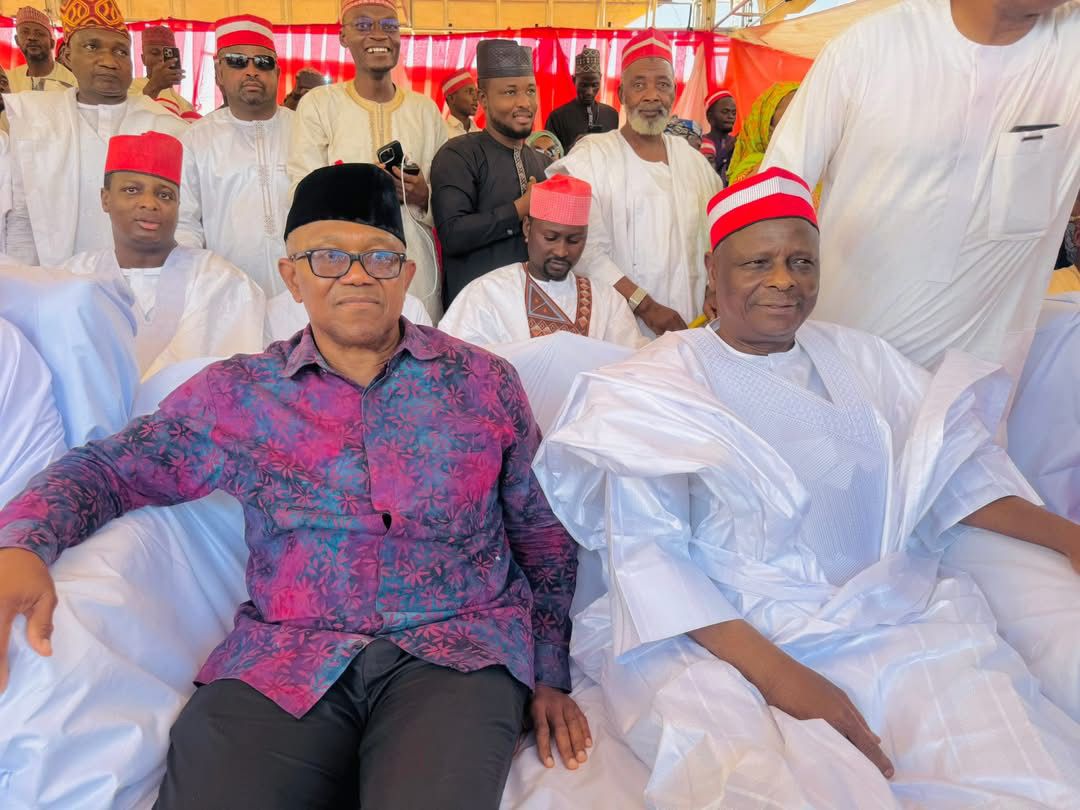
Former Governors Peter Obi and Rabiu Kwankwaso are reportedly stepping up political consultations aimed at securing a joint presidential ticket under the African Democratic Congress (ADC), with a strong push for a “one-term” presidency arrangement to win northern support ahead of the 2027 elections.
Sources within the party say the two politicians are working behind the scenes to rally key northern stakeholders around a power-rotation deal that would favour a southern presidency, with Obi expected to serve a single term if the plan sails through.
According to insiders, the strategy is also aimed at weakening the influence of former Vice President Atiku Abubakar within the party, as internal jostling for the ADC’s presidential ticket intensifies despite ongoing leadership disputes still awaiting resolution at the Supreme Court.

Political operatives familiar with the discussions say Kwankwaso’s camp has been particularly active in recent weeks, engaging traditional rulers and political stakeholders in parts of the North to build support for the emerging alliance. They are reportedly arguing that fairness requires allowing the South complete its turn in the presidency after eight years under a northern administration.
Supporters of the arrangement have also floated a proposed “one-term agreement” for Obi, which they say is intended to reassure northern power brokers. However, they acknowledge that the proposal is still being consolidated and not yet formally presented as a binding pact.
A coalition of supporters under the “Obi–Kwankwaso Movement” has already been launched to mobilise backing for the joint ticket ahead of party primaries.

Meanwhile, Atiku Abubakar, who has declared that 2027 will be his final presidential contest, is said to still command significant influence within the ADC structure, with his allies insisting that he remains the party’s strongest contender.
Party insiders describe the unfolding situation as a complex three-way contest involving Atiku, Obi, and Kwankwaso loyalists, each negotiating alliances across regional blocs.
Some ADC stakeholders believe the internal competition may ultimately lead to direct primaries rather than a consensus arrangement, given the strength of competing ambitions.
Reactions within political circles remain divided. While some party figures insist the alliance between Obi and Kwankwaso could reshape the opposition’s chances ahead of 2027, others argue that entrenched political structures and personal ambitions may make the arrangement difficult to sustain.

The ADC leadership has maintained that all aspirants remain free to engage in consultations, while expressing hope that the party will eventually produce a consensus candidate.
As consultations continue, political observers say the coming weeks may be decisive in shaping the direction of opposition politics ahead of the next general election.