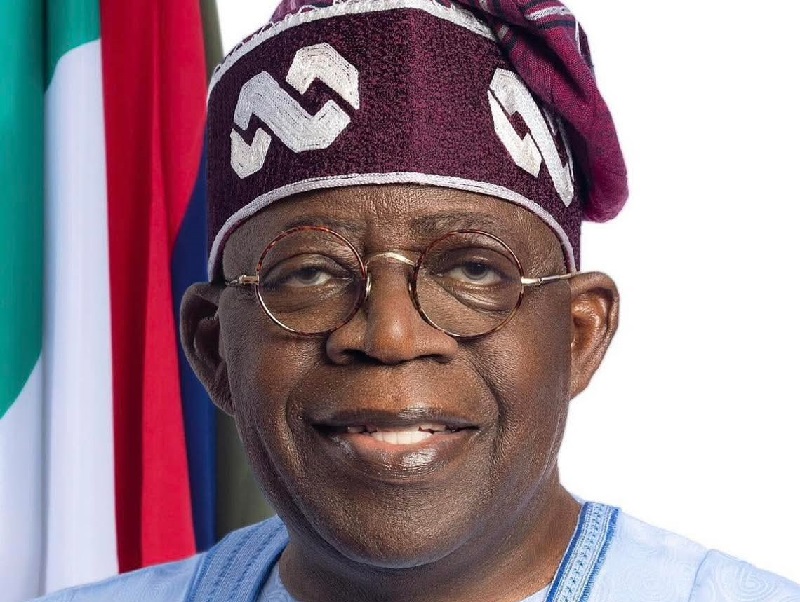
The Independent Media and Policy Initiative (IMPI) has said Nigeria’s economic reforms under the administration of President Bola Tinubu are beginning to yield measurable gains, with many companies recording significant increases in revenue and profitability.

The policy group said the improving fortunes of businesses across key sectors of the economy contradict growing criticism from opposition figures and economic skeptics who have continued to paint a gloomy picture of the nation’s economic outlook since the reforms began in 2023.
In a policy statement signed by its Chairman, Omoniyi Akinsiju, the think-tank said available data from quoted companies and the informal sector showed that the real sector of the economy had recorded noticeable growth over the last 24 months, describing it as evidence that the reforms were beginning to stabilise and strengthen the economy.
To support its position, IMPI said it reviewed the financial performance of 20 blue-chip firms listed on the Nigerian Exchange Group (NGX), which collectively generated N27.8 trillion in revenue in the 2025 financial year.

According to the group, this represented a 28.7 per cent increase compared to the N21.62 trillion recorded in the corresponding period in 2024.
Among the companies cited, Guinness Nigeria returned to profitability with a profit after tax of N41 billion in its audited 18-month results ending December 31, 2025, marking its first return to profit since 2023.
Similarly, MTN Nigeria posted what IMPI described as one of the most remarkable turnarounds, recording a profit before tax of N1.7 trillion in 2025 compared to a loss of N550.3 billion in 2024.
Airtel Africa also returned to profitability, posting a profit after tax of $328 million, reversing an $89 million loss recorded in the previous year.
The think tank noted that Nigerian Breweries returned to profitability after two years, with revenue rising by 68.9 per cent to N383.6 billion, up from N222.17 billion in 2024 and N123.31 billion in 2023.

It also highlighted the performance of International Breweries, which reported a pre-tax profit of N88.9 billion in its 2025 audited results, compared to a loss of N111.8 billion in the previous year.
In the manufacturing and energy sectors, Dangote Cement recorded revenue of N4.31 trillion, representing a 20.28 per cent increase from N3.58 trillion in 2024.
Seplat Energy also posted N4.14 trillion in revenue in 2025, representing a 150.4 per cent increase over the N1.65 trillion recorded in 2024.
The group further noted that Unilever Nigeria recorded a 62 per cent rise in gross profit to N90 billion, while net profit doubled to N32 billion from N15 billion in the corresponding period of 2024.
Related News
IMPI argued that the performance of quoted companies reflects broader improvements across sectors of the economy, including the informal sector where a large percentage of Nigerians earn a living.
“We can generalise these remarkable performances to companies across all sectors of the economy. Consequently, this aggregates to a state of buoyancy by private-led companies and sufficiently guarantees the employment of about 9.64 million Nigerians in the private sector, with an implied increase in retained earnings that would, in turn, crystallise in business expansion. This will also reflect in higher GDP numbers for the year,” the statement said.

The think tank added that improved earnings by listed companies had also resulted in N1.7 trillion in shareholder payouts, which it described as the highest rise in recent years.
The statement said: “From our standpoint, we surmise that the opposition’s propagation of bellicose intent against the federal government’s reforms lacks empirical validation and is generally pivoted on abysmal, commonplace, and sentimental generalisations.
“Contrary to the frequent public espousal of reform failure by the opposition, our reading of the national economic trajectory since 2023 strongly indicates otherwise. While we acknowledge the inevitability of some challenges inherent in the implementation of any body of reform policies, we assert that the Tinubu policies have, in significant ways, accomplished the first purpose of a sovereign’s economic rejuvenation: the resuscitation and strengthening of the real sector of the economy.
“This speaks to the resurgence of revenue and profitability in privately managed companies, with far-reaching implications for Domestic Product (GDP), employment, poverty reduction, and wealth creation, leading to a state of general prosperity from now on.
“Our affirmation of the recovery of the nation’s critical real sector is predicated on the framework of market reality, which represents the actual, current conditions of the marketplace, including consumer behaviour, competitor actions, and economic constraints, rather than the subsidy conditions prevalent during the years before the commencement of the implementation of the reform policies in 2023.
“Our submission is corroborated by verifiable data that profiles the performance of quoted companies on the Nigerian Stock Exchange and artisanal enterprises in the informal sector,” it said.

The think tank acknowledged that the economic reforms triggered initial volatility at the onset but argued that the rebound in the performance of publicly quoted firms over the last 18 months is proof that the policies are beginning to deliver positive outcomes.
“The sweeping economic reforms that initially triggered economic volatility are now translating into stronger revenues and earnings for many firms. This impressive change in tides in both the top and bottom lines of companies in the nation’s real sector is enabled by improving macroeconomic conditions and a more stable foreign exchange market.
“These positive indicators have elevated the Naira to Africa’s second-best-performing currency against the dollar year-to-date.”
It also cited a 2025 survey by Moniepoint, which showed that businesses in the informal sector recorded a 65 per cent jump in revenue, indicating that the economic rebound was not limited to formal corporate organisations.
“The rebound in business returns is not limited to companies in the formal sector only. The figures in the ubiquitous informal sector, where the majority of Nigeria’s workforce is engaged, also saw a high 65 per cent jump in revenue,” the statement added.