


In politics, timing is power. Structure is survival. Legitimacy is everything. Remove any one of the three, and even the loudest victory can collapse into quiet defeat.
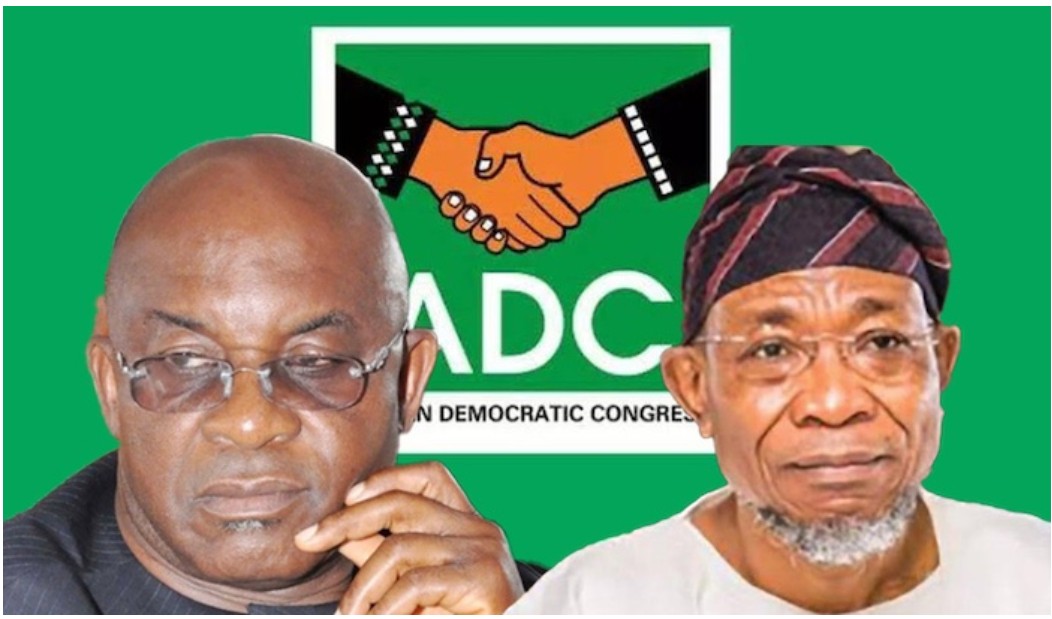
That is the uncomfortable reality now confronting former Senate President David Mark and the African Democratic Congress (ADC) following their widely celebrated outing at the Supreme Court of Nigeria.

On the surface, it looked decisive. Headlines screamed restoration. Supporters cheered vindication. Political messaging moved quickly to frame the moment as a turning point.
But beneath the applause lies a harsher truth: this was not a victory that settles anything. It was a ruling that exposes everything.
The central issue never changed. The suit filed by Nnamdi Bassey challenging Mark’s leadership was always about legitimacy. Mark’s defence rested on a familiar political argument—that the dispute was an internal party matter and therefore beyond the reach of the courts.
That argument has now collapsed completely.
The Court of Appeal of Nigeria rejected it. The Supreme Court has now affirmed that rejection. The implication is blunt and unavoidable: the courts have jurisdiction, and Mark must return to the Federal High Court of Nigeria to defend his position on the merits.
This is not a procedural inconvenience. It is the core battle—and it is still unresolved.
Yes, the Supreme Court set aside the interpretation of status quo ante bellum that led the Independent National Electoral Commission (INEC) to remove him. Yes, he has been restored to the position of interim chairman.
But restoration is not validation.
He is back in office—but under active legal contest. He is in position—but not in control. He holds the title—but not the certainty.
That distinction is everything.
Because while the optics favour celebration, the substance points to constraint.

Even before the ink dried on the Supreme Court ruling, the legal ground beneath ADC had already begun to shift. A Federal High Court ruling reportedly nullified the congresses and conventions conducted under Mark’s leadership and affirmed the legitimacy of existing state, local government and ward executives.
That single development changes the entire equation.
In Nigerian party politics, power does not reside in titles. It resides in structures. It resides in delegates. It resides in who controls the voting base at conventions.
And that structure is no longer aligned with Mark’s faction.
This means that even if he successfully defends his position at the Federal High Court, the pathway to becoming substantive chairman is no longer in his hands. The delegates who will decide that outcome are drawn from state, local government and ward executives that have now been judicially affirmed outside his immediate influence.
In simple terms, he may preside—but he may not prevail.
That is the first constraint.
The second is time—and time is far less forgiving than the courts.
Even under the most optimistic assumptions, the timeline is tight to the point of impossibility.
The Federal High Court is expected to determine the substantive matter no earlier than mid-May.
Electoral law requires a minimum of 21 days’ notice to INEC before any national convention can be held.
That immediately pushes any valid convention into early to mid-June.
Now place that against the electoral calendar.
Deadlines for submission of candidates fall before that window matures.
This is not political speculation. It is procedural arithmetic.
By the time ADC becomes legally positioned to hold a convention, it risks being administratively too late to produce candidates.
And even if—against precedent—deadlines are adjusted, the structural problem remains unchanged. The same delegates, already outside the coalition’s control, will determine the outcome of that convention.

So the question becomes unavoidable:
Who will elect the leadership—and whose candidates will emerge?
Under current realities, the answer does not favour the coalition bloc backing Mark.
This is where the celebration begins to look premature.
Because what the Supreme Court has effectively done is not to resolve the crisis, but to redefine it.
It restored Mark administratively.
It exposed him legally.
And it constrained him politically.
It is a rare legal outcome where the headline suggests victory, but the implications suggest limitation.

In strategic terms, this is not a breakthrough. It is a narrowing corridor.
The ADC now faces three simultaneous pressures:
A live legal battle at the Federal High Court that will determine leadership legitimacy
A hostile or misaligned party structure that controls the delegate system
A shrinking electoral timeline that may render compliance impractical
Any one of these would be difficult. Combined, they form a near-perfect constraint.
And this is where the deeper political lesson lies.

Too often in Nigeria’s political space, interim judicial relief is mistaken for final victory. But courts do not award political control—they determine legal boundaries. What happens within those boundaries depends on structure, timing and strategy.
Right now, ADC’s challenge is no longer just legal. It is existential.
Can it resolve its internal legitimacy dispute quickly enough?
Can it realign its grassroots structure in time?
Can it meet INEC’s procedural requirements without slipping past critical deadlines?
Each of these questions demands more than optimism. They demand precision—and time is not on their side.
The Supreme Court may have returned David Mark to the saddle.
But the terrain has shifted, the map has changed, and the race may already be running ahead of him.
In politics, you can win the moment and still lose the movement.
That is the risk now facing the ADC.
THE NATIONAL PATRIOTS
The celebration of judicial restoration must not be mistaken for political victory. What lies ahead is a far more difficult test—one of legitimacy, structure and time. Nigeria’s democracy demands leaders who understand that power is not secured by court orders alone, but by credible processes and broad-based acceptance.
If this moment is misread, it will not only weaken party cohesion but also deny voters a viable alternative. The focus must shift from applause to strategy—urgently and decisively.
Princess G Adebajo-Fraser MFR.
President, The National Patriots.




