

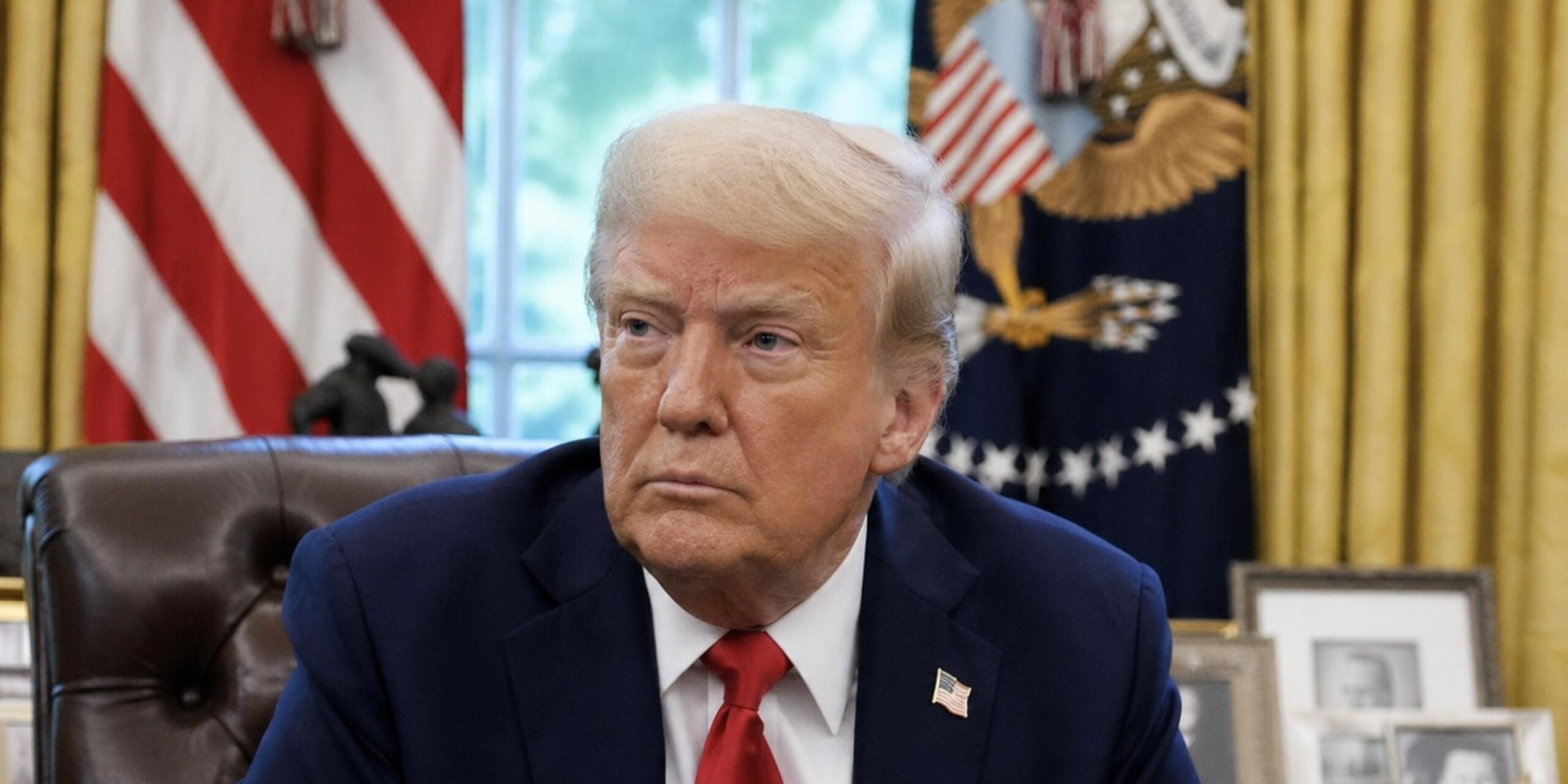
United States President Donald Trump has issued a strong response to German Chancellor Friedrich Merz after the German leader suggested that Washington was being “humiliated” in its handling of the ongoing conflict involving Iran.

In a statement posted on his Truth Social account on Thursday, April 30, 2026, Trump rejected Merz’s comments and described them as misguided, accusing the German government of prioritising the wrong issues.
Trump criticised Germany’s leadership, urging Chancellor Merz to focus more on domestic challenges such as the war between Russia and Ukraine, immigration, and energy concerns. He also argued that Germany should address what he described as internal problems rather than commenting on U.S. actions in the Middle East.

The exchange followed remarks made by Merz during an address to students in Marsberg, Germany, where he questioned the United States’ strategy in its confrontation with Iran. He warned that Washington risked repeating past military mistakes, referencing prolonged conflicts in Afghanistan and Iraq.
Merz also suggested that Iran was gaining diplomatic leverage in the situation, stating that Iranian officials were negotiating effectively and appearing stronger than previously assumed. He further noted that ongoing tensions were already affecting Germany’s economy, particularly energy supply and stability.

The German Chancellor called for caution and a swift resolution to the conflict, stressing the importance of avoiding prolonged military engagement.
Trump, however, defended U.S. actions, insisting that efforts against Iran were necessary to address what he described as a nuclear threat. He rejected claims of weakness and maintained that such criticism overlooked broader security concerns.
The disagreement highlights growing differences between the United States and some European allies over how to handle global security issues, including Iran, the war in Ukraine, and wider geopolitical instability. It also reflects ongoing debate over military intervention versus diplomatic resolution.

As tensions continue, the public exchange between both leaders underscores widening divisions within Western alliances over foreign policy direction and global conflict management.




