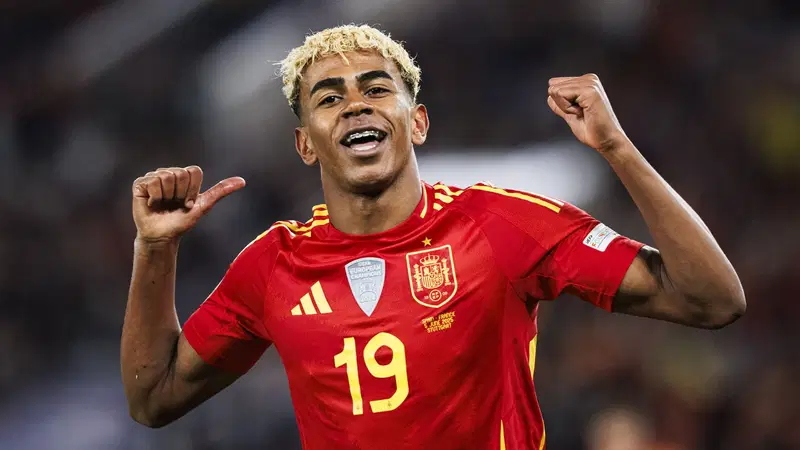
The countdown to the 2026 FIFA World Cup is already building excitement, not just for established superstars like Lionel Messi, Cristiano Ronaldo, and Kylian Mbappé, but also for a new wave of young talents expected to take centre stage on football’s biggest platform in the USA, Canada, and Mexico.
Across Europe’s top leagues, a fresh generation of players is emerging—teenagers and early-20s stars who are already influencing big matches and carrying the expectations of their clubs and countries. Many football fans believe this tournament could be the moment where they fully announce themselves to the world.
Spain’s Lamine Yamal, just 18, is widely seen as one of the brightest prospects in world football. Despite a recent injury concern, he is expected to be a key figure for Spain if fully fit. His creativity, confidence, and maturity on the ball have already made him a standout at Barcelona, and many believe the World Cup could be his true breakout stage.
Turkey’s Arda Güler, now 21, continues to grow in influence at Real Madrid. Known for his technique and eye for spectacular goals, he is expected to play a central role for Turkey, even if the team’s overall tournament progress may limit his spotlight compared to others.

Brazil’s Endrick, still a teenager at 19, is another name generating huge attention. Despite inconsistent club minutes earlier in his career, his loan spell at Lyon has seen him explode into form, with goals and assists that underline his potential as Brazil’s next attacking leader.
Germany’s Aleksandar Pavlović has stepped into the post-Toni Kroos era with composure beyond his years. At Bayern Munich, his rapid rise has earned him a growing role, and he is now seen as a key midfield option for Germany heading into 2026.
Spain also boasts another exciting talent in Fermín López, 22, whose energy, goalscoring ability, and versatility have made him a strong contender for minutes in a highly competitive midfield setup.
Norway’s Anthony Nusa, 21, brings flair and unpredictability from the wing, forming part of a promising generation alongside Erling Haaland. His explosive style and confidence on the ball have made him one of Europe’s most closely watched young attackers.

Senegal’s Ibrahim Mbaye, just 17, is another rising star making headlines after record-breaking performances at youth international level and early impact at club level. He represents the next wave of African talent expected to shine globally.
Portugal’s João Neves, now 21 and playing for PSG, has quickly established himself as a dependable midfield presence. His intelligence and discipline make him a key part of Portugal’s long-term planning.
Argentina’s Nico Paz, currently developing in Italy, continues to impress with goals, assists, and creativity. Already integrated into the national setup, he is seen as part of Argentina’s next generation after their recent success.
Finally, Spain’s Pau Cubarsí, only 18, has rapidly grown into one of Europe’s most promising defenders. Calm on the ball and tactically sharp, he is already trusted at the highest level despite his age.
As the 2026 World Cup approaches, these young players represent more than just potential—they symbolise a generational shift in world football, where new names are ready to step into the spotlight and define the next era of the game.