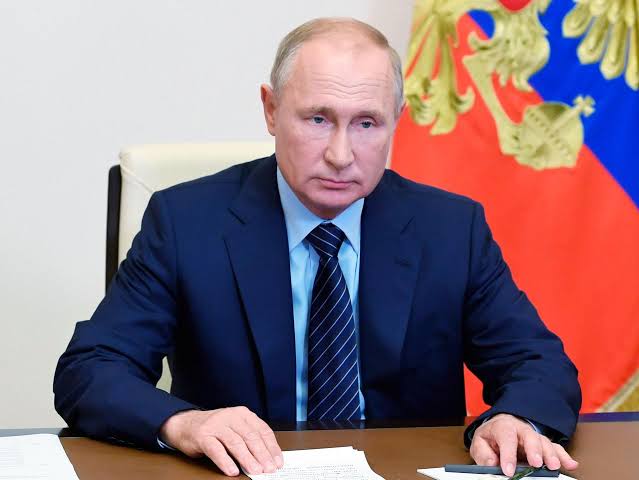
Russian President Vladimir Putin has defended his military campaign in Ukraine, describing it as a “just” struggle against what he called an “aggressive force backed by NATO,” as Russia marked Victory Day with a noticeably scaled-down military parade in Moscow.
Speaking to Russian troops during the annual commemoration of the Soviet Union’s victory over Nazi Germany, Putin said the country’s forces in Ukraine were continuing what he framed as a historic mission. He repeatedly linked the ongoing war to World War II themes, a narrative he has consistently used throughout his 25-year rule.
“They are confronting an aggressive force armed and supported by the entire NATO bloc. And despite this, our heroes move forward,” he said, adding, “I firmly believe that our cause is just.”

The 2026 Victory Day celebrations were significantly reduced compared to previous years, with no heavy military hardware displayed and fewer foreign leaders in attendance. Security was tightened following recent Ukrainian long-range strikes, which the Kremlin said influenced the decision to scale back the event.
Putin also addressed ongoing diplomatic tensions and ceasefire efforts, saying he remained open to meeting Ukrainian President Volodymyr Zelensky in a third country, but only after the terms of any peace agreement were fully settled.
“This should be the final point, not the negotiations themselves,” he said.
His remarks came just days after renewed attempts by both Russia and Ukraine to observe temporary truces, which each side accused the other of violating. Despite the accusations, no major attacks were reported during the latest short ceasefire period, although drone activity and sporadic clashes continued.
Former US President Donald Trump announced what he described as a three-day ceasefire, alongside a proposed prisoner exchange involving 1,000 captives from each side. However, the Kremlin later said there were no plans to extend the truce, and claimed it had not received formal proposals from Kyiv regarding the swap.

The war, now in its fifth year, continues to be the deadliest conflict in Europe since World War II, with hundreds of thousands reportedly killed. Peace talks mediated by the United States have so far produced little progress.
In Moscow, reactions to the Victory Day events were mixed, with some residents expressing fatigue over the prolonged conflict and disruptions, including temporary internet shutdowns introduced for security reasons during the parade.
While the Kremlin projected confidence and resilience, the muted celebrations and ongoing battlefield tensions reflected a war still deeply unresolved, despite repeated claims from Russian leadership that it is moving toward an end.