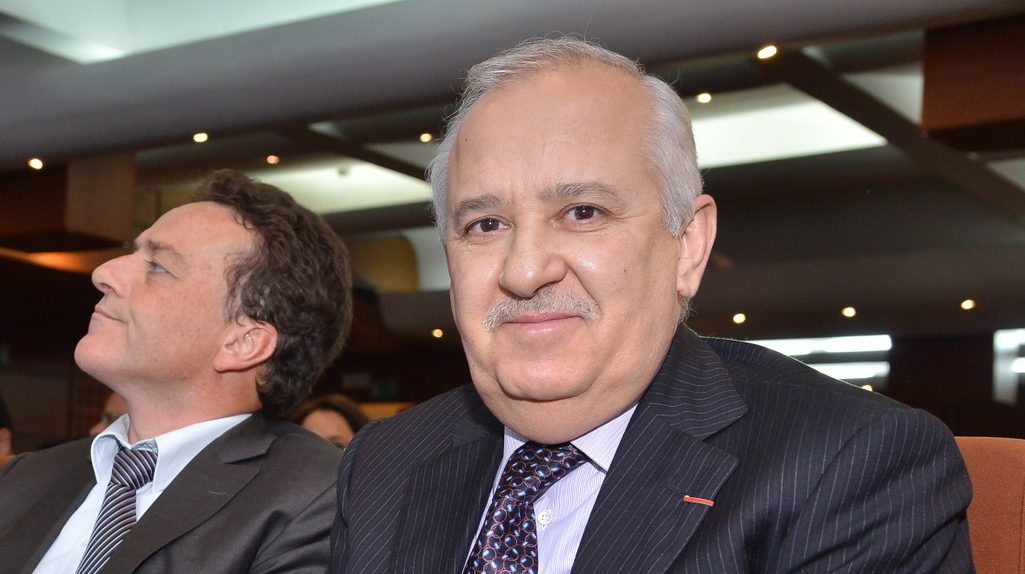
African billionaire Anas Sefrioui has sold his only cement plant in France, signaling a major shift in focus toward Africa, where his cement company, CIMAF, has rapidly expanded across several countries.
The move marks Sefrioui’s gradual exit from the European cement market as he positions his business to take advantage of growing opportunities in Africa’s construction and infrastructure sectors.
The facility sold was an integrated cement plant located in southern France. Reports indicate that the decision was driven by rising operational challenges in Europe’s cement industry, including high energy costs, strict environmental regulations from the European Union, and slowing construction demand.

Industry analysts say cement production in Europe has become increasingly expensive because of tighter climate policies and the heavy investments required to reduce carbon emissions. These pressures have reduced profit margins and made some operations less attractive for investors.
Compared to Europe, African markets continue to offer stronger growth prospects, especially in countries with rising urbanisation, expanding populations, and increasing infrastructure development.
Since launching CIMAF in 2011, Sefrioui has expanded the company across several West and Central African countries, including Côte d’Ivoire, Cameroon, Guinea, Gabon, Burkina Faso, Chad and Republic of the Congo.

The company’s strategy has focused on establishing local production plants in fast-growing markets where cement demand is rising but supply remains limited. This gives CIMAF an advantage by reducing import costs and strengthening its presence in emerging construction markets.
Experts believe Africa’s cement demand will continue to grow in the coming years due to housing shortages, infrastructure projects, and regional trade expansion under the African Continental Free Trade Area.
Sefrioui originally built his fortune through Groupe Addoha, one of Morocco’s biggest affordable housing developers. His move into cement manufacturing was seen as a natural extension of his real estate business, allowing him to supply materials for large housing and infrastructure developments across the continent.
According to recent estimates by Forbes, Sefrioui’s net worth stands at around $1.3 billion in 2026, despite challenges facing Morocco’s property market, including rising interest rates and weaker real estate demand.