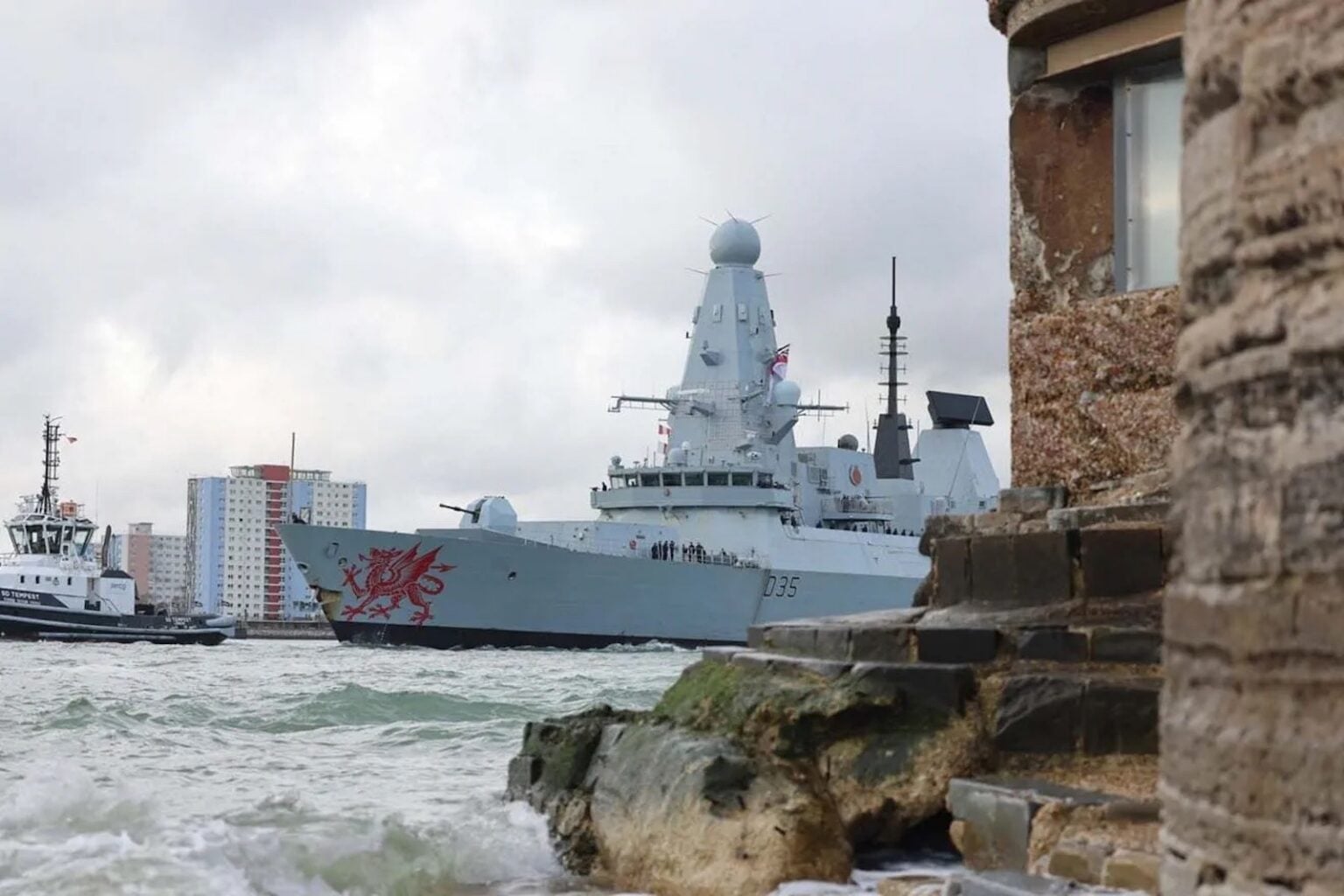
The United Kingdom has announced plans to strengthen its military presence around the Strait of Hormuz, unveiling a major deployment package that includes autonomous mine-hunting systems, counter-drone technology, Typhoon fighter jets, and the Royal Navy destroyer HMS Dragon.
The announcement was made on Tuesday during a virtual meeting involving defence ministers from more than 40 countries participating in a proposed multinational maritime security mission aimed at protecting commercial shipping in the region.
According to British officials, the mission — which will be jointly led by the UK and France — is designed to be “strictly defensive” and will begin operations once conditions permit.

The UK government said it is committing £115 million in new funding to support the deployment of autonomous mine-clearing drones and advanced anti-drone systems amid growing concerns over naval mines, drone attacks, and threats to shipping activities in the Strait of Hormuz.
UK Defence Secretary John Healey said Britain is taking a leading role in efforts to secure the strategic waterway.
“The UK is playing a leading role to secure the Strait of Hormuz, and we are demonstrating that today with new cutting-edge equipment to protect our interests and secure the Strait,” he said.
As part of the operation, the UK plans to deploy autonomous mine-hunting systems capable of locating and neutralising naval mines. The Royal Navy will also use its “Beehive” launch system, designed to deploy high-speed Kraken drone boats for surveillance and defensive missions.
The deployment package further includes Royal Air Force Typhoon fighter jets for air patrol operations and specialist British mine-clearance teams currently undergoing preparations for potential missions in the region.

At the centre of the naval deployment is HMS Dragon, a Type 45 destroyer already heading toward the Middle East after completing additional weapons and sensor upgrades for high-threat operations.
British officials highlighted the ship’s advanced Sea Viper air defence system and its ability to counter drone threats, noting that the operation reflects lessons learned from recent attacks on commercial shipping in the Red Sea.
The proposed mission is expected to mirror Europe’s maritime security operation in the Red Sea, known as EUNAVFOR ASPIDES, which was launched to protect merchant vessels from attacks linked to Houthi militants.
The UK also confirmed that Royal Fleet Auxiliary vessel RFA Lyme Bay is being upgraded to function as a support “mothership” for autonomous systems that could be used in future Hormuz operations.
The Strait of Hormuz remains one of the world’s most critical shipping routes, with roughly one-fifth of global oil supplies and major liquefied natural gas exports passing through the narrow waterway.
British authorities said the mission is intended to restore confidence among global shipping operators and reduce the impact of regional tensions on international trade and energy markets.