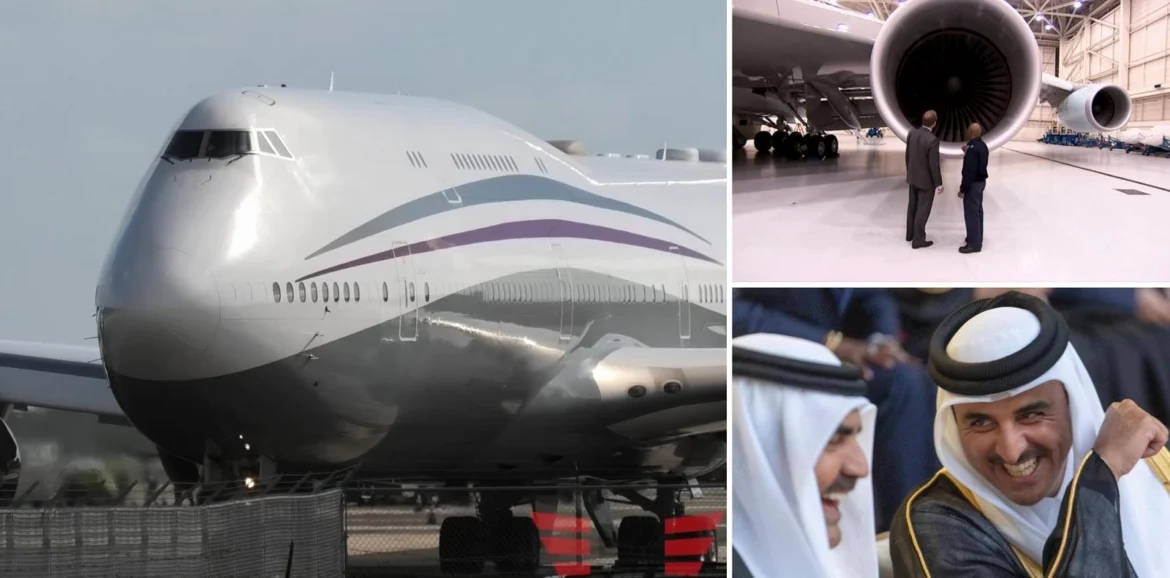
The next generation of Air Force One aircraft is so large that the United States Air Force had to build an entirely new facility just to house them — at a cost of more than $320 million.
The current presidential fleet, the VC-25A, has been in service since the early 1990s and is based on the Boeing 747-200B. But its replacement, the VC-25B, is built on the newer Boeing 747-8 Intercontinental — a jet that is significantly longer, wider, and heavier than the aircraft currently used to transport the U.S. President.
At first glance, the difference in size may not seem dramatic. However, in aviation terms, it changes everything. The 747-8 is not just an upgraded version of the older jumbo jet; it is a physically larger and more demanding aircraft that the existing infrastructure at Joint Base Andrews simply could not accommodate.
According to U.S. Department of Defense planning documents, none of the existing hangars at Andrews were capable of safely or effectively supporting the new aircraft, particularly given its increased wingspan and operational requirements.

A New Facility Built From Scratch
To solve that problem, the military constructed the Presidential Aircraft Recapitalization Complex — a massive, purpose-built hangar system designed specifically for the VC-25B fleet.
What began as an estimated $250 million project gradually increased in cost as designs were refined and construction contracts were awarded. By completion, the facility had grown into a roughly $322 million, 380,000-square-foot aviation complex.
But this was not just a larger hangar. It was designed as a fully self-sustaining operational base for Air Force One aircraft, including maintenance bays, secure storage areas, administrative offices, taxiways, lighting systems, and heavy-duty support infrastructure.
It also includes advanced fuel systems, backup generators, communications networks, and reinforced utility support — all built to military-grade standards for a platform that serves as a flying command center.
More Than an Aircraft Hangar
Air Force One is not treated like a standard passenger jet. It functions as a mobile command post capable of supporting presidential communications, national security coordination, and continuity-of-government operations.
Because of that role, its ground infrastructure must meet the same level of resilience and security as the aircraft itself. The new complex at Joint Base Andrews reflects that reality, effectively turning part of the base into a dedicated presidential aviation hub.
The scale of construction even forced changes across the installation, including relocation of training areas, cargo zones, and other base facilities to make room for the new development.

Delays and an Unexpected Twist
The VC-25B program itself has faced repeated delays and is now expected to enter service around 2028.
In the meantime, attention has turned to a Boeing 747-8 aircraft gifted by Qatar, which has reportedly been modified for potential interim use as Air Force One. Like the VC-25B, it is also based on the same larger 747-8 platform.
While there is no official confirmation on where it will be permanently stationed, it is possible it could eventually use the very same $320 million facility built for the next presidential fleet.
A Bigger Story Than Just Jets
In the end, the Air Force One replacement programme is not just about upgrading presidential aircraft. It is about how a change in aircraft size forced one of the most secure air bases in the United States to redesign itself around the future of presidential aviation.
The jets got bigger — and the infrastructure had to grow with them.