

The International Finance Corporation (IFC) has announced plans to deploy a mission to Nigeria to explore investment structures aimed at attracting more private capital into critical sectors of the economy.
The development was disclosed in a statement issued by the Special Adviser to President Bola Tinubu on Information and Strategy, Bayo Onanuga.

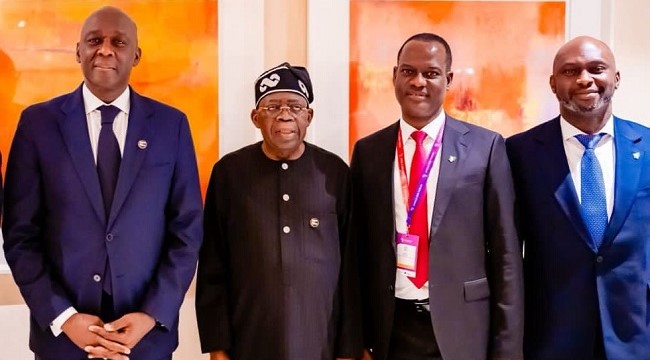
According to the statement, IFC Managing Director Makhtar Diop made the announcement during a meeting with President Tinubu on the sidelines of the 13th Africa CEO Summit held in Kigali, Rwanda.
Diop led an IFC delegation that included the organisation’s Regional Vice President for Africa, Ethiopis Tafara, and the Director for Central Africa and Nigeria, Dahlia Khalifa.
During the meeting, the IFC boss expressed interest in expanding collaboration with Nigeria in strategic sectors such as energy, housing and livestock production.

He also praised President Tinubu for implementing what he described as bold economic reforms, especially the removal of fuel subsidy and the unification of the foreign exchange market.
According to Diop, the reforms have improved investor confidence and demonstrated Nigeria’s willingness to undertake difficult but necessary economic decisions.
President Tinubu, in his remarks, reiterated Nigeria’s commitment to leveraging private-sector capital to drive institutional growth and economic development.
He stressed the importance of transforming African pension funds into strong development finance instruments capable of supporting infrastructure projects and productive investments across the continent.
Tinubu also highlighted the need for African governments and private investors to mobilise local institutional capital to fund infrastructure, energy transition and long-term economic transformation.

The President emphasised that improved energy transmission systems and decentralised power infrastructure are essential for attracting more private investment and accelerating industrial growth in Africa.
The discussions also focused on ways to expand infrastructure financing through institutional investors, local currency funding arrangements and regional financial partnerships.
Diop noted that stronger banking collaborations and local currency financing structures could improve regional trade, deepen financial integration and strengthen economic activities across Africa.
He added that African countries face similar development challenges and must work collectively to drive sustainable economic growth and regional transformation.




