

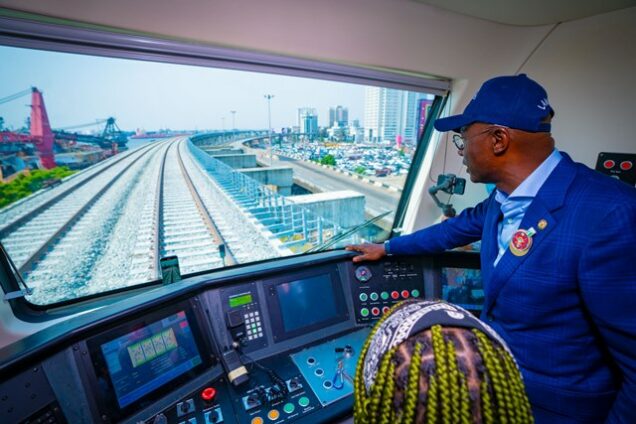
Lagos Rail Revolution: Governor Takes Symbolic Ride As Red, Blue, Green Lines Reshape Africa’s Mega City
The sight of the Governor of Lagos State riding aboard the expanding light rail system has become more than a ceremonial moment. For many residents, it represents a visible transformation of transportation infrastructure in one of the world’s fastest-growing megacities.
For decades, Lagos — a commercial powerhouse with an estimated population exceeding 20 million people — struggled under the weight of severe traffic congestion, chaotic road transportation and lost productivity estimated in billions of naira annually. Daily commuting in parts of the city often consumed four to six hours for workers, students and traders navigating overcrowded highways.
Today, the emerging rail network under the APC-led Lagos State Government is increasingly being projected as one of the most ambitious urban transportation reforms in modern Nigerian history.
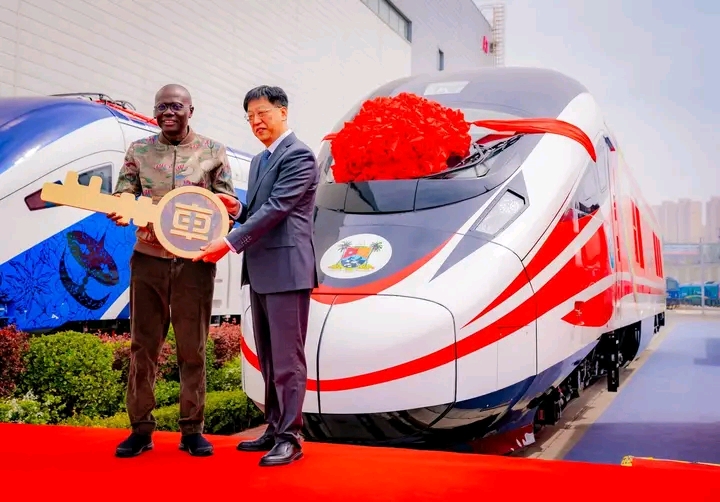
The operational Blue Line, connecting Marina to Mile two, has already become a major mobility corridor for thousands of commuters.
The Red Line, linking Agbado to Oyingbo and extending through densely populated districts, was designed to further reduce pressure on major roads including Agege Motor Road and Ikorodu Road corridors.
The proposed Green Line is expected to connect critical economic and coastal zones, including the Lekki axis and future airport corridor.

Transport analysts note that Lagos is attempting something few African cities have achieved at comparable scale: integrating rail transportation into a massive urban ecosystem previously dominated almost entirely by road traffic.
Comparatively, cities such as London, Dubai and Cairo invested heavily in rail systems decades ago to support population growth, reduce congestion and improve economic productivity.
Lagos, despite years of delayed urban planning and explosive population expansion, is now accelerating toward a similar long-term transportation model.
Economic experts argue that efficient rail transportation does not only move people faster; it also raises productivity, reduces fuel consumption, lowers pressure on roads, improves environmental outcomes and increases investor confidence.

Many commuters using the new rail services have openly praised the development, describing the trains as cleaner, faster and more predictable than long hours spent in gridlock. For traders, civil servants and students, the time savings are increasingly translating into improved daily productivity and lower transportation stress.
Supporters of the project argue that while skepticism initially surrounded the viability of modern rail transport in Lagos, the visible operation of the Blue and Red Lines has begun changing public perception about what is possible in Nigeria’s infrastructure sector.
Critics, however, maintain that expansion, affordability, last-mile connectivity and maintenance consistency will determine whether the system achieves full long-term success. Urban development specialists also stress the need for stronger integration between rail, buses and water transportation to maximise efficiency.
Still, many observers believe the rail expansion marks a defining infrastructure legacy for the APC administration in Lagos, particularly as the state continues positioning itself as a globally competitive economic hub.
For countless residents watching trains move across corridors once defined by endless traffic, the symbolism is difficult to ignore: Lagos may finally be entering a new era of mass transportation.

“The expanding rail network across Lagos State is increasingly being viewed as one of the most visible transportation achievements of the APC-led government. From the Blue Line to the Red and proposed Green corridors, many residents say the project is gradually reducing commuting stress, restoring confidence in public infrastructure and repositioning Lagos toward the standards of modern global megacities driven by efficient mass transit systems.”‘ – National Patriots
Headlinenews.news Special Report




