

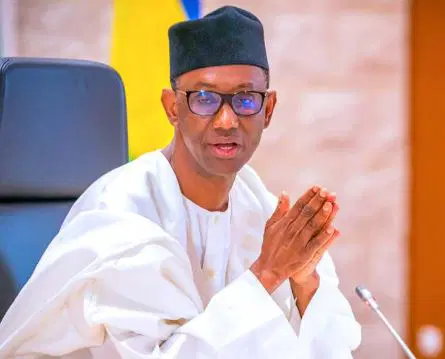
In the continuation of a political analysis series, the writer argues that recent developments within President Bola Ahmed Tinubu’s administration reflect deeper power struggles rather than routine administrative adjustments.

The article maintains that the creation of a parallel role on homeland security signals a shift in influence away from the National Security Adviser, Nuhu Ribadu, suggesting a decline in his political standing within the presidency.
It further argues that Ribadu failed to fully grasp the political sensitivity and historical weight of his office, which has traditionally been one of the most powerful yet politically volatile positions in Nigeria’s security architecture.

According to the analysis, the National Security Adviser role has evolved into a critical but unstable office, and misjudging its dynamics contributed to Ribadu’s diminishing influence.
The piece also situates Ribadu’s political trajectory within broader patterns of relations between northern political elites and southern-led administrations since 1999, spanning governments from former President Olusegun Obasanjo to former President Goodluck Jonathan, and now Tinubu.
It argues that southern administrations often operate with a political instinct shaped by historical perceptions of northern dominance, which in turn influences how power is distributed within the federal structure.

The analysis claims that northern political elites have often responded with internal divisions and lack of cohesion, weakening their collective influence within successive administrations.
It further suggests that Ribadu’s attempt to position himself as the primary political bridge between the northern region and the presidency created tension within the administration, particularly with Vice President Kashim Shettima.

The piece argues that such rivalry weakened the cohesion of the northern political bloc within the government and made it easier for the presidency to consolidate influence across key political structures.
It also references broader political developments within the ruling party, suggesting that internal struggles and strategic positioning have shaped recent political realignments.
The analysis concludes that Ribadu’s experience highlights the importance of political alignment, internal cohesion, and strategic awareness within Nigeria’s complex power structure, particularly for northern politicians operating under southern-led governments.




