

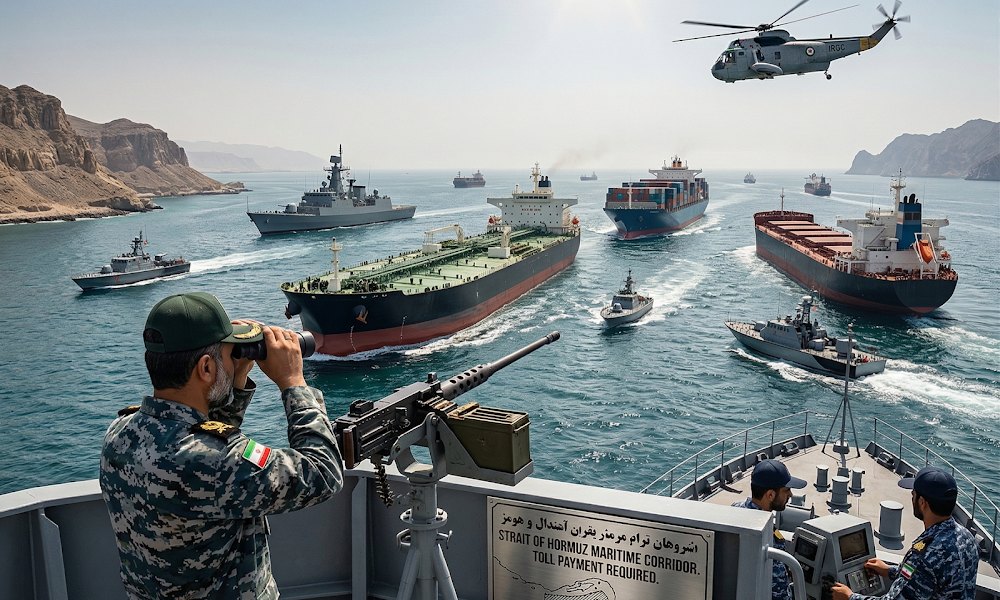
Iran has announced the establishment of the Persian Gulf Strait Authority, introducing new rules requiring vessels to obtain authorization before passing through the strategically important Strait of Hormuz.

According to the authority, it will now oversee and coordinate all vessel movements through the waterway, insisting that shipping companies must seek approval and provide detailed operational information before transit.
The new requirements reportedly include over 40 categories of information such as cargo contents, ownership details, crew nationalities, and final destinations. Reports also suggest that some ships have already paid large transit fees, with certain payments allegedly made in Chinese yuan.

Iranian authorities also released maps claiming military oversight across large sections of the strait, a move that has intensified concerns among global shipping operators and energy markets.
The development has affected several international vessels, including African-linked ships operating within the Gulf region. Some tankers have reportedly continued transit operations under Iranian coordination, while others faced disruptions or route changes due to heightened tensions.

Shipping data indicates that vessel traffic through the Strait of Hormuz has dropped sharply in recent months compared to pre-conflict levels, reflecting growing uncertainty in one of the world’s most critical oil transit routes.
The move has attracted criticism from the United States, European nations, and Gulf countries, many of which argue that Iran’s actions could violate international maritime regulations governing freedom of navigation.

The United Arab Emirates also rejected Tehran’s position, describing the claims over the strategic waterway as unrealistic and politically motivated.
Analysts say the situation could further impact global energy supply chains, shipping costs, and international trade, especially as tensions continue across the Middle East.




