By Headlinenews.news Special Report
For too long, terrorists, bandits and insurgents across Africa have dictated fear, controlled forests, terrorised villages, ambushed military convoys and turned innocent citizens into refugees inside their own country.
Entire communities have gone to sleep uncertain they will wake up alive.
Farmers have abandoned fertile lands. Highways have become death traps. Schoolchildren have been kidnapped. Rural economies have collapsed. Soldiers have walked into deadly ambushes laid by criminals who understand the terrain better than overstretched security forces.
But warfare is changing globally.
And Africa now stands at a defining crossroads.
The old counterterrorism model — waiting for terrorists to strike before deploying exhausted troops into forests and dangerous territories — is becoming increasingly outdated in the age of drones, satellite intelligence, artificial intelligence and integrated digital warfare systems.
The future belongs to nations that can see threats before they emerge, track terrorists in real time, monitor borders digitally and neutralise dangers swiftly from the air.
This is why the emerging security strategy associated with Burkina Faso under Captain Ibrahim Traoré has attracted attention across Africa and beyond. The country has increasingly leaned toward drone warfare, rapid aerial response systems and enhanced surveillance capabilities in its battle against insurgents operating across the Sahel region.
While some dramatic social media claims regarding exact operational structures, targeting systems and command centre figures remain difficult to independently verify publicly, the broader transformation itself is undeniable.
Technology is redefining modern warfare.
The era when terrorists could hide comfortably inside forests for months without detection is gradually ending in technologically advanced military environments.
The new battlefield is digital.
And the psychological balance of power can change completely when terrorists realise they are the ones being hunted.
That is the turning point Nigeria and Africa must now pursue aggressively.
Terrorists should fear movement.
They should fear communication.
They should fear assembling in groups.
They should fear travelling at night.
They should fear crossing borders.
Most importantly, they should fear the sky.
Across modern conflicts worldwide, drone technology has transformed military operations dramatically.
In Ukraine, drones have altered battlefield strategy on both sides. In the Middle East, precision air surveillance and unmanned systems have become central to counterterrorism operations. Türkiye’s Bayraktar drone programme demonstrated how relatively affordable unmanned systems can change the balance of power in asymmetric warfare. The United States has spent decades building integrated intelligence and drone networks capable of conducting surveillance and precision strikes thousands of kilometres away.
China has emerged as one of the world’s largest exporters of military drone systems, offering relatively affordable options to developing nations. Russia, Iran, Israel and other powers have also accelerated investments in drone warfare, AI-assisted military systems and electronic surveillance infrastructure.
Africa cannot remain stuck in 20th-century security structures while terrorist organisations evolve using modern technology.
The uncomfortable truth is that many insurgent groups operating across Africa already use GPS systems, encrypted communications, satellite phones, improvised drone surveillance and sophisticated mobility networks across porous borders.
Nigeria, despite possessing one of Africa’s largest military establishments, still faces multiple overlapping security crises — Boko Haram and ISWAP terrorism in the Northeast, armed banditry in the Northwest, kidnapping syndicates spreading across highways and forests, piracy concerns in coastal waters, oil infrastructure sabotage in the Niger Delta and violent criminal networks in several regions.
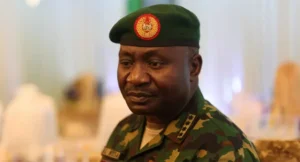

The human cost has been devastating.
According to various international security assessments over the years, tens of thousands of people have died from insurgency-related violence in Nigeria, while millions have been displaced from their homes. Entire local economies have collapsed under insecurity. Food inflation has worsened partly because farmers cannot safely access agricultural lands in vulnerable areas.
This is not merely a military issue anymore.
It is an economic emergency.
It is a national survival issue.
No country can become globally competitive while large territories remain under fear.
This is why Nigeria must radically modernise its counterterrorism architecture.
The country must move from reactive warfare to predictive warfare.
Instead of waiting for attacks, security systems should detect suspicious movement before attacks happen.
Instead of deploying soldiers blindly into forests, aerial surveillance should first map enemy locations, supply routes and gathering points.
Instead of allowing terrorists to disappear after attacks, drones should track escape routes continuously.
Instead of terrorists hunting civilians, the terrorists themselves must become the hunted.
Nigeria should establish a nationwide integrated digital security grid connecting all geopolitical zones through advanced command-and-control centres supported by satellite intelligence, drone operations, thermal imaging systems and rapid-response coordination units.
Such command centres would not simply monitor terrorism alone. They could also support anti-kidnapping operations, border security, pipeline surveillance, anti-smuggling enforcement, maritime protection and emergency response coordination nationwide.
A modern digital counterterrorism system for Nigeria should include:
• Armed tactical drones for rapid intervention operations.
• Long-endurance surveillance drones capable of monitoring remote forests and border corridors.
• AI-assisted intelligence analysis systems.
• Satellite-linked monitoring infrastructure.
• Thermal detection systems for night operations.
• Integrated communication systems linking military, police, DSS, civil defence and air force operations.
• Real-time operational dashboards for coordinated response.
• Electronic mapping of vulnerable forests and criminal corridors.
• Indigenous drone manufacturing and assembly capability to reduce long-term dependence.
• Highly trained cyber and drone warfare units within the armed forces.
Critically, such systems reduce unnecessary troop exposure.
This does not mean soldiers become irrelevant.
Far from it.
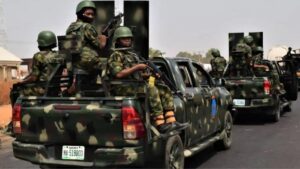
Ground troops remain essential for territorial control, intelligence gathering, rescue operations and post-strike stabilisation. However, technology can significantly reduce the number of soldiers walking blindly into deadly ambushes or landmine-infested territories.
One properly equipped surveillance drone can monitor vast areas that would normally require hundreds of personnel on dangerous patrol missions.
One thermal imaging system can detect movement in darkness where terrorists previously operated freely.
One integrated command system can coordinate responses across multiple states simultaneously within minutes.
This is how modern warfare multiplies military effectiveness.
The psychological impact alone would be enormous.
At present, many rural communities live in fear because terrorists often appear unpredictable and unstoppable. But when criminals know they can be detected from the air, tracked digitally and targeted rapidly, the psychological advantage shifts dramatically.
Fear changes sides.
The hunter becomes the hunted.
Terrorist groups thrive where governments appear blind, slow or weak. But they begin to fracture when constant surveillance disrupts movement, logistics, recruitment and communication.
No criminal network operates effectively under relentless pressure.
This is where Nigeria’s strategic opportunity lies.
The country possesses enormous untapped advantages.
Nigeria has engineers, software developers, aviation specialists, universities, military institutions and financial capacity capable of supporting a major domestic defence technology revolution if properly coordinated.
Instead of relying almost entirely on imported security solutions indefinitely, Nigeria should aggressively invest in indigenous defence technology development partnerships involving universities, private firms, military research institutions and local manufacturers.
The long-term objective should not merely be buying drones.
It should be building Nigerian capability.
A nation that cannot secure itself independently remains strategically vulnerable regardless of population size or natural resources.
The economic benefits of defeating insecurity would also be transformative.
Agricultural productivity would rise sharply as farmers return safely to abandoned lands. Transport and logistics costs would reduce. Foreign direct investment confidence would improve. Tourism and hospitality sectors would expand. Interstate commerce would grow faster. Insurance risks would decline. Infrastructure projects could proceed more safely across vulnerable regions.
Security is not separate from development.
Security is development.
No investor willingly commits billions into unstable environments where highways are unsafe and critical infrastructure remains vulnerable to attacks.
Of course, advanced surveillance and drone systems also raise serious concerns about accountability, civilian protection and operational discipline. Those concerns must never be ignored. Any modern counterterrorism strategy must operate within legal frameworks, constitutional safeguards and strict operational oversight mechanisms to prevent abuse or wrongful targeting.
Technology without accountability can become dangerous.
But weakness without technology is equally dangerous.
Nigeria now faces a historic choice.
Continue fighting 21st-century terrorists with largely outdated structures and reactive deployments — or embrace a smarter, technology-driven security doctrine capable of restoring fear to criminal networks instead of innocent civilians.
The future battlefield will not belong to the side with the most noise.
It will belong to the side with superior intelligence, surveillance dominance, faster response capability and digital control.
Africa must stop normalising insecurity as permanent.
The continent must stop acting as though terrorism is unbeatable.
It is not unbeatable.
It is beatable with political will, technological investment, intelligence coordination and modern strategy.
The forests must no longer belong to terrorists.
The highways must no longer belong to kidnappers.
The villages must no longer belong to fear.
The sky itself must become a warning signal to every criminal network threatening national stability.
And when terrorists begin to fear movement, fear communication and fear the sound of drones overhead, then the tables would finally have turned.
That is when the hunted become the hunted no more.
Princess Gloria Adebajo-Fraser MFR
President, the National Patriots