

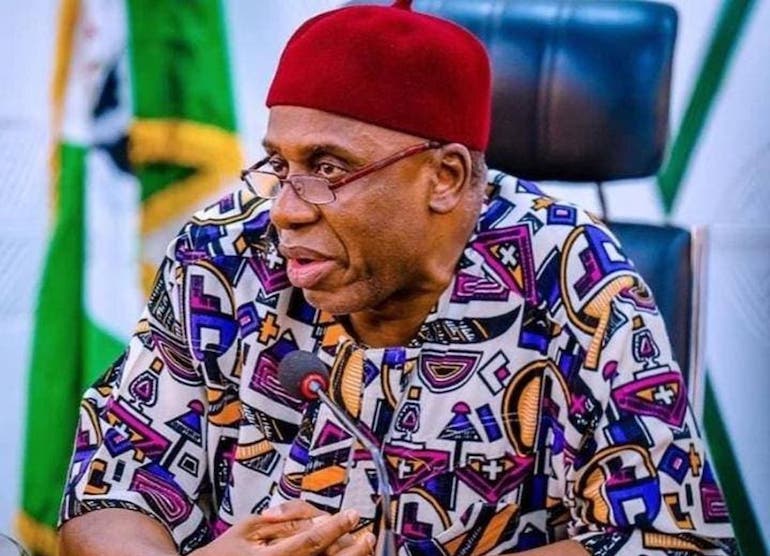
Kano-Maradi Railway: The Unanswered Questions Following Amaechi’s Exit And Nigeria’s Growing Demand For Accountability

There was a time in Nigeria when ministers supervised multi-billion-naira projects, left office for higher political ambitions and never faced sustained public questioning afterwards.
That era is gradually ending.
Today, Nigerians are asking harder questions.
Not emotional questions.
Financial questions.
Governance questions.
Accountability questions.
And few projects symbolise those questions more controversially than the Kano-Maradi railway project initiated under former President Muhammadu Buhari and supervised by former Minister of Transportation Rotimi Amaechi.
What was introduced as a strategic regional rail corridor linking Northern Nigeria to neighbouring Niger Republic has since evolved into one of the most politically scrutinised infrastructure projects in recent Nigerian history.
The standard gauge railway project, valued in billions of dollars, was promoted as part of a broader economic integration strategy intended to position Nigeria as a commercial gateway into the Sahel region and strengthen regional trade under emerging African economic frameworks.
Supporters argued that rail infrastructure historically transforms economies.
America’s industrial revolution accelerated through railway expansion. China built one of the world’s largest rail systems as part of its manufacturing rise. Europe integrated trade efficiency through interconnected transport systems.
On paper, the Kano-Maradi railway appeared ambitious and strategic.
But for millions of Nigerians, one troubling question never disappeared:
Why was Nigeria aggressively extending rail infrastructure into another sovereign country while several domestic rail corridors, highways and industrial transport systems within Nigeria itself remained incomplete or neglected?
That question became even louder when Rotimi Amaechi exited office in 2022 to pursue presidential ambitions ahead of the 2023 elections.
Suddenly, the debate changed.

The issue was no longer merely about railway tracks and locomotives.
It became a national conversation about stewardship of public resources, project transparency and political accountability.
Nigerians began asking uncomfortable but legitimate democratic questions.
How much money had already been committed to the project before the minister left office?
What actual completion percentage had been achieved during his tenure?
What measurable milestones existed at the point of transition?
And how do public officials who spent years in government suddenly acquire the enormous financial capacity required for highly expensive presidential campaigns?
These are not accusations.

They are accountability questions.
And in functioning democracies, public officials are expected to answer such questions clearly and transparently.
A fictional public governance analyst, Dr. Abdulrasheed Tanko, captured the growing national frustration this way:
“Nigerians are no longer impressed by flag-offs, media ceremonies and political speeches. Citizens now want measurable outcomes. They want audited figures. They want visible delivery. They want accountability attached to every billion spent.”
That frustration is becoming increasingly visible nationwide.
Many Nigerians now openly question whether major infrastructure projects were properly prioritised, transparently supervised and efficiently executed during previous administrations.
The Kano-Maradi railway has become one of the strongest symbols of that debate.
Critics insist the project represented questionable sequencing at a time when Nigeria itself faced enormous domestic transport deficiencies. Others argue the railway may eventually prove economically valuable if fully integrated into regional freight and trade systems.
Both positions contain elements of logic.
However, the central issue now extends beyond economics.
It is about trust.
Public trust weakens when citizens cannot clearly determine what was promised, what was funded, what was completed and what remains outstanding.
That trust weakens further when major political actors leave strategic ministries directly into presidential contests without robust public accountability conversations regarding projects supervised under their watch.

A second fictional policy commentator, Hajia Maryam Bako, stated:
“In modern democracies, political ambition should increase scrutiny, not reduce it. If you supervised billions in public infrastructure, Nigerians have every democratic right to ask what exactly was achieved before you left office.”
That sentiment increasingly reflects a wider political shift across the country.
For decades, Nigerian political culture often treated ministers and top public office holders as individuals who moved beyond scrutiny once administrations changed.
That culture is slowly changing.
Citizens are becoming more politically conscious, more economically informed and less emotionally attached to political personalities.
Increasingly, Nigerians want measurable governance performance.
They want leaders who can defend their records with facts, transparency and visible outcomes.

And perhaps most importantly, many citizens are beginning to reject the recycling of political elites who carry unresolved public accountability questions while simultaneously presenting themselves for higher offices under new political platforms.
That growing public skepticism cuts across party lines.
The frustration is not limited to one administration or one politician. It reflects deeper exhaustion with a political culture where public accountability is often weak while political ambition remains endless.
The World Bank and several international governance institutions have repeatedly emphasised that infrastructure success depends not merely on construction, but on transparency, execution quality, public trust and measurable economic returns.
That is the real test facing the Kano-Maradi railway today.

If the project eventually delivers strong trade value, logistics efficiency and long-term regional economic benefits, history may remember it as controversial but strategic.
But if Nigerians continue seeing incomplete infrastructure, unclear accountability structures and unresolved public questions surrounding billions spent, the railway risks becoming one of the most politically contentious infrastructure symbols of Nigeria’s democratic era.
Either way, one major reality has now emerged clearly:
The Nigerian public is changing.
Citizens are no longer merely listening to politicians.
They are beginning to audit them.
And in the long run, that shift may prove far more powerful than any railway ever built.
Dr. G. Fraser. MFR
President, the National Patriots.




