

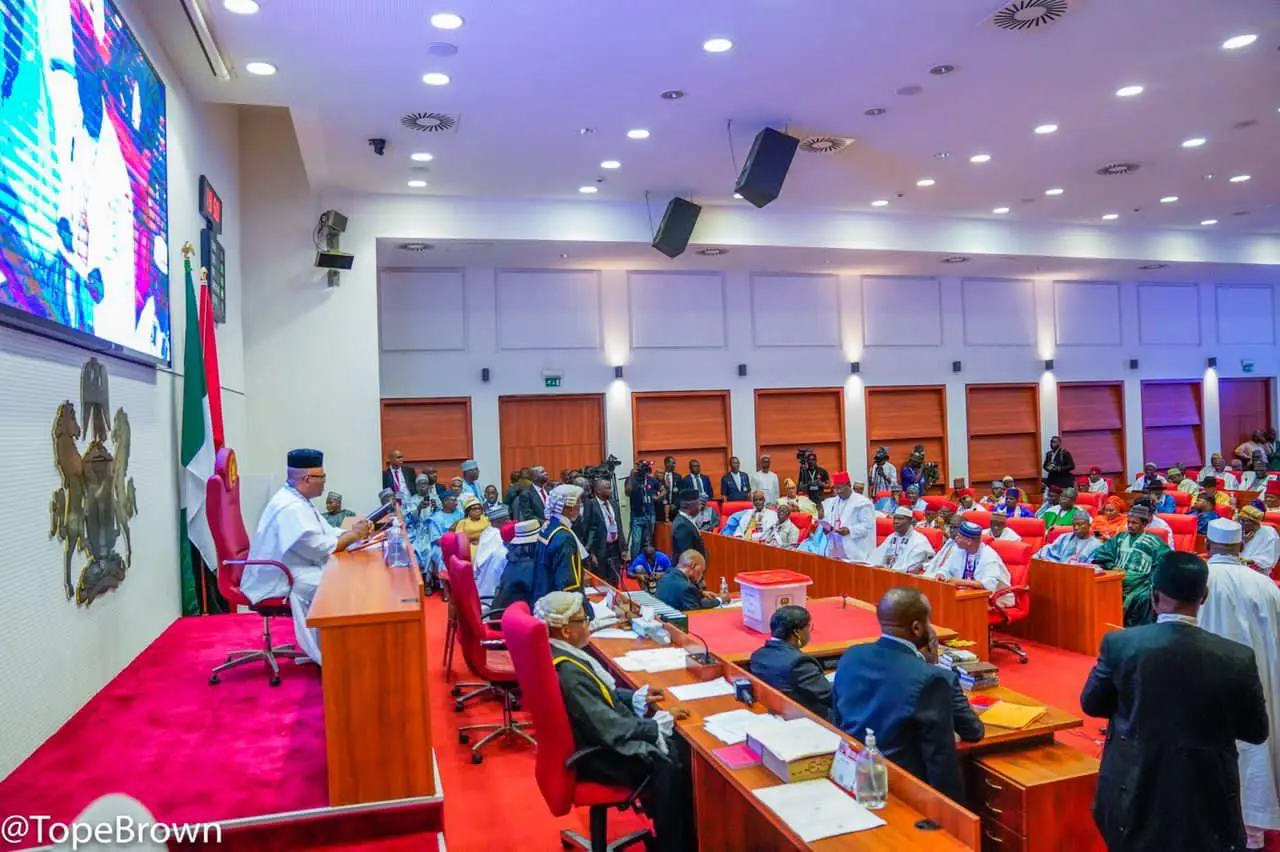
The Senate has passed the second reading of a bill aimed at regulating cryptocurrency operations in Nigeria, protecting investors, and strengthening the country’s growing digital economy.
The proposed legislation was approved during Tuesday’s plenary session after lawmakers supported it through a voice vote, with Deputy Senate President Barau Jibrin presiding over proceedings. Following its passage, the bill has been referred to the Senate Committee on Capital Market for further review and is expected to undergo a public hearing, with a report due within four weeks.

The bill, sponsored by Barau Jibrin and presented by Senate Chief Whip Tahir Monguno, seeks to establish a clear legal and regulatory structure for virtual assets, digital currencies, and Virtual Asset Service Providers (VASPs). It also introduces requirements for licensing, compliance, and transparency for cryptocurrency exchanges operating within the country.

During the debate, Monguno emphasized that Nigeria has not kept pace with other African nations in regulating digital finance, despite having one of the highest levels of cryptocurrency adoption on the continent. He warned that the absence of proper regulation has exposed investors to financial risks and allowed illegal activities to thrive.
Lawmakers supporting the bill noted that millions of Nigerians are already active in the digital asset space, using cryptocurrencies for savings, trading, and cross-border transactions. They argued that a formal framework is necessary to reduce fraud, prevent market abuse, and curb illicit financial flows such as money laundering and terrorism financing.

Some senators, including representatives from Kwara South, Lagos East, Ogun Central, and Edo North, backed the proposal while urging careful alignment with existing financial laws to avoid regulatory overlap and ensure consistency within the sector.
Concerns were also raised about the need for a balanced approach that supports innovation while preventing the emergence of unregulated black-market activities.

If eventually passed into law and signed by the President, the bill is expected to significantly reshape Nigeria’s digital asset landscape by improving oversight, boosting investor confidence, and encouraging both local and foreign investment in the fintech and blockchain sectors.




