

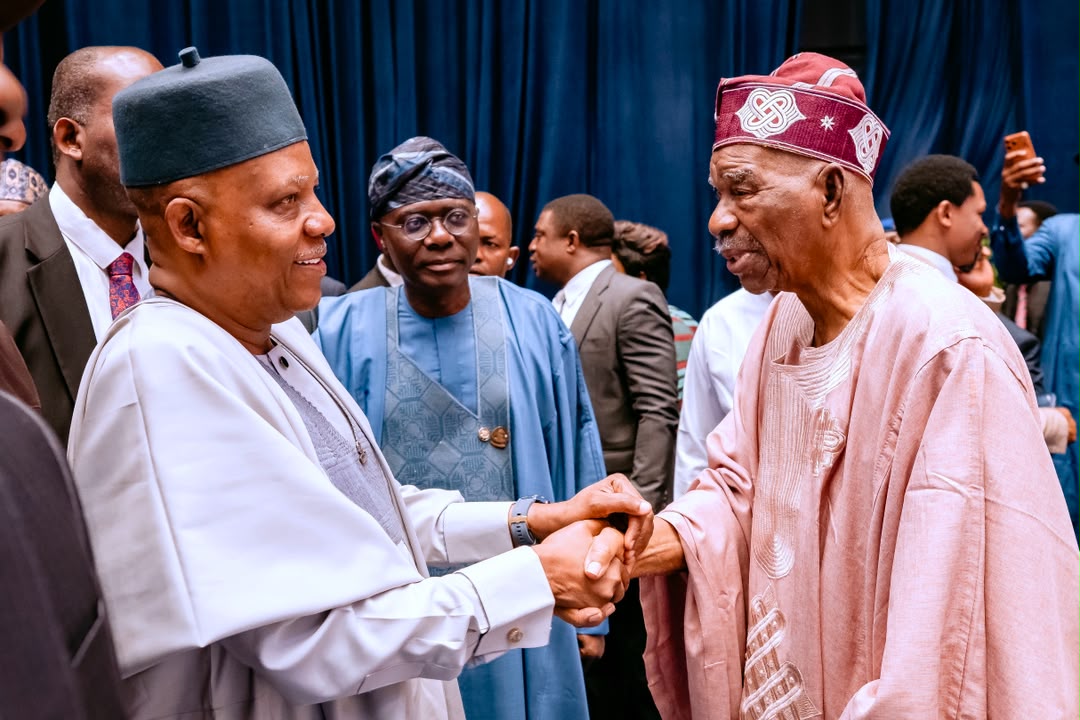
Vice President Kashim Shettima has said that Nigeria’s ambition of building a $1 trillion economy will be driven by enterprise, investment, and coordinated reforms across all levels of government.
Speaking at an investment summit in Lagos, the Vice President highlighted Lagos State as a leading example of how subnational governance can accelerate national economic transformation and attract global capital.

He noted that Nigeria’s economic future depends on creating a strong environment that supports innovation, productivity, and private sector growth, describing Lagos as a key gateway for commerce and investment in Africa.
Shettima praised Lagos for consistently positioning itself as a centre for business activity, describing it as a testing ground for ideas, governance, and economic execution. He also credited long-term institutional reforms and leadership continuity for the state’s economic progress.

He acknowledged the foundational role of past and present Lagos leadership in shaping the state’s development trajectory, while commending ongoing efforts to sustain growth and improve its attractiveness to investors.
The Vice President explained that recent economic reforms by the federal government are aimed at restoring investor confidence, ensuring fiscal stability, and encouraging large-scale private sector participation.
He admitted that some policy decisions have been difficult but insisted they were necessary to build a more productive and competitive economy.
Shettima also emphasized Nigeria’s demographic advantage and its potential to benefit from the African Continental Free Trade Area, noting that the country is well positioned to become a major hub for production, logistics, and innovation in Africa.

He added that achieving the $1 trillion economy goal will require strong collaboration between the federal government, state governments, and the private sector.
Other speakers at the event echoed similar sentiments, highlighting Lagos as a key investment destination and stressing the importance of reforms, infrastructure development, and regional cooperation in driving economic growth.




