

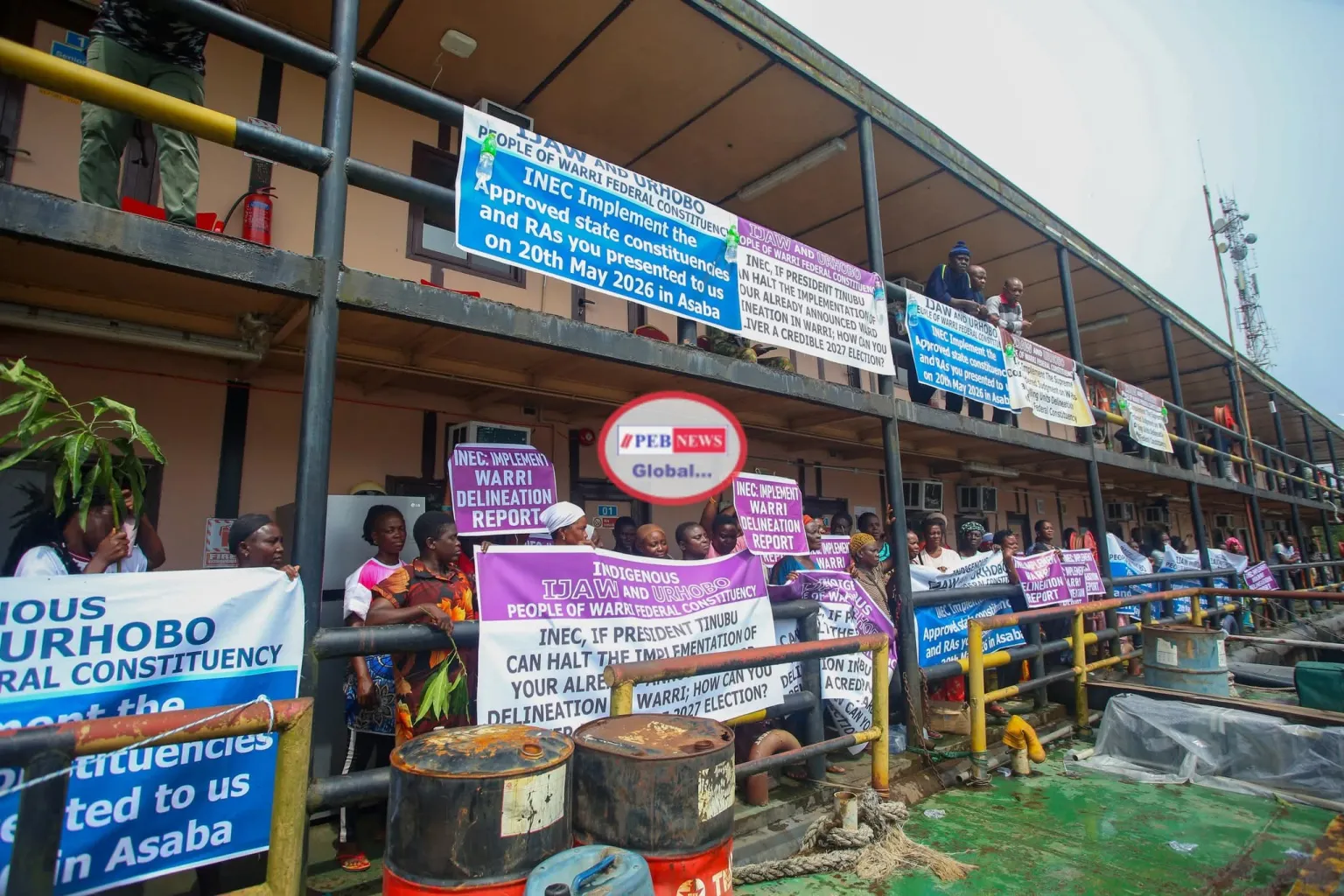
Hundreds of protesters have shut down 13 oil flow stations in Delta State over the demand for the implementation of a disputed ward delineation report, causing major disruptions to oil production activities and putting Nigeria’s crude output at risk.
The shutdown, which started on Monday across communities in the Warri Federal Constituency, has affected key oil facilities operated by Renaissance Africa Energy Company, Chevron Nigeria Limited, and Nestoil/Neconde. Industry sources estimate that the impacted stations collectively produce about 400,000 barrels of crude oil per day.

The affected flow stations include Odidi 1 and 2, Batan, Ogbanabou, Jones Creek, Otunana, Egwa 1 and 2, Abiteye, Makaraba, Olero Creek, Dibi Field, and Opuekeba.
The protesters—made up largely of women and youths from Gbaramatu, Ogbe-Ijoh, Isaba, Egbema, and Diebiri kingdoms—reportedly occupied the facilities and blocked workers from gaining access. They also disrupted logistics by restricting movement through waterways used by the oil companies.

Their action is linked to the ongoing dispute over the Independent National Electoral Commission (INEC) ward delineation exercise carried out following a Supreme Court ruling. The protesters insist that production will remain shut until the commission fully implements the final report presented in Asaba in May.
Demonstrators carried placards demanding immediate implementation of the delineation report, insisting it is key to addressing long-standing political representation issues in the area.

Speaking on behalf of the group, a representative said the protest was a response to what they described as delays in executing a completed process, stressing that their action would continue until their demands are met.
The dispute traces back to a 2022 Supreme Court judgment ordering a fresh delineation of wards and polling units in Warri Federal Constituency. Although INEC later completed the exercise and submitted its report, disagreements among Ijaw, Urhobo, and Itsekiri stakeholders have stalled implementation.

Concerns are now growing over the economic impact of the shutdown, as Nigeria continues efforts to boost crude production and improve export earnings. A prolonged disruption could affect national output and government revenue.
As of the time of reporting, neither the affected companies nor regulators had issued official statements on the extent of production losses or steps being taken to restore operations.
The protesters maintain that their action will continue until the ward delineation report is implemented ahead of the 2027 general elections.




