

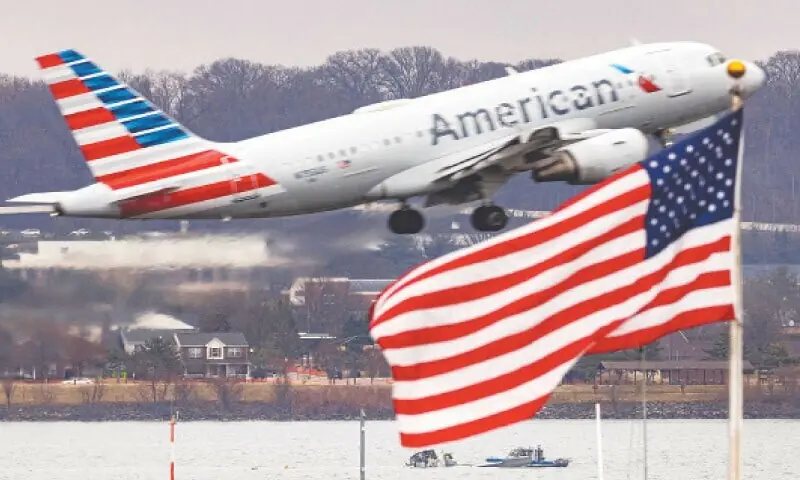
Airlines around the world could save billions of dollars on fuel costs following a decline in oil prices triggered by an interim peace agreement between the United States and Iran. However, travelers hoping for lower airfares may have to wait, as carriers are expected to prioritize improving profitability over reducing ticket prices.

The situation is particularly evident in the United States, where airlines have faced rising fuel expenses throughout the year. Although carriers increased ticket prices, baggage fees, and adjusted flight schedules, those measures only partially offset higher operating costs.
With jet fuel prices now falling sharply from recent highs, airlines are positioned to benefit significantly. Industry estimates suggest that if current fuel prices remain stable, US carriers could save tens of billions of dollars annually on fuel expenditures.

Despite the drop in fuel costs, airfare levels remain elevated. Analysts note that ticket prices have not increased at the same pace as fuel expenses over recent months, meaning many airlines still have room to recover lost margins before considering fare reductions.
Several major US airlines have reported that only a portion of higher fuel costs has been passed on to passengers. While some carriers have recovered close to half of their additional fuel expenses through pricing adjustments, others have recovered even less.
Industry executives believe airlines are gradually moving closer to fully offsetting those costs through higher fares and ancillary revenues. As a result, many carriers are expected to maintain current pricing levels even as fuel becomes cheaper.

Recent market data show that domestic airfare prices in the United States remain significantly higher than they were a year ago, reflecting strong demand and limited seat availability.
Analysts argue that the key issue is no longer fuel costs alone but whether airlines can sustain current ticket prices while benefiting from lower operating expenses. Reduced fuel costs could help improve airline earnings without necessarily leading to immediate savings for passengers.
Outside the United States, the impact is expected to vary by region. In Europe, long-haul routes may see some fare moderation because airlines were more successful in passing fuel costs on to travelers. Short-haul routes, however, could remain expensive if travel demand continues to strengthen.
In Asia, market conditions differ widely. Some airlines face weaker demand and reduced pricing power, while others are benefiting from strong premium travel and cargo operations that help offset operational costs.
The Middle East presents a unique case due to disruptions caused by regional tensions. Some carriers may introduce promotional offers to attract travelers back to affected routes, although widespread fare reductions remain unlikely because fuel prices are still relatively high compared to previous years.
Aviation experts emphasize that airlines purchase fuel over extended periods, meaning the financial benefits of lower prices are not felt immediately. Additionally, current fuel costs remain considerably higher than they were a year ago despite recent declines.

Airline profitability is therefore expected to improve before passengers see meaningful reductions in ticket prices. Industry forecasts suggest that even modest decreases in fuel costs could significantly boost earnings for major carriers.
Unlike previous periods when falling oil prices triggered aggressive competition and fare wars, today’s market conditions are different. Aircraft delivery delays, airport capacity constraints, and slower expansion among budget airlines are limiting the chances of widespread price-cutting.
Current projections indicate only modest growth in airline seat capacity, giving carriers greater flexibility to maintain existing fare levels. Financial analysts believe these supply constraints will help airlines preserve pricing power and strengthen profitability.
For travelers, the future of airfare pricing may depend less on fuel costs and more on consumer demand. If passenger demand remains strong, airlines are likely to continue charging premium fares even as their fuel expenses decline.
Ultimately, while falling oil prices provide a welcome financial boost for the aviation industry, passengers should not expect immediate or widespread reductions in ticket prices.




