

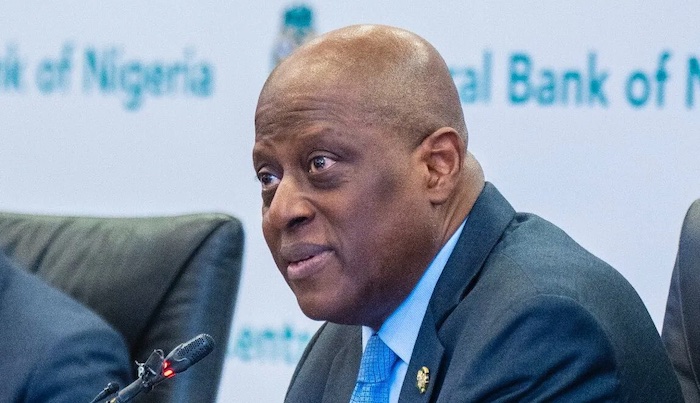
The Governor of the Central Bank of Nigeria (CBN), Olayemi Cardoso, has urged commercial banks to invest the fresh capital raised during the recently concluded banking recapitalisation exercise into sectors that will drive economic growth, create jobs, and boost foreign exchange earnings.

Speaking at the Future of Banking Summit 2026 in Lagos, Cardoso said the completion of the recapitalisation programme marks the beginning of a new phase for the banking industry, where the focus should shift from raising capital to supporting productive sectors of the economy.
He disclosed that the recapitalisation exercise, which ended on March 31, 2026, generated ₦4.65 trillion in fresh capital, enabling 33 banks to meet the minimum capital requirements for their respective operating licences. According to him, about 73 percent of the funds were raised from Nigerian investors, while the remaining capital came from international markets, reflecting confidence in the country’s financial system.

Cardoso stressed that the objective of the exercise was not simply to increase banks’ balance sheets but to strengthen their ability to finance businesses, absorb economic shocks, and support sustainable economic development.
He encouraged banks to channel the new capital into critical sectors such as small and medium-sized enterprises (SMEs), agriculture, infrastructure, and export-oriented businesses capable of generating employment and foreign exchange.

The CBN governor also highlighted the implementation of the Payment System Vision (PSV) 2028, a strategy aimed at modernising Nigeria’s payment ecosystem and positioning the country as Africa’s leading digital finance hub. The initiative focuses on interoperability, security, financial inclusion, innovation, transparency, and collaboration.
He noted that Nigeria already has one of the world’s most advanced digital payment ecosystems, driven by fintech innovation, instant payment systems, and an extensive agent banking network. He expressed confidence that the country can move beyond adopting financial technology to developing globally competitive fintech companies.
Cardoso added that the success of both the recapitalisation programme and the Payment System Vision 2028 will depend on effective implementation, improved financial inclusion, reduced fraud, lower cross-border payment costs, and the emergence of Nigerian fintech firms capable of competing on the global stage.




