

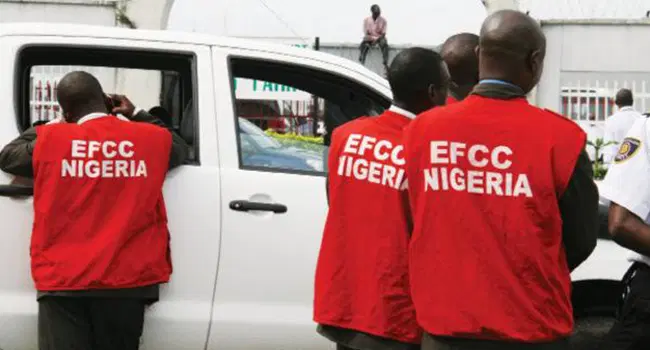
The Economic and Financial Crimes Commission (EFCC) has called for closer cooperation among African governments, regulatory agencies and civil society organisations to strengthen efforts against terrorist financing while ensuring that legitimate non-profit organisations are not burdened by unnecessary regulations.
Speaking at the 3rd Africa High-Level Civil Society Anti-Money Laundering and Counter-Terrorist Financing (AML/CFT) Conference in Abuja, EFCC Chairman, Olanipekun Olukoyede, said combating terrorist financing requires targeted, risk-based measures instead of broad restrictions on all non-profit organisations.

Represented by the Director of the Special Control Unit against Money Laundering (SCUML), Harry Erin, Olukoyede noted that terrorism financing, violent extremism, organised crime and illicit financial flows continue to threaten peace, economic growth and democratic institutions across Africa.
He explained that the Financial Action Task Force (FATF) Recommendation 8 is designed to identify non-profit organisations that may be vulnerable to terrorist financing while allowing genuine humanitarian and development organisations to operate freely.
According to him, stronger collaboration between regulators, governments, development partners and civil society remains essential for the effective implementation of the recommendation through transparency, information sharing and mutual trust.

Olukoyede said Nigeria’s coordinated efforts involving the EFCC, SCUML, the Nigerian Financial Intelligence Unit, the Office of the National Security Adviser, the Corporate Affairs Commission and civil society groups enabled the country to carry out a comprehensive risk assessment of the non-profit sector.
He added that the assessment has helped authorities adopt a more focused regulatory approach that protects legitimate charities while addressing areas vulnerable to abuse.
The EFCC chairman also stated that Nigeria’s reforms have improved transparency, strengthened institutions and boosted public confidence while ensuring compliance with international anti-money laundering and counter-terrorism financing standards.

Also speaking at the conference, the Executive Director of Spaces for Change (S4C), Victoria Ibezim-Ohaeri, said sustained collaboration between civil society organisations and regulators over the past decade has transformed their relationship into a productive partnership.
She noted that the reforms contributed to Nigeria achieving compliance with FATF Recommendation 8 and have become a model for several African countries, including Ghana, Togo, The Gambia and Burkina Faso.
Board Chairman of S4C, Samuel Diminas, expressed concern over the huge impact of illicit financial flows on Africa, revealing that the continent loses an estimated $88 billion annually through illegal financial activities.

Delivering the keynote address, United Nations Special Rapporteur on Counter-Terrorism and Human Rights, Professor Ben Saul, commended Nigeria’s progress in meeting FATF standards and urged countries to ensure that anti-terrorism financing measures remain proportionate and respect human rights.
He warned against imposing excessive regulations on civil society organisations, saying such measures could weaken humanitarian work, human rights advocacy, peacebuilding efforts and initiatives aimed at preventing violent extremism.




