

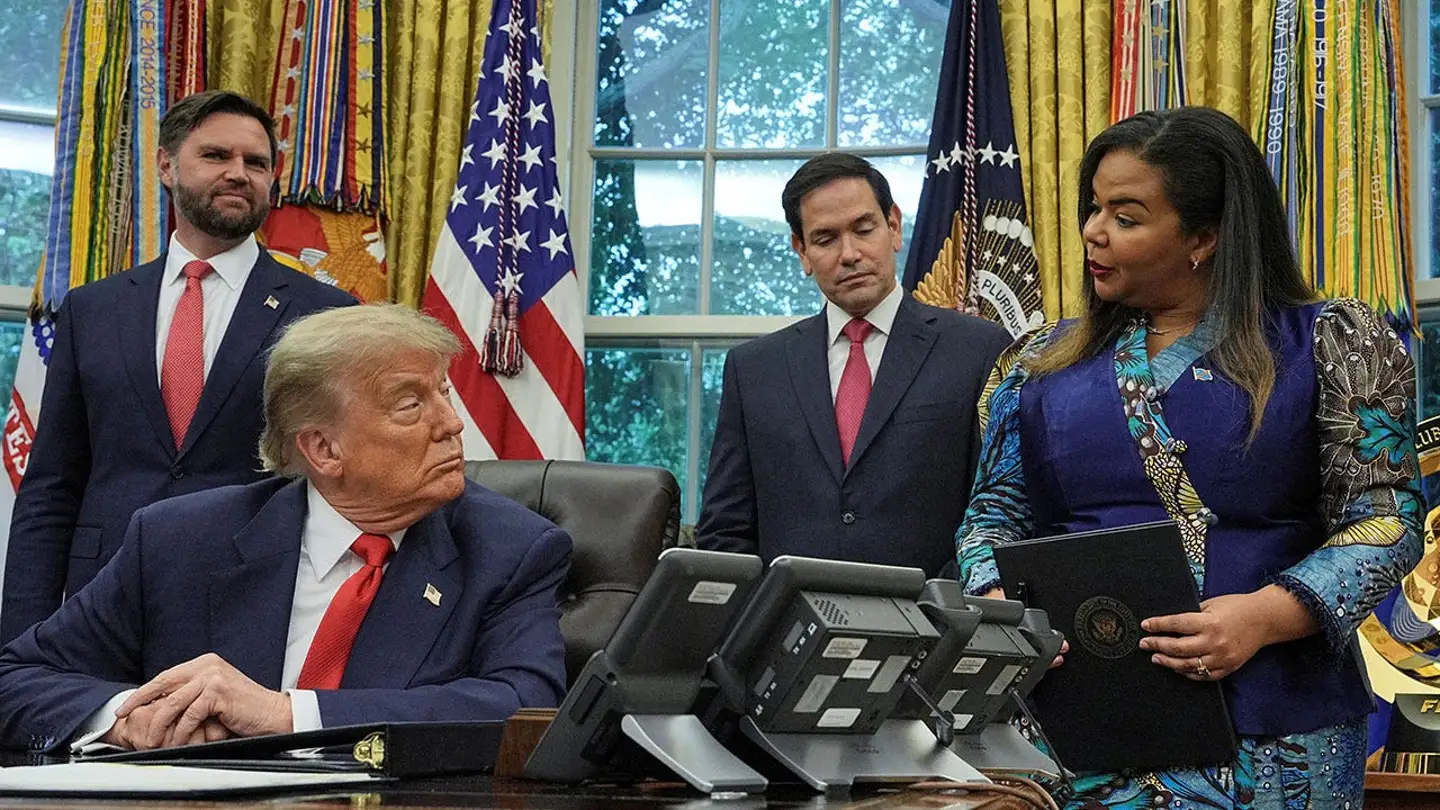
The Democratic Republic of Congo (DRC) has dismissed suggestions that increasing United States investment in its critical minerals sector is aimed at challenging China’s influence, insisting that the country welcomes partnerships with multiple global powers.
Speaking during an interview at the United Nations, Foreign Affairs Minister Thérèse Kayikwamba Wagner said the DRC’s development strategy is built on collaboration rather than competition.

According to her, a country with the size and economic potential of the DRC cannot rely on a single international partner, stressing that different countries bring unique expertise and opportunities that can contribute to national development.
Her remarks come as the United States seeks to strengthen its involvement in the DRC’s mining sector, particularly in the supply of strategic minerals such as copper, cobalt, lithium and gold, while working to diversify global supply chains.
The minister said relations between Kinshasa and Washington have become more practical and economically driven, expressing optimism that increased American investment would help transform the country’s mineral resources into long-term economic benefits for Congolese citizens.

She also urged foreign investors to go beyond extracting raw materials by supporting local processing, industrialisation, infrastructure development, technology transfer and improved access to financing.
Speaking at a United Nations forum on critical minerals, Kayikwamba Wagner warned that the global transition to clean energy should not repeat past patterns where Africa exports raw resources while manufacturing and most of the profits remain overseas.
She maintained that stronger local value addition is essential if African nations are to benefit fully from their natural resources.
Addressing regional security, the minister acknowledged that the peace process between the DRC and Rwanda has not yet ended decades of violence but described ongoing international support as an important step toward lasting stability.
She also welcomed continued diplomatic efforts and sanctions imposed on individuals and groups accused of fueling instability in eastern Congo, saying such measures demonstrate sustained commitment to the peace process.
The minister further expressed concern over the increasing cases of conflict-related sexual violence in areas affected by armed groups, stressing that restoring government authority remains crucial to ensuring justice, healthcare and protection for victims.




