

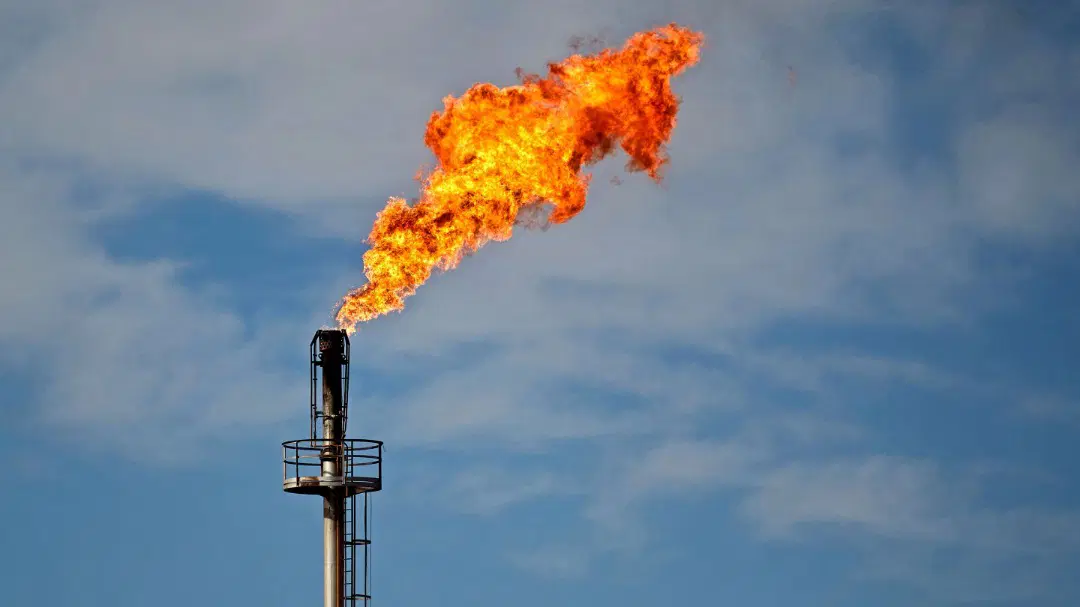
Nigeria lost an estimated 62,400 gigawatt-hours (GWh) of potential electricity between 2024 and 2025 due to gas flaring, despite ongoing efforts by the Federal Government to reduce the practice through stricter regulations and financial penalties.
The figure represents an 18.6 percent increase compared to the 50,800 GWh of potential electricity lost during the 2022–2023 period.
According to data from the National Oil Spill Detection and Response Agency (NOSDRA), the value of gas flared over the two-year period was estimated at $2.2 billion. The agency also disclosed that oil companies responsible for the flaring could face penalties totaling about $1.2 billion.

The report showed that operators working onshore accounted for 380.6 million standard cubic feet (SCF) of flared gas, while offshore operations recorded 243.8 million SCF. The flaring also released an estimated 33.2 million tonnes of carbon dioxide into the atmosphere, contributing significantly to greenhouse gas emissions.
NOSDRA noted that despite years of government interventions, gas flaring remains a major challenge in Nigeria, resulting in the waste of valuable energy resources and increasing environmental pollution.
The latest findings are consistent with the World Bank’s Global Gas Flaring Tracker Report, which listed Nigeria among the world’s top nine gas-flaring countries in 2025. Other countries on the list include Russia, Iran, Iraq, Venezuela, Mexico, Libya, Algeria, and the United States.

The report stated that these nine countries were responsible for 83 percent of global gas flaring in 2025, even though they accounted for only 46 percent of worldwide oil production. Nigeria alone flared about nine billion cubic metres (bcm) of gas during the year, making it the seventh-largest gas-flaring nation globally.
Commenting on the development, Professor Emeritus of Petroleum Economics, Wumi Iledare, said the continued flaring reflects deeper structural issues within Nigeria’s energy sector rather than simply weak enforcement of environmental regulations.

He explained that every volume of gas wasted through flaring represents missed opportunities to generate electricity, support industrial growth, create employment, increase export earnings, and improve the country’s energy security.
According to Iledare, the persistent problem is driven by inadequate gas gathering infrastructure, an underperforming electricity market, pricing challenges, and regulatory bottlenecks that make gas flaring more convenient than commercial utilization.

He emphasized that while stricter penalties are necessary, lasting solutions will require stronger policies that encourage gas capture, increased infrastructure investment, market-based pricing, and a financially stable electricity sector capable of ensuring prompt payments to gas producers.




