


Part 3
The Price of Delay: How Nigeria Spent Four Decades Borrowing from the Future
By Gloria Fraser, MFR
Opening Reflection
Every nation eventually receives a bill for the decisions it postpones. Some pay it gradually. Others pay it all at once. Nigeria’s bill accumulated over four decades—not because its leaders lacked intelligence or patriotism, but because difficult reforms were repeatedly delayed, softened or overtaken by more immediate political realities. By the time President Bola Ahmed Tinubu assumed office in May 2023, much of that bill had finally fallen due.
History rarely punishes nations for making honest mistakes. It is far less forgiving of nations that repeatedly postpone difficult decisions. Challenges deferred seldom disappear. They accumulate quietly beneath the surface until they become too large, too costly or too urgent to ignore. What might once have required measured adjustment eventually demands painful correction.
That observation captures much of Nigeria’s economic story.
Few countries have been blessed with the natural advantages that Nigeria possesses. With vast oil and gas reserves, fertile agricultural land, abundant solid minerals, a strategic geographic location and one of the world’s youngest and most entrepreneurial populations, the country appeared destined to become one of the leading economic powers of the developing world. At independence in 1960, expectations were high. Even after the civil war, the oil boom of the 1970s seemed to confirm that Nigeria’s future prosperity was almost inevitable.
But wealth can be as deceptive as poverty.
The discovery of abundant oil revenues transformed public finance, but it also created an illusion that would shape economic policy for decades. As oil income expanded, governments found it easier to finance public expenditure without undertaking some of the deeper structural reforms that long-term development required. Economic diversification became an aspiration rather than an urgency. Tax reforms progressed slowly because petroleum revenues appeared sufficient. Manufacturing struggled to compete with imports purchased through oil earnings. Agriculture, once the backbone of the economy, gradually lost its central place in national planning.
The problem was not unique to Nigeria. Economists have long described the phenomenon as the “resource curse” or the “paradox of plenty”—a situation in which countries blessed with abundant natural resources sometimes diversify more slowly because those resources temporarily mask underlying structural weaknesses.
Nigeria was not condemned by oil.
It was, at times, comforted by it.
Periods of rising oil prices created optimism and fiscal relief. Governments launched ambitious programmes, expanded spending and financed development projects. Yet when global oil prices declined, the vulnerabilities that had been hidden beneath years of strong petroleum earnings became painfully visible. Revenue contracted, fiscal pressures intensified and economic reforms that had seemed unnecessary during prosperous years suddenly became unavoidable.
The pattern repeated itself with remarkable consistency.
Economic pressure encouraged reform.
Improving conditions reduced the urgency for reform.
The cycle then began again.
It would be unfair to suggest that successive administrations ignored these challenges. Many recognised them. Different governments introduced banking reforms, privatisation programmes, agricultural initiatives, debt restructuring, pension reforms, infrastructure projects and efforts to diversify the economy. Some achieved significant successes. Others produced mixed results. Yet structural transformation proved more difficult than policy announcements.
Part of the challenge lay in the nature of democratic governance itself. Difficult reforms often produce immediate discomfort while their benefits emerge only years later. Political leaders naturally face pressure to deliver visible relief within electoral cycles. As a result, governments everywhere—not only in Nigeria—sometimes postpone decisions whose long-term benefits are outweighed by their short-term political costs.
That is why history must judge nations with fairness.
Nigeria’s present economic challenges cannot be attributed to any single administration. They were shaped by global events, fluctuating oil markets, demographic pressures, institutional weaknesses and policy choices made over many decades. Each government inherited unresolved problems, addressed some of them and passed others to its successor.
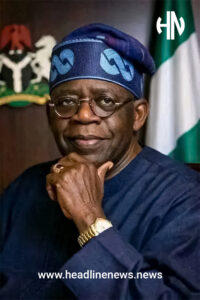
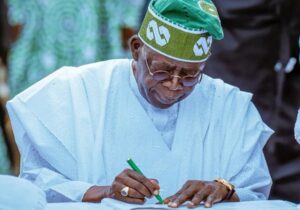
By 2023, however, the cumulative weight of those unresolved challenges had reached a point where postponement itself had become a risk. President Bola Ahmed Tinubu inherited not merely an economy under pressure but the accumulated consequences of decisions deferred across generations.
Understanding that historical journey is essential, because before any nation can decide where it wishes to go, it must first understand how it arrived where it is today.
History suggests that the answer is always the same.
The longer a nation delays confronting structural weaknesses, the fewer choices it eventually has. Problems that could once have been corrected through gradual adjustment often demand more painful remedies when they are finally addressed. Time rarely solves economic distortions. More often, it compounds them.
Nigeria’s experience reflects this reality.
For many years, the country financed development and public expenditure largely from oil revenues. That model worked reasonably well when crude oil prices were high and production remained stable. However, global energy markets became increasingly volatile, domestic production faced repeated disruptions and the demands of a rapidly growing population expanded far faster than government revenue. Roads required expansion. Schools needed improvement. Hospitals demanded greater investment. Electricity infrastructure lagged behind industrial needs. Security challenges imposed additional fiscal pressures, while millions of young Nigerians entered the labour market each year expecting opportunities worthy of their education and ambition.
The challenge was no longer simply how to spend national wealth.
It became how to create it.
That distinction changed everything.
A modern economy cannot rely indefinitely on a single commodity whose price is determined largely by international markets beyond its control. Sustainable prosperity requires a broader productive base—competitive agriculture, manufacturing, technology, mining, services and exports supported by efficient institutions and sound public finances. Nigeria understood this objective for decades. The difficulty lay not in recognising the destination but in sustaining the political resolve necessary to reach it.
Other nations confronted similar crossroads.
India’s reforms in 1991 followed years of mounting fiscal and external pressures. Indonesia’s restructuring gained momentum after the Asian Financial Crisis exposed deep vulnerabilities within its economy. Vietnam’s transformation required a decisive break from policies that had constrained productivity and private enterprise. None of these countries changed because reform was politically convenient. They changed because delay had become more costly than action.
Nigeria eventually reached a similar point.
By the time President Bola Ahmed Tinubu assumed office, many economists agreed that the country could no longer rely on incremental adjustments alone. Structural reforms that had long been debated in policy circles were no longer theoretical options; they had become practical necessities. The question before the new administration was therefore not whether change would involve sacrifice. It was whether avoiding change would impose even greater costs on future generations.
That is an uncomfortable truth for every democracy.
Citizens understandably expect governments to reduce hardship, not increase it. Yet there are moments in national history when leadership requires distinguishing between temporary relief and lasting recovery. The two are not always the same. Policies that ease today’s pressures without addressing their underlying causes may postpone discomfort, but they rarely eliminate it. Eventually, the burden returns—often heavier than before.
This is why the phrase “borrowing from the future” extends beyond public debt. A nation also borrows from the future when it postpones investment in education, delays critical infrastructure, neglects agricultural productivity, tolerates institutional weakness or avoids reforms whose necessity has become increasingly evident. Future generations inherit not only financial obligations but also unfinished responsibilities.
The significance of President Tinubu’s reform agenda should therefore be understood within this broader historical context. Whether every policy succeeds is a question that only time can answer. Whether implementation has been perfect is open to legitimate debate. What is beyond dispute, however, is that the administration assumed office at a moment when many of Nigeria’s long-standing structural challenges had converged. The luxury of postponement had become increasingly limited.
History will ultimately judge this period not by the intensity of its political disagreements but by the durability of its outcomes. If today’s difficult decisions produce stronger institutions, broader economic diversification, greater investment, improved infrastructure, more productive agriculture, sustainable public finances and rising living standards, future generations may conclude that this was the period when Nigeria finally interrupted the cycle of deferred reform. If those outcomes fail to materialise, history will record another opportunity that promised much but delivered too little.
The Final Word
Nations are rarely transformed by the decisions they make in moments of comfort. They are transformed by the choices they make when postponement is no longer possible. For decades, Nigeria repeatedly deferred difficult reforms while hoping that tomorrow would provide easier answers. By 2023, tomorrow had arrived. President Bola Ahmed Tinubu inherited that moment of reckoning. Whether it becomes the beginning of Nigeria’s renewal or another chapter of deferred promise will depend not on the courage to announce reforms alone, but on the discipline to sustain them until they produce lasting results.
Food for Thought
“The greatest burden one generation can place upon the next is not debt alone, but the cost of decisions it lacked the courage to make.”


THE NATIONAL PATRIOTS.
The National Patriots believe Nigeria’s future depends on breaking the cycle of postponed reforms. Every generation has a duty to confront difficult realities rather than transfer them to those who follow. Sustainable prosperity demands courageous leadership, institutional continuity and policies that strengthen production, expand opportunity and secure a better future for every Nigerian.

Princess Gloria Adebajo-Fraser MFR.
Former Special Adviser to Former President Goodluck Jonathan.




