Part 4
The Hardest Decision: Why Fuel Subsidy Had to End
By Gloria Fraser, MFR
Opening Reflection
Few decisions define a presidency. Fewer still define a generation. The removal of fuel subsidy was one of those rare decisions. With a single declaration on 29 May 2023, President Bola Ahmed Tinubu brought to an end a policy that had shaped Nigeria’s economy for more than four decades. Applause and outrage followed almost simultaneously. Yet beneath the politics lay a deeper question: if successive governments had acknowledged that fuel subsidy was unsustainable, why did only one administration choose to end it immediately?
History often remembers leaders not for the decisions that were easy to make, but for those that carried the greatest political risk. The policies that attract the loudest criticism in the present are sometimes the very ones that later generations recognise as necessary. Equally, history is unforgiving of leaders who postpone difficult choices simply because they are politically inconvenient.
Few policies illustrate this dilemma more vividly than Nigeria’s fuel subsidy.
For decades, fuel subsidy occupied a unique place in the nation’s political and economic landscape. To millions of Nigerians, it represented one of the few visible benefits they received from a country blessed with abundant crude oil resources. Cheap petrol became more than an economic policy; it evolved into a social contract between government and the people. Any attempt to tamper with it was viewed not merely as fiscal reform but as a direct assault on the welfare of ordinary citizens.
That perception was understandable.
For families already burdened by unemployment, inflation and inadequate public services, affordable fuel reduced transportation costs, moderated the prices of goods and offered some relief in an economy where many essential services depended on petrol or diesel. Removing the subsidy therefore appeared, on the surface, to impose hardship without offering immediate compensation.
Yet beneath that perception lay a more complicated reality.
Nigeria is one of the world’s major crude oil producers, but for many years it imported a substantial proportion of its refined petroleum products because domestic refining capacity remained inadequate. Government therefore paid the difference between the regulated pump price and the actual landing cost of imported fuel. As international crude oil prices fluctuated and the value of the naira weakened, that difference widened significantly, increasing the fiscal burden on the national treasury.
What began as a temporary intervention gradually evolved into one of the largest recurring expenditures in public finance.
Successive administrations recognised the growing problem. Various committees, economic advisers, international financial institutions and even government officials repeatedly warned that the subsidy had become increasingly expensive, encouraged inefficiency and created opportunities for abuse. Reports over the years raised concerns about fraudulent claims, opaque accounting practices and the diversion of public resources that could otherwise have been invested in infrastructure, healthcare, education, security and productive sectors of the economy.
The debate therefore was never about whether the subsidy imposed costs.
It was about whether Nigeria was politically prepared to confront those costs.

Several governments attempted partial reforms. Some adjusted fuel prices. Others announced phased removals before retreating in the face of widespread protests, labour resistance and understandable public anxiety. The fear was not unfounded. Fuel prices influence almost every aspect of economic life in Nigeria. Any increase inevitably affects transportation, food prices, production costs and household expenditure. Political leaders understood that removing the subsidy would almost certainly provoke immediate hardship and intense public opposition.
For many years, postponement appeared to be the safer political option.
But economic realities continued to change.
As subsidy payments expanded, they consumed increasing fiscal resources at a time when Nigeria faced rising infrastructure needs, growing security challenges, mounting demands for social investment and a rapidly expanding population. Every naira committed to maintaining the subsidy became a naira unavailable for roads, hospitals, schools, electricity, agricultural development or other long-term investments.
The central question confronting policymakers gradually shifted.
It was no longer whether subsidy imposed hardship.
It became whether maintaining it imposed an even greater hardship on Nigeria’s future.
That was the difficult choice awaiting President Bola Ahmed Tinubu when he assumed office on 29 May 2023.
Within hours of taking the oath of office, he chose the path that several administrations had acknowledged but ultimately deferred.
Whether history will vindicate that decision depends not only on the courage required to make it, but on what follows thereafter.
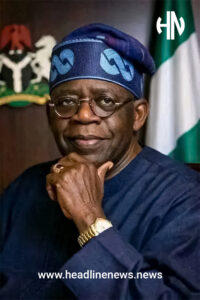
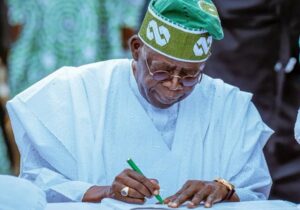
President Tinubu’s announcement that “fuel subsidy is gone” instantly altered Nigeria’s economic landscape. Within hours, petrol prices adjusted sharply, transport fares increased and the cost of goods and services began to rise. For millions of Nigerians, the reform was not experienced as an economic theory debated by experts. It was felt in markets, bus parks, factories and family budgets. The hardship was immediate, visible and undeniable.
That reality explains why the removal of fuel subsidy remains one of the most fiercely debated economic decisions in Nigeria’s democratic history.
Critics argue that the policy should have been implemented more gradually, with stronger social protection already in place before prices were allowed to adjust. Many believe government underestimated the speed with which higher fuel costs would spread through the economy, pushing up food prices, transportation costs and the general cost of living. Others questioned whether Nigerians could reasonably be asked to bear such sacrifices when corruption, inefficiency and waste in public institutions remained sources of public concern.
These criticisms deserve serious consideration.
Economic reforms do not exist in isolation from human realities. A policy may be fiscally sound and yet impose genuine hardship if implementation fails to protect vulnerable households. Successful reforms therefore require more than economic logic. They require public trust, transparent communication and visible evidence that the sacrifices demanded of citizens are producing measurable national benefits.
Yet there is another side to the argument.
Supporters of the reform contend that maintaining fuel subsidy had itself become a form of national hardship—one that was less visible but ultimately more damaging. They argue that a substantial portion of public resources was being consumed by a system that had become increasingly expensive to sustain, while critical sectors such as education, healthcare, infrastructure, security and agriculture required significantly greater investment. They further contend that a policy originally designed to benefit Nigerians had, over time, become vulnerable to inefficiencies, distortions and opportunities for abuse that reduced its effectiveness.
The fundamental question therefore was never whether Nigerians would bear costs.
The question was which costs would better serve the nation’s future.
Would Nigeria continue financing a subsidy whose fiscal burden had grown steadily heavier, or redirect those resources towards investments capable of expanding production, improving infrastructure and strengthening long-term economic growth?
History offers useful perspective.
Countries that have undertaken major economic reforms have often experienced periods of adjustment before longer-term benefits became evident. India’s liberalisation programme in 1991, Indonesia’s reforms after the Asian Financial Crisis and Egypt’s subsidy reforms all generated controversy and short-term hardship. Their experiences differed, and none provides a perfect comparison with Nigeria. They do, however, illustrate an important principle: structural reforms should not be judged solely by the pain they initially create, nor should they be considered successful merely because they were boldly announced. Their legitimacy ultimately depends on whether they improve the lives of ordinary citizens over time.
That is now the challenge before President Tinubu’s administration.
Removing the subsidy was never intended to be the destination.
It was the beginning of a larger economic journey.
For the reform to justify the sacrifices it demanded, Nigerians must see tangible evidence that the resources previously devoted to subsidy are contributing to visible national development. Better roads, improved healthcare, stronger educational institutions, expanded public transportation, increased agricultural productivity, reliable electricity, enhanced security and a more competitive economy must become measurable outcomes rather than policy aspirations.
Equally important, government must continue strengthening targeted social protection for the poorest households, improving transparency in public expenditure and demonstrating prudent fiscal management. Citizens are far more willing to endure difficult adjustments when they are confident that government is making equally difficult choices to eliminate waste, improve accountability and govern in the national interest.
History will not remember the removal of fuel subsidy simply because it happened.
It will remember what followed.
If the policy becomes the foundation for broader economic renewal, stronger public finances and sustained improvements in the quality of life, future generations may regard it as one of the defining decisions that altered Nigeria’s trajectory. If, however, the expected benefits fail to materialise, history will conclude that the hardship imposed on citizens yielded too little in return.
That is why the true significance of fuel subsidy removal cannot be measured by the announcement made on 29 May 2023.
It will be measured by the Nigeria that emerges in the years ahead.
The Final Word
Every generation encounters a decision that previous generations recognised but lacked either the opportunity or the political resolve to make. Fuel subsidy became that decision for President Bola Ahmed Tinubu. It was never destined to be judged by the applause or criticism it received in its first weeks. It will be judged by whether it released Nigeria from an increasingly unsustainable fiscal burden and created the foundation for broader national prosperity. History rarely asks whether a decision was popular. It asks whether it was necessary—and whether it ultimately worked.
Food for Thought
“The true cost of reform is not the sacrifice it demands today, but the future it fails to build tomorrow.”


THE NATIONAL PATRIOTS.
The National Patriots recognise that the removal of fuel subsidy was one of the most difficult economic decisions in Nigeria’s democratic history. Its success will ultimately depend on transparent governance, prudent use of public resources and visible improvements in infrastructure, social services, job creation and the quality of life of every Nigerian.

Princess Gloria Adebajo-Fraser MFR.
Former Special Adviser to Former President Goodluck Jonathan GCFR.