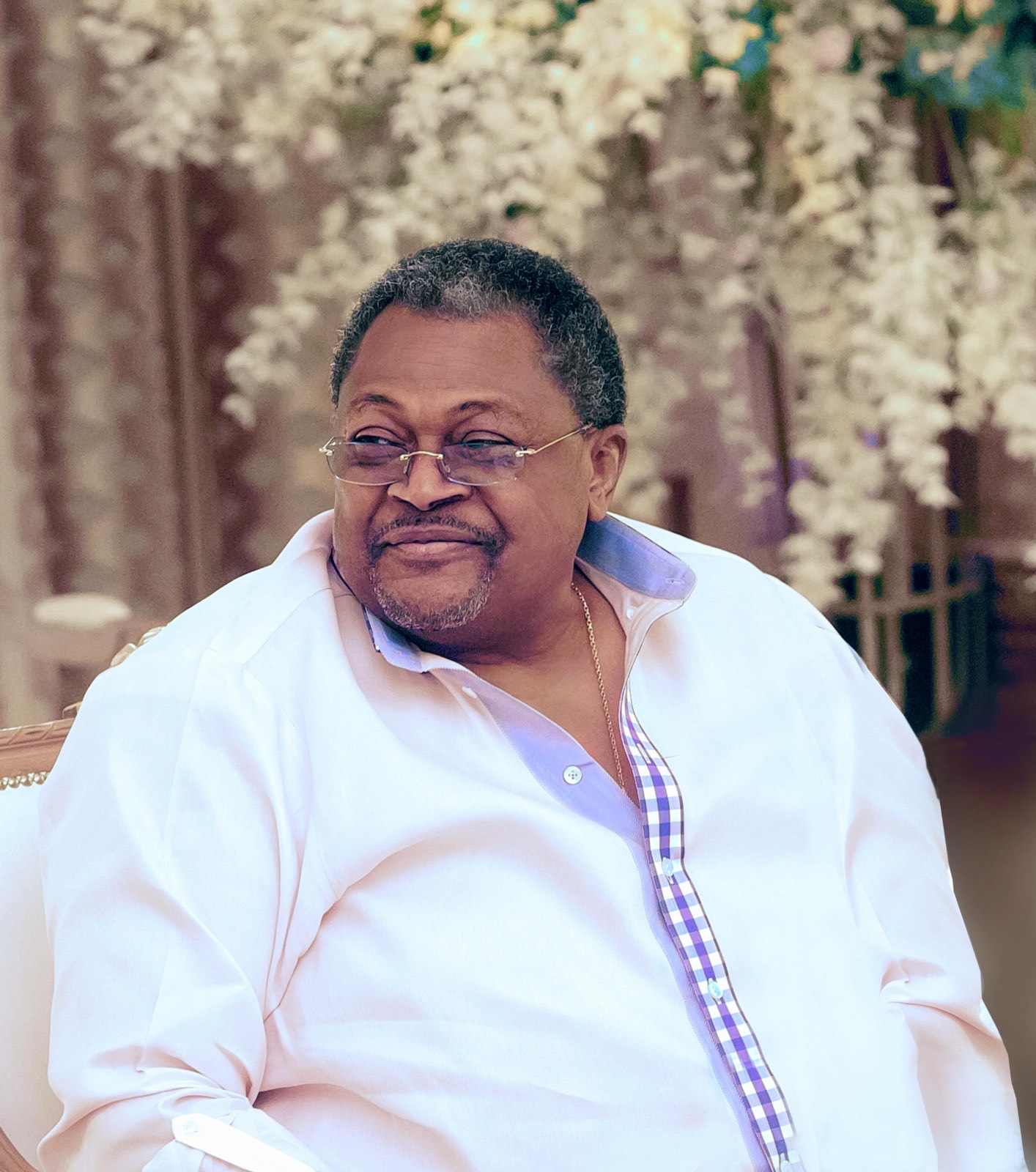
Billionaire businessman Mike Adenuga remains the sole owner of Globacom, more than two decades after the Nigerian telecommunications company began operations.
Globacom, popularly known as Glo, marks 23 years in business this month, and unlike other major telecom operators in Nigeria, the company has remained entirely under Adenuga’s ownership.
Since Glo Mobile launched in August 2003, Adenuga has not brought in outside equity investors, listed the company on the Nigerian Exchange or sold any portion of his stake.
Forbes estimated his fortune at $6.8 billion at the end of 2024.
Glo’s ownership structure stands in sharp contrast to other major operators. MTN Nigeria listed on the Nigerian Exchange in 2019 and now has a market value of about ₦18 trillion, while Airtel Africa was also publicly listed in London in 2019.

Etisalat Nigeria, meanwhile, was taken over by its lenders in 2017 after defaulting on a $1.2 billion loan facility. The company was subsequently rebranded as 9mobile and has undergone further ownership changes.
Entering a market built on scarcity
When Nigeria began opening up its telecommunications sector in the early 2000s, the market was still extremely small.
In 2001, the country had only about 400,000 active telephone lines for a population of roughly 120 million.
The Nigerian Communications Commission subsequently auctioned GSM licences, with MTN, Econet and the state-owned M-Tel emerging from the initial process.
Adenuga’s Communications Investments Limited did not secure an operator licence during that first GSM auction.
Instead, Globacom obtained the Second National Operator licence in 2002, entering the mobile market about two years after its major competitors.
The company arrived in a market where mobile services were expensive and difficult for ordinary Nigerians to access.
SIM cards reportedly sold for between ₦20,000 and ₦25,000, while calls were billed at approximately ₦50 per minute.
Even a very short call could therefore attract the full one-minute charge.

The one-kobo revolution
Glo changed the market when it launched commercially on August 29, 2003, introducing per-second billing at one kobo per second.
The difference was immediate.
A 60-second call cost 60 kobo on Glo, compared with ₦50 under the prevailing pricing structure.
A 10-second call cost just 10 kobo rather than the full ₦50.
The move forced competitors to respond, and MTN and Econet subsequently introduced per-second billing.
Glo also aggressively reduced the price of SIM cards.
The price reportedly fell from ₦6,999 to ₦500, then ₦100 and eventually ₦1. By October 2004, the company had begun distributing SIM cards free of charge at a time when competitors were still charging around ₦2,000.
Rivals followed suit.
Within its first year, Glo reportedly attracted one million subscribers across 87 Nigerian towns and generated more than ₦120 billion in revenue.
The broader Nigerian telecom market subsequently exploded, with mobile subscriptions rising from roughly 400,000 in 2001 to more than 150 million within two decades and later exceeding 200 million.
Broadband penetration, which was effectively negligible when Glo launched, had climbed above 45 per cent by 2025.
Although Glo did not drive this expansion alone or become the largest operator, its aggressive pricing helped establish the competitive structure that shaped the market.
Two decades before tariffs rose
The low-cost pricing model remained a feature of the Nigerian telecom market for years.
It was not until early 2025 that operators secured their first major tariff increase in more than a decade, arguing that rising operating costs and the need for continued investment made higher prices necessary.
Glo subsequently increased its tariff from 11 kobo to 22 kobo per second.
MTN raised its rate from 13 kobo to 23 kobo, while Airtel moved from 18 kobo to 25 kobo.
Building Glo-1
Adenuga’s influence on Nigeria’s telecom industry was not limited to mobile pricing.
Globacom also made a major strategic decision to build its own international submarine cable rather than depend entirely on bandwidth purchased from other operators.
Before 2009, Nigeria relied heavily on the SAT-3 submarine cable, operated by a consortium involving NITEL and more than 30 other carriers.
The dependence exposed Nigeria to capacity constraints and network vulnerability.
When a fault affected SAT-3 infrastructure in 2009, large parts of West Africa experienced a major internet disruption, affecting businesses, banks and other services dependent on connectivity.

Globacom had already commissioned its own submarine cable project.
Known as Glo-1, the system stretches approximately 9,800 kilometres along the West African coast, connecting the United Kingdom and Nigeria through landing points in Lagos and Bonny, as well as Lisbon, Accra and Côte d’Ivoire.
The cable connects 17 countries.
It landed at Alfa Beach in Lagos in September 2009, was completed in July 2010 and entered commercial service in October of that year. The Ghana connection became operational in April 2011.
Glo-1 launched with approximately 640 gigabits per second of capacity and is now advertised at up to 2.5 terabits per second.
Globacom financed the project itself, without foreign equity investors or consortium partners.
Reported estimates of the project’s cost vary significantly, from about $250 million for the supply contract to approximately $800 million in contemporary Nigerian accounts.
The cable gave Globacom direct access to international bandwidth and reduced its dependence on external providers.
Its impact, however, extended beyond Glo.
Greater international bandwidth helped reduce connectivity costs across the Nigerian internet market and encouraged further submarine cable investments, including MainOne, MTN’s WACS and Google’s Equiano.
The growth of data centres and technology infrastructure around the Lekki corridor has also benefited from the increasing availability of international connectivity.
Alongside Glo-1, Globacom developed a terrestrial fibre network across Nigeria, supporting its enterprise operations and services such as dedicated internet access, MPLS and managed connectivity.
Changing Nigerian advertising
Globacom also took a different approach to marketing.
The company made celebrity endorsements a central part of its brand strategy, signing major Nigerian musicians, actors and athletes as ambassadors.
Artists and personalities including P-Square, Phyno, Wizkid, May7ven and Tobi Amusan have been associated with the Glo brand.
The strategy helped popularise celebrity-driven advertising across Nigeria.
Today, major Nigerian consumer brands frequently rely on musicians, actors, athletes and influencers to promote products, a trend in which Glo played an early and significant role.
The company’s sponsorship activities extended beyond individual celebrities.
Globacom supported the CAF African Footballer of the Year awards between 2005 and 2016 and backed Nigerian football initiatives involving the Super Eagles, the Nigeria Football Federation and the domestic league.
It also established the Glo Soccer Academy, a television programme designed to identify and develop young football talent in West Africa.
Following Nigeria’s 2013 Africa Cup of Nations victory in South Africa, Adenuga reportedly rewarded the Super Eagles with $1 million.
The company also became a major sponsor of Nigerian cultural festivals, including Ojude Oba, Lisabi and Ofala, while partnering with MTV on The Big Friday Show.
Building a Nigerian identity
Glo’s marketing strategy also reflected Adenuga’s decision to position the company as a distinctly Nigerian brand.
As a late entrant into a market dominated by foreign-owned competitors, Glo could not immediately compete on network coverage.
Instead, it competed aggressively on price, accessibility and national identity.
The strategy helped the company establish a strong identity among Nigerian consumers and differentiate itself from its larger rivals.

The man behind Globacom
Mike Adenuga was born in Ibadan in April 1953 and turns 73 in 2026.
Before building his business empire, he reportedly worked various jobs in the United States, including driving taxis and working in security, while financing his university education.
He eventually returned to Nigeria and made his first fortune through commodity trading before expanding into telecommunications and other sectors.
Unlike many high-profile billionaires, Adenuga maintains a notably private public profile.
He rarely gives interviews and makes few public appearances.
Globacom has also not publicly disclosed detailed figures regarding its revenue or its investment plans for the company’s next phase.
More than 20 years after Glo entered a market defined by expensive services and limited access, Adenuga remains the company’s sole owner—a rare position in Nigeria’s increasingly competitive telecommunications industry.