
NIGERIA’S ₦1.4 TRILLION SOCIAL PROTECTION PLAN: PROMISE MUST NOW BECOME PROTECTION
The Federal Government has proposed a potentially important anti-poverty architecture, but unanswered questions about financing, coverage, benefit adequacy, accountability and implementation could reduce it to another expensive announcement
By Gloria Fraser, MFR
Nigeria does not suffer from a shortage of poverty-alleviation programmes. It suffers from programmes that announce billions, count beneficiaries and disappear before vulnerable families experience lasting change.
The Federal Government’s proposed ₦1.4 trillion social protection programme therefore deserves neither automatic applause nor cynical dismissal. Its central philosophy is sound: Nigeria must move beyond fragmented palliatives towards an integrated system that identifies vulnerable households, assesses their particular needs and supports them along credible pathways to stability and economic independence.

According to the THISDAY report, the initiative comprises the Household Prosperity and Empowerment Social Protection Project, known as HOPE-SP; the One-Humanitarian-One Poverty Response System; an Emergency Cash Transfer Programme; the Federal Ministry of Humanitarian Affairs and Poverty Reduction Ministerial Blueprint; and Humanity First Magazine.
The proposed emphasis on unified data, digital delivery, household-level assessment and coordination among federal, state and local governments addresses genuine weaknesses in Nigeria’s existing system. Fragmentation has allowed some households to receive assistance from several programmes while equally vulnerable citizens receive nothing.
Tracking household outcomes instead of merely announcing beneficiary numbers is also overdue. The important question is not how many names entered a database, but whether assistance restored school attendance, improved nutrition, financed productive activity, prevented displacement or moved a family towards a sustainable income.

However, a potentially good architecture is not yet a credible implementation plan.
THE FIGURES DO NOT YET RECONCILE
The first problem is financial clarity. The programme has been presented as a $1 billion initiative and as a ₦1.4 trillion programme. Government should identify the applicable exchange rate, funding sources, implementation period and precise expenditure framework.
The Emergency Cash Transfer component reportedly targets 7.6 million vulnerable households with a one-off digital payment of ₦40,000. That would cost ₦304 billion, leaving more than ₦1 trillion of the advertised amount unexplained in the public presentation.
How much will finance direct assistance? How much is allocated to technology, consultants, administration, monitoring and livelihood programmes? Is the money already appropriated? Does the figure include existing World Bank facilities and earlier programmes, or is it entirely new funding? What proportion will be borrowed, contributed by development partners or funded directly by Nigeria?
Until the government publishes these details, ₦1.4 trillion remains a headline—not a binding social contract.
There is also a danger of confusing expenditure with achievement. Government’s claim that more than ₦600 billion has already been distributed to over 10 million households requires an independently audited account. Nigerians should be told who received the money, when payments were made, how many households received complete payments and what measurable effect the intervention produced.
₦40,000 IS RELIEF—NOT A ROUTE OUT OF POVERTY
A one-off ₦40,000 payment may help a family purchase food, medicine or emergency transportation. That matters. But it cannot move a household from poverty to prosperity.
It cannot sustainably finance rent, healthcare, education, farm inputs or business equipment. Government should therefore describe the payment honestly as emergency shock relief rather than evidence of economic empowerment.
Poverty is not simply a temporary absence of cash. It is frequently sustained by unemployment, poor education, illness, disability, insecurity, displacement, unaffordable transportation and the absence of electricity, credit, markets and productive assets.
A household may require immediate income support, but it may also need health insurance, school assistance, subsidised transportation, agricultural inputs, vocational training or access to affordable credit. Cash transfers must therefore be one component of a wider protection system—not the entire policy.
National Patriots has previously cautioned that cash-transfer programmes are especially vulnerable to corruption, manipulation and diversion when beneficiary selection and payment verification are controlled by political structures. Digital payment reduces some opportunities for theft, but it does not correct a compromised register or a fraudulent selection process.
COMPARATIVE LESSONS FOR NIGERIA
Brazil’s Bolsa Família is relevant because it was developed in another large, unequal and decentralised federation. Brazil consolidated several overlapping programmes, created clear national eligibility standards and used a unified household registry. Payments were predictable, while participating families were connected to education, healthcare and local social services.
Its importance lies not merely in transferring money, but in combining immediate poverty relief with investments intended to break intergenerational deprivation. Political leadership was supported by technical management, defined institutional responsibilities, local implementation, grievance procedures and continuous evaluation.
Nigeria’s proposed unified system is therefore moving conceptually in the right direction. But it must be supported by regularly updated household data, enforceable service standards and sustained financing.
South Africa offers a different lesson. Its social-grant system provides regular, legally established support targeted particularly at children, elderly people, persons with disabilities and other vulnerable groups. A World Bank assessment found that the system materially reduces poverty and inequality and improves nutrition, educational attainment and health outcomes.
The important word is regular. Poverty cannot be meaningfully reduced through occasional payments announced during economic crises or political seasons. Predictability allows households to plan, keep children in school and avoid distress decisions such as selling productive assets.
India demonstrates the possibilities of digital public infrastructure and direct benefit transfers at enormous scale. Linking identity and payment systems can reduce duplication and ghost beneficiaries. But India also provides a warning: rigid identity authentication can exclude legitimate recipients through documentation problems, biometric failures, delayed payments and poor connectivity.

Nigeria should use NIN verification as a safeguard, not as a wall against elderly citizens, internally displaced persons, remote communities and people whose documentation is incomplete. Every digital system must include assisted registration, offline alternatives and a functional human appeal process.
CREATE AN INDEPENDENT IMPLEMENTATION COMMISSION
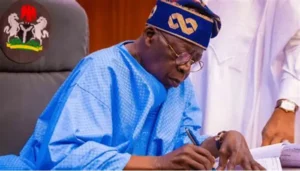
President Bola Ahmed Tinubu should establish an independent Social Protection Implementation and Accountability Commission, consistent with the National Patriots blueprint for managing safety nets and reform relief.
The commission should include credible representatives of relevant government institutions, civil society, labour, women, persons with disabilities, humanitarian organisations, professional bodies and development partners. Its leadership must be technically competent, politically non-partisan and subject to asset declaration, conflict-of-interest rules and independent audit.
The commission should publish:
The complete ₦1.4 trillion financing and expenditure framework;
Beneficiary-selection criteria and state-by-state allocations;
The value, frequency and duration of every benefit;
Procurement awards and administrative expenses;
A regularly updated dashboard showing verified payments and outcomes;
Accessible channels through which excluded citizens can appeal;
Quarterly implementation reports and annual independent audits.
The National Social Register should not be treated as permanently accurate. Inflation, insecurity, floods, unemployment and displacement can push previously stable households into poverty. Registers must be continuously updated through community validation, independent sampling and open registration—not controlled exclusively by governors, local officials or party structures.
PROTECTION MUST MATCH THE PERSON
Social protection should be differentiated according to need.
Extremely poor households may require predictable income and food assistance. Working families need affordable transportation, healthcare and childcare. Farmers require inputs, irrigation, storage, insurance and market access. Young people need apprenticeships linked to real employers—not training programmes that distribute certificates without jobs. Elderly citizens and persons with disabilities require continuing protection, not unrealistic “graduation” deadlines.
Public works can support able-bodied beneficiaries while producing community assets such as drainage, feeder roads, sanitation facilities and environmental restoration. However, wages must be paid promptly and programmes must not displace regular employment.
The government’s proposed “poverty graduation pathway” must also be approached carefully. Graduation should never become an administrative device for removing beneficiaries to produce favourable statistics.
A household should leave support only after independently verified improvement in income, food security, health, housing and resilience. It must also be able to re-enter rapidly when affected by unemployment, disaster, displacement or another serious shock.
FROM ANNOUNCEMENT TO ACCOUNTABILITY
National Patriots welcomes the Federal Government’s recognition that economic reform cannot be sustained while vulnerable Nigerians bear its harshest consequences alone. Fuel-subsidy removal and foreign-exchange reforms may have improved aspects of public finance, but their social costs have been severe. Social protection is therefore not charity. It is an essential part of responsible economic reform and national stability.
The proposed programme has genuine possibilities. It could unify fragmented interventions, improve targeting, reduce duplication and connect temporary relief to healthcare, education, employment and productive opportunity.
But success will require more than an attractive launch, a large figure and another magazine publicising government achievements. Nigeria needs transparent funding, independent management, predictable assistance, accessible grievance mechanisms and measurable household outcomes.
The success of this programme will not be determined by how much money was announced at the Presidential Villa. It will be determined by the hunger prevented, the children returned to school, the farms restored, the businesses sustained and the vulnerable Nigerians who can finally say: government support reached us, protected us and gave us a genuine path out of poverty.
Nigeria has announced compassion many times. This time, it must build a system that delivers it.
Princess Gloria Adebajo-Fraser MFR.
President, The National Patriots.
Vice Chairman, Strategic Communication Committee Buhari PCC 2019.
Former Special Adviser to President Goodluck Jonathan.