


NIGERIA’S GREAT RESET – PART 22
THE ACCOUNTABILITY TEST: TINUBU, THE ANTI-CORRUPTION WAR AND THE RECOVERY OF PUBLIC WEALTH
By Gloria Fraser, MFR
President Bola Ahmed Tinubu’s anti-corruption record is increasingly defined by institutional independence, asset recovery, digital controls and a quieter strategy of closing the channels through which public wealth has historically leaked.
OPENING REFLECTION
“Since assuming office, I have consistently maintained that anti-corruption and law enforcement agencies must be allowed to discharge their statutory responsibilities independently, professionally, without fear or favour, or political interference.”
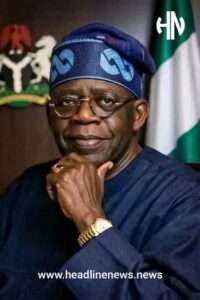
— President Bola Ahmed Tinubu, 6 August 2026
Corruption is like termites inside the beams of a house. Government may repaint the walls, raise revenue and build new rooms, but if the termites remain, the structure weakens from within.
Tinubu’s approach increasingly seeks to strengthen the beams: digitise vulnerable processes, improve traceability, reduce discretion, recover assets and allow anti-graft institutions to operate.
A Yoruba proverb teaches, “Bí a bá rí ẹ̀gún, a gbọdọ̀ yọ ọ́”—when a thorn is discovered, it must be removed. The Igbo saying “Ezi afa ka ego” reminds us that a good name is greater than wealth, while the Hausa maxim “Alkawari kaya ne”—a promise is a burden—underscores the responsibility accompanying public trust.
INSTITUTIONS, RECOVERIES AND UNFINISHED CASES
The EFCC and ICPC have pursued politically sensitive investigations, while courts have ordered substantial forfeitures in proceedings involving powerful former public officials.
The Obazee investigation into the Central Bank alleged that former Governor Godwin Emefiele operated or controlled 593 foreign bank accounts in the United States, United Kingdom and China and raised allegations concerning banking ownership structures. Emefiele disputed the allegations.

Former Petroleum Minister Timipre Sylva presents another complex history. In 2013, the EFCC moved against 48 Abuja properties linked to him during money-laundering proceedings. Those earlier cases were subsequently dismissed or struck out and the properties returned. In 2026, however, a Federal High Court ordered interim forfeiture of nine Abuja properties allegedly linked to Sylva as suspected proceeds of unlawful activity.
Sylva has also been named in federal proceedings arising from the alleged October 2025 plot to overthrow the Tinubu administration. These grave allegations remain subject to judicial determination.
ATIKU AND THE CASE THAT WILL NOT DISAPPEAR
Former Vice-President Atiku Abubakar also carries unresolved historical controversies.
The EFCC investigated allegations involving Atiku while he was Vice-President in 2005–2006. A subsequent 2010 United States Senate investigation documented more than $40 million in suspect funds transferred into the United States through accounts and offshore corporations associated with his then-wife, Jennifer Douglas.
Atiku’s name also arose in the American investigation of Congressman William Jefferson, who was eventually convicted on corruption charges. Atiku himself was never criminally charged in the United States.
Now the matter has returned. On 1 September 2026, the EFCC received a petition from former federal lawmaker Ehiozuwa Agbonayinma, through Hannibal Egbe Uwaifo, SAN, demanding that the Commission reopen the longstanding Atiku investigation and giving it 14 days to act.
Twenty years is too long for allegations of such magnitude to remain institutionally unresolved.

FIGHTING CORRUPTION INTELLECTUALLY
Tinubu’s less celebrated anti-corruption weapon may be technology.
Nigeria Customs generated approximately ₦7.28 trillion in 2025, exceeding its target by more than 10 per cent. Customs attributed its stronger performance partly to improved compliance, better use of data, digital tools and disciplined enforcement.
The Treasury Single Account predates Tinubu and was substantially implemented under President Muhammadu Buhari, but Tinubu has continued the wider transition towards digital collections, integrated data and reduced manual intervention.
In August 2026, Tinubu went further, approving a comprehensive forensic audit of IPPIS, federal ministries and agencies, specifically intended to identify systemic weaknesses, strengthen verification and prevent irregular entities or persons from accessing public resources.
This is corruption fought professionally: do not merely chase those exploiting loopholes—close the loopholes.
ACCOUNTABILITY FROM STATES TO THE GRASSROOTS
Lagos Governor Babajide Sanwo-Olu put it succinctly:
“Without accountability, governance becomes opaque, and corruption thrives.”
Abia Governor Alex Otti has been equally categorical:
“The issue of transparency is not negotiable.”
Abia subsequently rose from 17th to fourth in BudgIT’s State of States performance assessment over two years.
At grassroots level, Ojo Local Government in Lagos, chaired by Princess Muhibat Titilola Rufai, publicly opened competitive bids for infrastructure projects in 2026, emphasising transparency, due process and value for money.

Accountability cannot stop in Abuja.
THE FAKE-AGENCY WARNING
Headlinenews.News has reported on extraordinary cases exposing vulnerabilities within government.
Adeniyi Adeyemi was charged over the purported Presidential Foreign Intervention Promotion Council, PFIPC. A National Assembly investigation subsequently traced approximately 58 bank accounts through identifying information associated with him.
Separately, the National Brands Development and Made-in-Nigeria Special Project Office became controversial after an ICPC investigation. Tinubu ordered action against its promoter, George Buchi Nwabueze, while three permanent secretaries were suspended.
Nwabueze disputes the description of the project as a fake agency and maintains that it had longstanding connections with the Office of the Secretary to the Government of the Federation. Reports have also described his claim that disagreements involving an OSGF team preceded petitions against the organisation.
That controversy must be investigated impartially. But both cases expose the need for stronger verification systems capable of preventing questionable entities from acquiring the trappings of government.
WHEN CORRUPTION FIGHTS BACK
Reform creates losers as well as beneficiaries.
The old petrol-subsidy regime, foreign-exchange arbitrage, manual revenue processes, opaque transactions and other leakages created powerful beneficiaries. When digitalisation and financial reforms close these conduit pipes, those who profited from them have compelling reasons to resist.

The National Patriots believes this dimension cannot be ignored when examining some of the forces mobilising to prevent Tinubu’s re-election in 2027. This does not mean every opposition politician or government critic benefited from corruption. Legitimate opposition is indispensable to democracy. But it would be naïve to imagine that entrenched interests deprived of lucrative privileges have suddenly become indifferent to who controls government.
Corruption can fight back politically as well as economically.
Tinubu’s answer should remain professional: identify the leakage, redesign the system and close it. Those betting that entrenched interests will reverse the sanitisation of government may discover that Nigerians increasingly understand what is at stake.
FOOD FOR THOUGHT
“The true measure of an anti-corruption war is not how many powerful people are accused, but whether public wealth is recovered, institutions are strengthened and justice is applied without fear or favour.”
— Princess Gloria Adebajo-Fraser, MFR
THE NATIONAL PATRIOTS’ POSITION
The National Patriots supports President Tinubu’s institutional approach to fighting corruption through digitalisation, tighter revenue controls, independent anti-graft agencies and judicially supervised asset recovery.
However, the EFCC must now intensify its work, widen its investigative net and bring long-running cases to decisive conclusion. An anti-graft commission loses credibility when persons facing serious corruption allegations remain indefinitely before the courts or even return to positions of influence without their cases being resolved.
Justice must be fair, but it must also be timely. Endless investigation without prosecution, and endless prosecution without conclusion, risks making a mockery of the anti-corruption effort.

The EFCC and ICPC should accelerate pending cases, pursue assets vigorously and secure convictions wherever evidence establishes guilt. Political influence, wealth or status must never become a shield against accountability.
Recovered wealth should also be publicly traceable. Nigerians deserve an annual register showing major assets recovered, their value, legal status and where the proceeds were applied.
President Tinubu appears to understand that the smartest way to fight corruption is often to close the conduit pipe rather than merely chase those who drank from it.
Corruption will fight back. Government must answer with technology, evidence, stronger institutions, speedy prosecution and the law.
Princess Gloria Adebajo-Fraser, MFR
President, The National Patriots
Former Special Adviser to President Goodluck Jonathan, GCFR
Vice-Chairman, Strategic Communications Committee, Buhari PCC 2019
Member, Strategy Committee, Presidency, 2023




