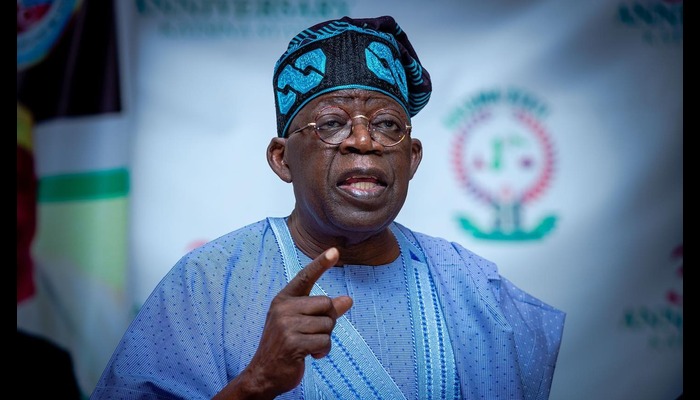
President Bola Ahmed Tinubu has rejected calls for the return of petrol subsidies, insisting that his administration will maintain its economic reform programme despite the difficulties Nigerians have experienced since the reforms began.
Tinubu stated this in his Independence Day address to Nigerians on Thursday, October 1, 2026, as the country marked its 66th anniversary.

The President defended the reforms introduced by his administration, arguing that they were necessary to address longstanding weaknesses in the Nigerian economy rather than the cause of those problems.
According to Tinubu, reversing the reforms and returning to the previous subsidy system would undermine the progress recorded so far.
He said the government must remain committed to the course it began in 2023 instead of returning to what he described as an unsustainable subsidy model.
Tinubu announced the removal of the petrol subsidy shortly after assuming office in May 2023. The decision was followed by a significant increase in fuel prices, with higher transportation, food and production costs contributing to increased living expenses.

The administration subsequently introduced other economic measures, including reforms to the foreign exchange market. Opposition figures and other critics have continued to question the impact of the policies on households and businesses, with some calling for a reversal of the subsidy removal.
However, Tinubu said his government’s assessment of the economy shows signs of improvement.
He said Nigeria’s economy had grown by more than four per cent in 2026, with both the oil and non-oil sectors contributing to what he described as a period of more stable growth.
The President also highlighted improvements in several economic indicators, including a reduction in oil theft, a decline in inflation from its previous peak, an increase in foreign reserves and greater stability in the foreign exchange market.

Tinubu further stated that Nigeria recorded more than $6 billion in non-oil export revenue in 2025, describing the figure as evidence of increased activity among Nigerian businesses.
He maintained that international observers, journalists, non-governmental organisations and multilateral institutions had recognised changes in the Nigerian economy.
According to the President, foreign direct investment has also continued to increase, while the private sector has responded positively to the direction of the economy.
Tinubu said the country had now reached a new stage in its economic transformation.
He explained that the first three years of his administration had largely focused on correcting what the government considered structural problems in the economy. The next phase, he said, would focus more directly on translating economic reforms into broader prosperity for Nigerians.

The President said his administration’s objective was not simply to achieve stronger economic figures but to create conditions that would improve the daily lives of citizens.
He outlined his vision of an economy where farmers can produce more efficiently and earn better returns, factories have reliable electricity, businesses can access credit and young Nigerians have greater opportunities for productive employment.
He also said Nigerians should be able to access affordable food and transportation, quality education and other essential services while working families have greater confidence in their economic future.

Tinubu acknowledged that the reforms had created significant difficulties and disappointments but maintained that the government would continue pursuing its chosen economic direction.
The President’s position comes amid continuing debate over the effects of subsidy removal and other economic reforms, with supporters of the policy pointing to improved government revenues and macroeconomic indicators, while critics continue to highlight the pressure on household incomes and the cost of living.
For now, Tinubu has made clear that his administration does not intend to return to the previous petrol subsidy regime and will instead continue with its broader economic reform agenda.